In that sense, I believe music is very much like a talisman: something that protects and empowers you against the harshness of life.
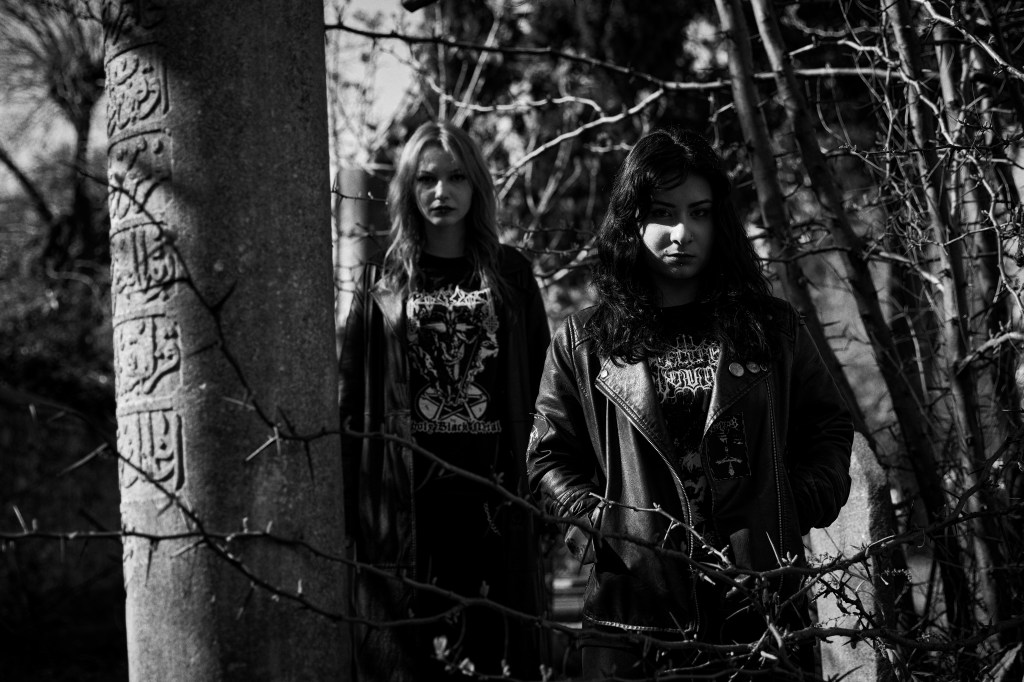
Emerging from the heart of Istanbul’s layered history, Ash Magick is a rising black metal project that blends haunting atmospheres with themes of mysticism, spirituality, and ancestral lore. Formed in 2022 by Necrosanctus and Graveyard Slut, the band has quickly carved out a distinct identity with their raw yet immersive sound. Their latest release, “Rituals of Anathematic East” (out since August 29th via Apocalyptic Witchcraft), takes inspiration from a pilgrimage to Mardin — a region steeped in Mesopotamian and Syriac mysticism. We spoke with Ash Magick about their origins, creative vision, and the rituals woven into their new album.
HH: Ash Magick emerged from “firsthand occult experience.” Can you tell us more about how that personal journey shaped the band’s creation? And how do your personal rites and invocations bleed into composition and performance?
Graveyard Slut: I wouldn’t say I personally have had many metaphysical experiences. Those actually came from my bandmate, who used to share such stories with me. I’m not someone who is blindly devoted or full of faith, but I’m also not dismissive of these things either. What drives me most is curiosity.
One of the events she told me about was related to something called ash magick — a kind of spell involving ashes. That immediately caught my attention, and I thought it could be a powerful name and concept for a Black Metal project. So, while it didn’t come directly from my own experiences, it was born out of the unusual metaphysical events my bandmate had within her family.
I’ve always been interested in dreams, energies, and esoteric subjects in general, they fascinate me. So, in a way, I was the one who connected these stories with Black Metal. The experiences belonged to them, but the vision to channel it into music came from me.
HH: How does being rooted in Istanbul — a city layered with history and mysticism — influence your sound and vision?
GS: One of the great things about Istanbul is that no matter where you look, there’s always a vision to be found. It can feed off the vision within yourself, so the more creative you are, the more the city nourishes you in return. For me, Istanbul has always been a place that fuels creativity.
I can’t say I’ve explored every historic site, but the ones we’ve visited left a deep impression on us. Even near my home there are historic cemeteries — actually, they exist in almost every district of the city. These places have strongly influenced us since the beginning. When we first formed, many of our songs and even entire albums were dedicated to particular cemeteries. So yes, living in Istanbul shapes us in a mystical way.
Of course, it also depends on being able to handle the city’s constant stress, only then can you truly discover its beauty. Whenever we find the time, Istanbul’s atmosphere, its water, its history, and even its religious sites provide inspiration. We’ve never strayed too far or explored everything in depth, but even in our close surroundings, Istanbul always manages to offer something that leaves a mark on us.
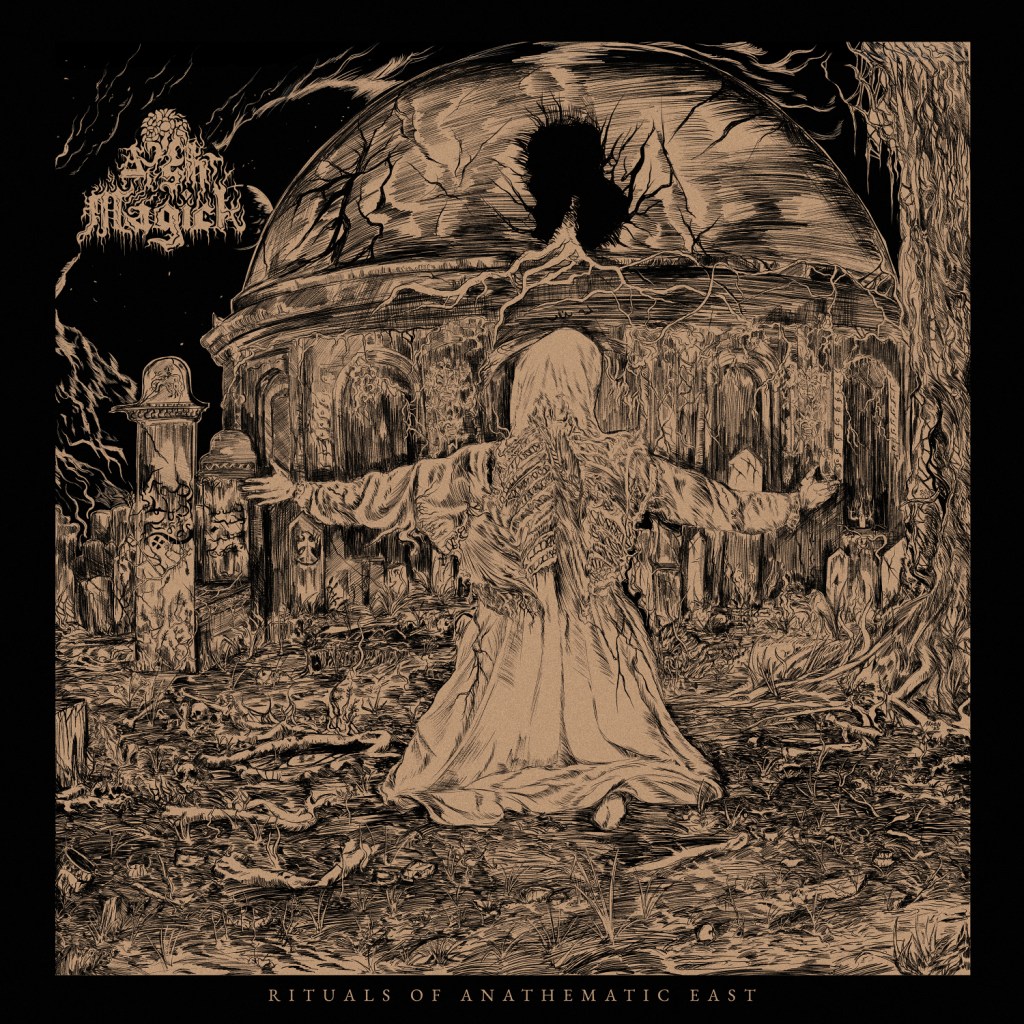
HH: “Rituals of Anathematic East” is your third release. How is it different from your earlier work?
GS: In many ways, it’s completely different from our previous releases. Composition-wise, this time I took full responsibility for writing everything myself. In the past, my bandmate’s style — rooted more in punk influences and riff-based transitions — was a bit present. On this album, however, there’s a stronger focus on arpeggios. We also pushed the tempo further; the BPM is much higher, the sound became faster, dirtier, and overall much more intense.
Another major difference is the effort and depth behind it. Our earlier albums were recorded almost spontaneously, in a very raw way, and while they had strong themes, they weren’t always grounded in a solid conceptual framework. This record, on the other hand, was built upon a very deliberate theme, with historical and esoteric roots. The storytelling is more cohesive, each track connects to the others, forming poetic narratives that carry a sense of reality and history.
Visually and symbolically, too, this release marks a new foundation for us. We changed our logo, and instead of using photographs for the cover art like before, we had a friend create an original illustration. This album represents a clear step forward in terms of identity and concept.
It also reflects a huge amount of work, nearly a year went into creating it. Compared to our earlier records, which sometimes came together in as little as a month, this one was a much more serious and carefully thought-out process. That’s perhaps the biggest difference: this album is the result of patience, intention, and relentless effort.
HH: The album was inspired by a pilgrimage to Mardin. Could you share what that journey meant for you personally and musically?
When we went to Mardin, we didn’t have any musical goals in mind — it was simply meant to be a short trip, almost like a winter getaway. We stayed there for about three or four days in December, right in the middle of winter. But once we arrived, I realized how much inspiration the place gave us musically. The city itself is breathtaking. Its architecture, its history, and the way it has been home to so many different peoples and cultures throughout time is deeply moving.
On a personal level, it was also a very meaningful trip. Spending that time with my friend was wonderful, and the distance from our everyday lives gave it even more significance. Being Kurdish myself, visiting the East also resonated with me on a much deeper level. It’s in my blood, so experiencing that part of the world had a strong impact on me both personally and musically.
HH: What do you hope listeners experience when they engage with “Rituals of Anathematic East”?
I don’t really have fixed expectations, it’s very much about the listeners themselves and what they bring into it. Everyone will have their own personal experience with the record, and that’s how it should be.
What I aimed to create, though, was something like a journey. Each track has its own atmosphere and its own transitions, but overall I wanted the experience to feel unsettling, especially at the beginning. The intro was designed to carry a sense of ritualistic discomfort. From there, that unease gradually transforms into passion, endurance, and finally into something like a spiritual passage. The interludes, for example, were meant to evoke a sense of ascension and purification. I drew on hymn-like, ambient elements to create that atmosphere, so that the music would move beyond aggression into something almost devotional.
But ultimately, I don’t want to dictate what people should feel. If listeners come away with a sense of intensity — whether that’s disturbance, catharsis, or transcendence —that’s enough for me. My intention was to shape something mythical, to reveal a certain mysticism. Whether I’ve fully achieved that, I can’t say, but I hope people can sense that spirit and interpret it in their own way.
HH: Black metal has always flirted with the esoteric — how do you see your approach as different, especially with your focus on Eastern mysticism and feminine energy?
I don’t really claim that what we’re doing is radically different. As for the idea of “feminine energy,” that’s actually something other people tend to highlight more than we do. We never go out of our way to say, we’re a female band, we’re channeling feminine energy. People can focus on whatever aspect resonates with them — that’s fine with me, but it’s not something we emphasize ourselves. Where I do feel we bring something different is in turning our attention toward the East. In black metal, I haven’t often seen themes rooted in Eastern mysticism or in the cultural and historical heritage of this region.
Musically, we may not be the most polished or the most professional, but what makes us unique is the world we’ve built and the themes we’ve chosen to explore. That’s what probably led you to ask this question. For me, it’s all about being creative and putting something of yourself into the work. It’s about asking: why does this affect me, and how can I translate that into something that will affect the listener as well? If you surrender yourself to that process, the rest follows naturally.
HH: In Mesopotamian mythology, Lamashtu was a feared female demon — the daughter of the sky god Anu — blamed for spreading disease and nightmares. Did her story, or other ancient figures like her, play a role in shaping the new album?
GS: We didn’t really dive into Mesopotamian mythology in this album. What we wanted to focus on instead were the ways people in Anatolia have historically engaged with magic, rituals, and darker beliefs. So rather than mythological figures, we leaned more toward entities and ideas closer to Islamic folklore, things like the concept of the jinn, or even the devil himself, which felt more fitting within a Black Metal framework.
For example, in “The KneelingWretch“ we drew inspiration from a ritual involving braided hair, which we came across during our research. We also found accounts of villagers in Mardin sharing their experiences with researchers in what was called “Mardin Demonology.” Those files are actually available online. Many of the stories involve shadowy figures, strange illnesses, or dark presences, jinns… things commonly found in Islamic traditions. Whether or not they were “real” doesn’t matter; they reflect a living folklore that we found compelling.
That said, we didn’t want to overwhelm the album with too many creatures or demons. We kept things relatively minimal and instead focused on rituals and practices themselves, weaving them into a poetic and musical form. The mythological aspect is less direct—our emphasis was on the rituals and the atmosphere they carry. And honestly, I hadn’t known much about Lamashtu before you mentioned her, that’s actually really fascinating.
HH: Ancient cultures used amulets and incantations against Lamashtu’s influence. Do you see parallels between those protective rituals and the way modern music can act as a form of catharsis or empowerment?
GS: Honestly, I had never thought of this connection before, but it makes so much sense to me and I really like it. First of all, thank you for such a beautiful question. I definitely agree with you.
For me, music — whether modern or not — has always been a source of strength. In the beginning it was more about the empowerment side, but once I started making music myself, the catharsis part came in as well. It truly carries that kind of power within a person. Of course, carrying an amulet feels very different, because it becomes a tangible object. Music, on the other hand, feels more abstract, yet it lives inside us, both for the one who creates it and the one who listens. In that sense, I believe music is very much like a talisman: something that protects and empowers you against the harshness of life.
For me, the ultimate goal of making music is to let my energy out, to purge myself, to create. And being creative in itself is already a kind of protection. That’s why I really loved this question.
HH: Where does the path of Ash Magick lead — deeper into the forgotten East, or towards new occult terrains?
GS: I feel that with this album we’ve ventured deep enough into the Eastern realm, and for the time being, that chapter feels complete. What lies ahead for Ash Magick is a different path, one that I won’t fully unveil just yet, but I can say it carries an allure of its own.
Future projects will likely step beyond the East, reaching into wider and perhaps more unexpected territories (but still around). Still, the mystical spirit of Ash Magick will remain at the core, guiding the music wherever it goes. For now, though, I’ll keep the rest shrouded in a bit of mystery.

 Heavy Hags
Leave a comment