By Kira L. Schlechter
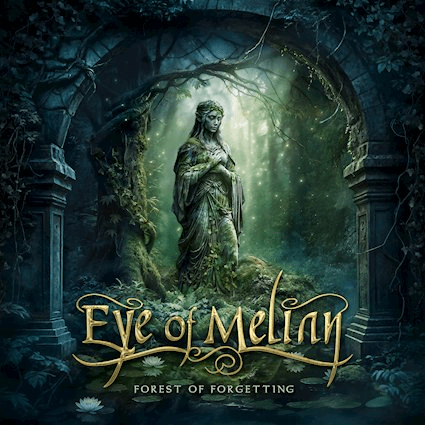
That endless font of musical inspiration, J.R.R. Tolkien, just keeps on inspiring – case in point, Eye of Melian and their dramatically dreamy debut Napalm Records effort, “Forest of Forgetting.”
The project’s name is taken from Melian, a singing spirit from the British author’s novel “The Silmarillion.” The band itself is a partnership between Martijn Westerholt of Delain (keyboards and orchestral arrangements) and singer/violinist Johanna Kurkela of Auri and also features Westerholt’s wife, Robin La Joy, on backing vocals and Mikko P. Mustonen on keyboards and orchestral arrangements.
Guest spots come from Patty Gurdy on hurdy-gurdy and Nightwish/Auri multi-instrumentalist Troy Donockley, giving tracks like “Elixir of Night” that Celtic feel that meshes so well with anything Tolkien-related.
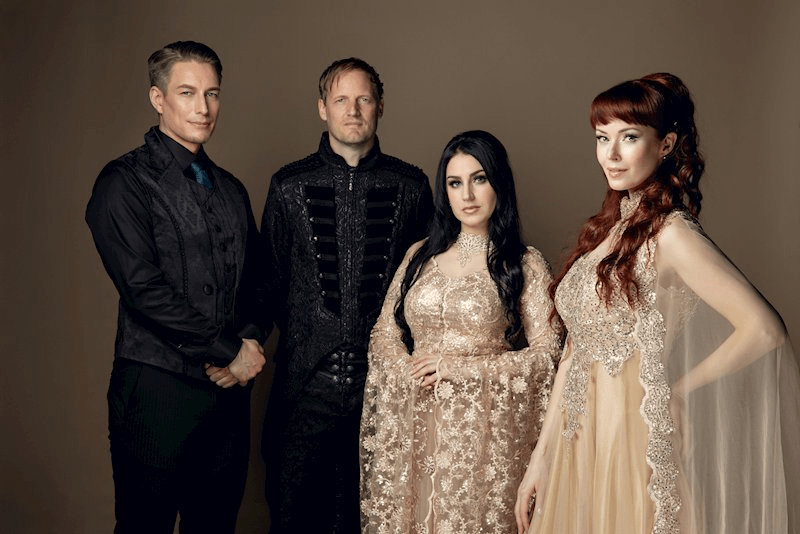
Photo credit: Tim Tronckoe
Johanna said in emailed responses to questions that the idea for the band came to Martijn as he “dream(ed) of another project to channel a more ethereal realm of music.”
“His wife Robin came up with the name, inspired by the character Melian … beautifully described as possessing the gifts of wisdom, beauty and magical singing,” she said. “We all love Tolkien’s world dearly, but it is our Mikko and Robin who take the cake in remembering all the tiniest of details about all its places, happenings, and characters.
“Even though our music is heavily inspired by the works of Tolkien and deeply resonates with the otherworldly energy of the elves, Eye Of Melian still stands alone as an entity of its own. At the core of our music lies deep appreciation, love, freedom, friendship, and (the) trust we share with one another. This is a labor of love. A connection from one heart to another, weaving bridges between hearts of kindred spirits all over the world,” she explained.
The album’s songs aren’t necessarily tied to “The Silmarillion” per se, she said.
“Lyric-wise, our songs are entirely their own entities.” she said. “Sure, we draw a lot of inspiration from Tolkien’s books, but none of the songs are strictly tied to any one story or character.
“In my own lyrical works, I always love to follow a theme that feels somehow current and personal to me. I find lyric writing a very cathartic process, opening doors to self reflection, release, and self discovery,” she added.
Johanna talked about some of those songs, like the opening track, “Of Willows and Shadows,” which acts very much like an introduction, like asking us to gather round and listen. It sets the stage and the imagery to come.
“What happened, happened very organically,” she said. “I love how there are many ways of interpreting music. That is the beautiful magic of it. It always invites the listener on a personal journey.
“The way I sing is the same. It is not so much the mind working to get to a certain outcome, but rather the body channeling out what the music stirs inside,” she said.
“Child of Twilight” was a track that stemmed directly from Tolkien’s work with its mention of “Lomion,” a reference to the character Maeglin. It’s an urging to “lift your gaze from your scars,” to stop living in the past and focusing on pain, and to “become the love you seek.”
“I found the story of Maeglin very inspiring – it provided the song title, the theme, and a starting point for the lyrics,” Johanna said. “But, again, as with any art, the lyrics are only loosely tied to this specific character.
“The character Maeglin serves as a universal archetype, providing a sort of mirror for a more wider, deeper inspection of these themes in each listener’s life. All human suffering happens in the mind. The lesson of learning to love oneself and others through the kind of love that sets you free is something all of us here as souls are faced with in one form or another,” she said.
“Blackthorn Winter” is a term to describe a spell of cold weather in May in rural England, and the song from which it takes its title seems to be a plea to send winter (with its “white callousing air,” a great phrase) back where it belongs. It also features several lines in Johanna’s native Finnish.
“The lyrics for (this) song actually started unraveling for me from the Finnish word ‘takatalvi,’ which means ‘a returning winter,’” she said. “This song holds a very special meaning. Living in Finland, with snow, cold, and bleakness covering the land for the vast majority of each year, one cannot but be affected by its energy.
“To me, winter also represents the stagnant energy in life, when our passions are put to the test and made to wait for their most optimal time of bloom. The gift of winter is a teaching of trust and patience, that there is a divine timing for everything,” she added.
“Lady of Light” seems to depict a character on a quest, a journey through the Golden Wood, one who is beseeching said lady in prayer for safe travels. It was written by Robin, but the song makes Johanna think of Tolkien’s Lady Galadriel, she said.
“She is one of the inspiring, ever-graceful energies I try to channel in life when times get really hectic,” she said.
A question about the track “Dawn of Avatars” had Johanna take a metaphysical turn in her response. While it seems to be a wish for simpler times, it also may be a longing to return home after years of “aimless wanderlust.”
“This song indeed represents a mysterious longing to experience our unnameable universal home, the source of life we are all made of,” she said. “At the end of the day, we are all only brief visitors here on planet Earth. Ephemeral avatars. Where our true home lies, our human brains find hard to grasp.
“As humans, we often live in a trance-like state of dualities, suffering, and illusions, when in reality, everything is only energy, originating from stardust, manifesting itself in different ever-changing and evolving shapes and dynamics,” she said.
Keeping in mind what she called the “wider perspective of our human existence, ‘the home where we belong,’” she said, helps her ‘live my life more meaningfully, more freely, without getting too attached to things of no consequence – not even our own ephemeral earthly avatars, not who we think we should be or what we think we should do in life.”
“We have already arrived,” she concluded. “Irrevocably connected to all of life with each inhale and exhale. I find that thought endlessly reassuring and empowering.”
The title track then follows perfectly, that idea of finding a place of solace where you can forget all your woes. And “The Buried Well” continues that theme with a really lovely metaphor – the physical digging up of the well described in the track corresponds with the “excavating through my despair and dismay.”
“I really love this song and Robin’s beautiful lyrics,” Johanna said, “And the end conveys such a strong energy of hope and empowerment, doesn’t it! Life is always working out in our favor in the end, even at times when it least seems like it. Every challenge is like a new teacher that comes bearing gifts we need to take the next step in life.”
“Forest of Forgetting” ends with a cover of “Tears of the Dragon,” from Bruce Dickinson’s solo album, “Balls to Picasso.” Its message of letting go and letting yourself feel resonated with Johanna.
“This song was actually introduced to us by Mikko,” she said, “We were looking for a legendary heavy metal song to cover and when Mikko pitched (it), we knew we had found a winner.
The melody is absolutely beautiful and the lyrics, as you mentioned, convey a deep sense of release and healing. ‘The tears of the dragon for you and for me’ land, as if granting us all a permission for even the hardest facades to crumble and be vulnerable. It is this very epiphany: the key to true strength lies in all of us,” she added.
Johanna says Eye of Melian has just signed with Napalm Events; they have a series of shows booked in Finland this spring and are “currently in the process” of booking more.
“After that, (we) are looking forward to sharing live music magic with kindred spirits also elsewhere,” she said. “As soon as we have solid dates and venues confirmed, we’ll be announcing them on our socials. So stay tuned!”
 Heavy Hags
Leave a comment