By Kira L. Schlechter
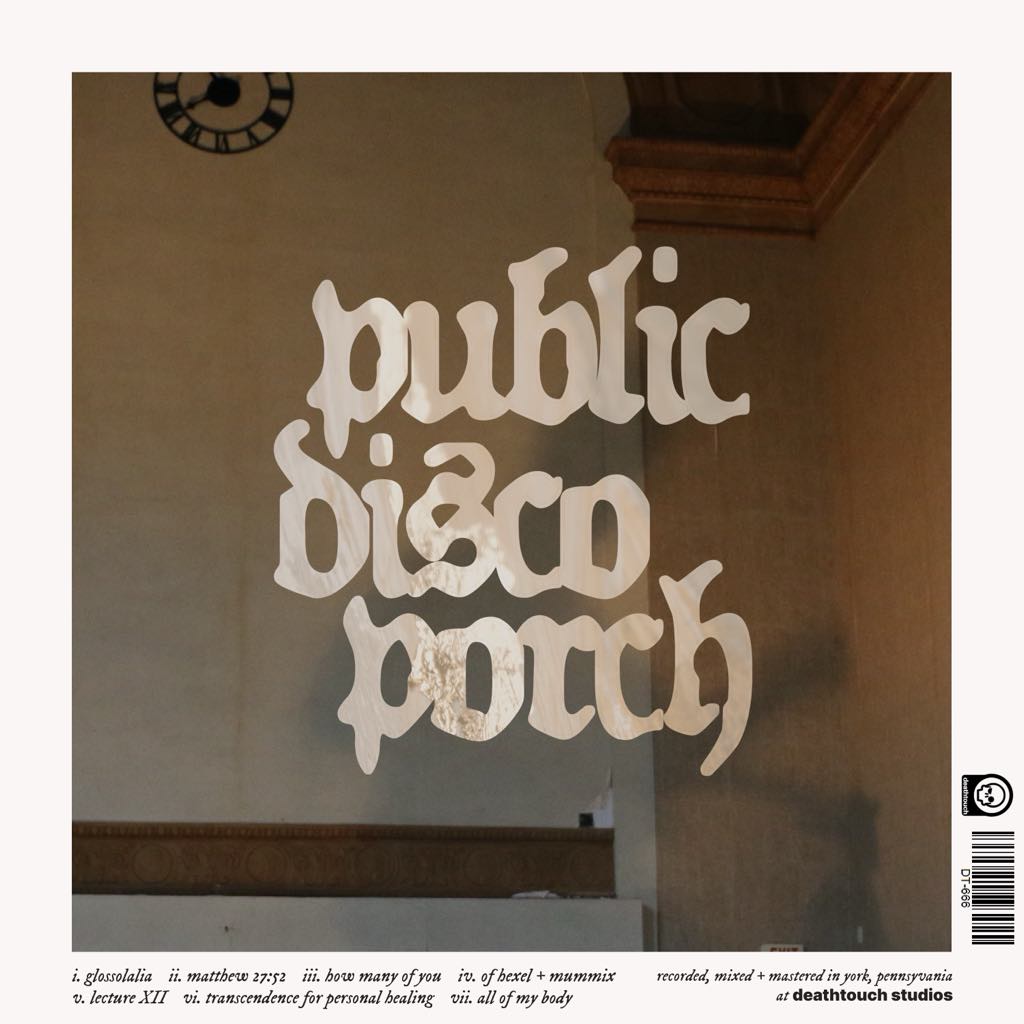
Public Disco Porch: a juxtaposition of unrelated words. The musical style of the indie band of that name: let’s say Pennsylvania Dutch mystic folk stoner metal – a juxtaposition if ever there was one.
The Pennsylvania quartet is charismatic singer/guitarist/violinist Spencer McCreary, David Portelles on guitar and organelle, Caleb Miller (McCreary’s brother-in-law) on bass, and the amazingly talented Robby Everly III on drums (a guy who makes the dead simplest of kits sound completely massive).
Their fourth album is the remarkable “Benediction,” a bare 27 minutes of some of the most interesting music you’re like to hear.
McCreary spoke of its genesis in an interview at his property in York County, Pennsylvania. At the end of a single-lane road, tucked in a hollow surrounded by trees, is the house he shares with wife Brittany and two young daughters, Fira, 5, and Maene, 2, featuring improvements he did himself.
“The guys came over for rehearsal, I was like, ‘you guys wanna hear the new record?’” McCreary said. “And they were like, what? And I played it start to finish. (I said), ‘hear me out, because the whole thing is basically a benediction – it’s a blessing. I know it sounds crazy, but I’ve been listening to nothing but benedictions for two months.’
“‘We’re going to be at a falling point and then there’s going to be this triumphant key change. And (it will) end with this sort of, now you may go,’” he concluded.
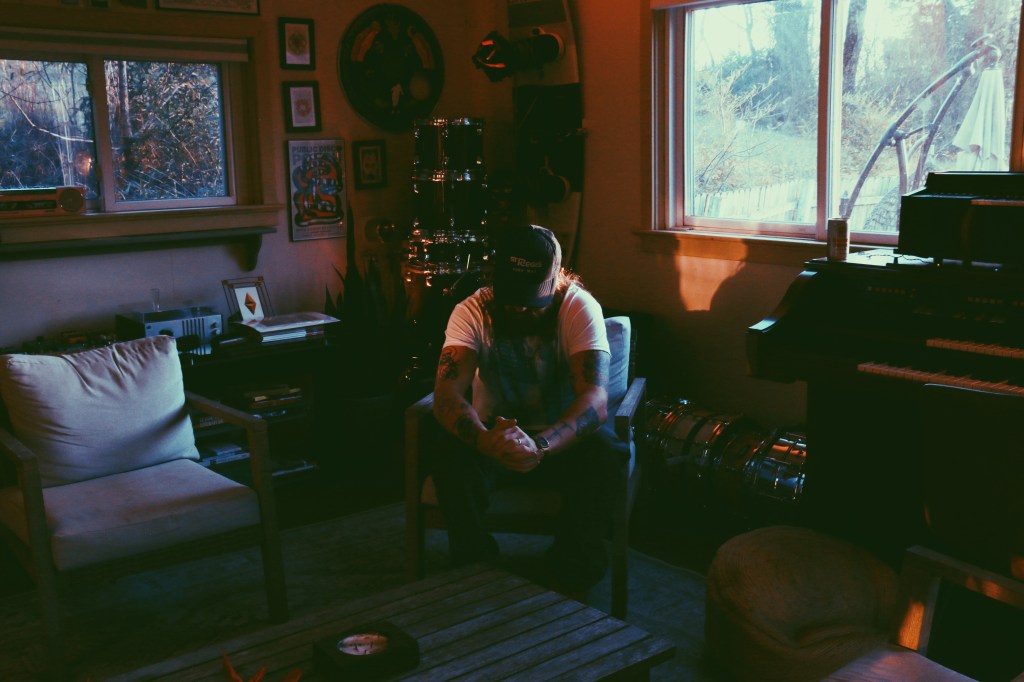
We spoke in a small outbuilding where the album was recorded, a combination living area/studio, with a kitchenette and seating area. Stacks of drums were piled in the window and guitar pedals, entwined with cords, rested on the floor.
McCreary is tall and rugged, with sandy hair flowing into a matching beard and a plethora of interesting tattoos. He grew up in York, then moved to Chicago after graduating from Wheaton College, also in Illinois.
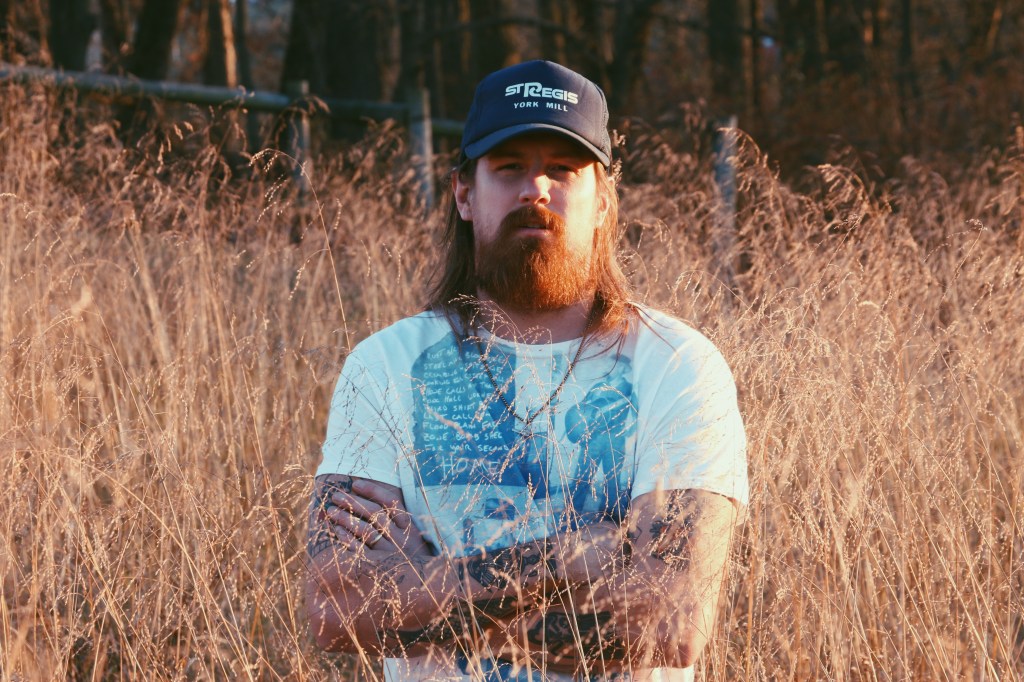
“I was there to play basketball primarily and then I was studying premedical biology,” he said. “But I also played a lot of music and was hanging out with all of the conservatory people when I was there.” That’s also where the first two PDP records were recorded.
“When I moved back, I kind of was hibernating away here doing woodchopping, rebuilding some of this place, and was thinking about hanging it up. It was kind of like what am I doing, what am I singing about?,” he added.
He started talking to Miller and played him some demos; the bassist dug them.
“I’m a fan of the band David (PDP’s guitarist) was in in Chicago, and then they had stopped playing,” he said. “So I sent him a message and I was like, hey man, we should hang out. Then he introduced me to Robby, who was his cousin.
“Ever since then, we’ve just become really good friends. We started feeling like a band, as opposed to me writing songs and sending them to my friends across the world. This is four people that contribute to the same mission,” he said.
In Everly’s case specifically (McCreary called him at once “an animal” and “the most mild, gentle person”), one band’s loss is absolutely PDP’s gain.
“(I learned that) some contemporaries, or even previous band leaders maybe, would give feedback or criticism to him that he kind of goes crazy or, quote unquote, overplays,” he said.
“The whole point of this band is to take the (bridle) off of the horse and let it run, and so Robby bringing metal blastbeats to my folk songs is just perfect,” he added with a broad grin.
McCreary’s day job is another, you guessed it, juxtaposition – this time between his folky roots and the very latest forms of technology. “I work for an international bank on the frontiers of AI, and have been integrating lots of different models of old legacy data into a Chat GPT integration that we have with that company,” he said. “Open AI is specifically who I’m working pretty closely with.”
Those folky roots are Pennsylvania Dutch, an ethnic group that came to this state (among others) from the Palatinate region in Germany during the 17th through 19th centuries. They have a long history of mysticism: there’s powwowing, the practice that combines healing charms and folk religion to treat illness or protect against harm; and hexing, which is the opposite of course, bringing harm, wishing ill.
And McCreary is fascinated with the dichotomy – yes, juxtaposition – of such an orthodox group of people being so open to the rather pagan idea of white and black magic.
“Within (this) album, I’m pointing to specific contradictions that happen within the liturgy and text that I was exposed to as a kid, growing up (Presbyterian) and then (going) to Wheaton and (studying) the NIV (New International Version, of the Bible) as if it was water itself,” he said.
“I really dove into the ritualistic healings of the Pennsylvania Dutch that some people might look at and be like that’s witchcraft or that’s some sort of spooky Wiccanism. That irony and juxtaposition – people just doing things to get through their day, like smearing mud on their face to take in the new moon – sounds as though it’s a scary thing to a practicing Presbyterian. But in reality it’s not that far off,” he added.
That exploration starts right off the bat with the rafters-shaking “Glossolalia,” which, in essence, means speaking in tongues. And it comes from personal experience.
“I have been exposed to very small amounts of actual glossolalia – other members of the band have participated in it and done it,” he said.
“If you were to hand that sort of practice to someone, they might think, oh, no. Whereas in the actual text, it is the conduit through which to speak that closely to God. So even though these things might seem strange or unorthodox or scary sometimes, the people that are doing it (are trying) to connect with something, to feel safe, worthy, and worthwhile,” he added. Not that he subscribes to it necessarily, he says.
“(In) trying to figure out what is the crux of some of the problems that are going on in the world, glossolalia as an example is a beautiful metaphor to help shepherd people down this sort of liturgical revelation,” he explains.
The heavy lyrical and sonic context of this opening track – which McCreary calls “me writing a riff that felt like probably the angriest thing I’d ever put to a guitar,” sets the stage for “later down the road to bend the body towards the light, (towards) understanding and acceptance and kindness and love and all of the good stuff.”
We’ll get to that later.
PDP’s heavy sonic soul comes from an unsurprising place.
“If you start thinking about metal, (Tony) Iommi getting his fingers sawn off and putting pieces of plastic on and playing guitar, that inherently is a sound that I like,” he said.
“‘Black Sabbath,’ the album, is the pinnacle. But then also sometimes Radiohead can also be heavy in a way that I also love and find myself running to. The fun playfulness of introducing a really heavy thing within some sort of transcendent major chord is exciting,” he added.
“Matthew 27:53” refers to the resurrection of Christ, but in the song, McCreary wonders what happened to the others who were also crucified that day. He asks, in one of many examples of his skilled wordplay, “Did they Lazarus themselves back down/Or did they raise like you say?”
“I can’t go back and talk to this long-dead apostle and be like, hey man, why didn’t you talk about all these other people who rose from the dead and walked around – it kind of cheapens the ascension of Christ and the resurrection. S’up with that?,” he quipped.
“How Many of You” touches on the suffering of women throughout time, especially in its poignant lines about St. Brigid of Kildare: “Tendered up my name/All the purity’s insane/The hagiography said she was a goddess.” Indeed she was, in the Celtic pantheon before Christianity.
“I was thinking about Fira (his younger daughter) specifically, because she’s kind of like asking these questions,” he said. “These doctrines and dogmas that we’ve instilled in humans have helped move things forward – the empowerment of women is one of them. But I believe there’s a lot of road to cover, obviously, in the current climate of that specific issue.”
“Of Hexel + Mummix” refers to a Pennsylvania Dutch recipe for leftovers – bits and bobs of other foods scrambled together to make a new dish. McCreary has a cookbook of those recipes.
“It’s one of those things that’s just of this area,” he said,
It also marks a thematic shift in the album.
“The previous song (‘How Many of You’) asks how many of you have actually gone down to … the river to pray,” he said. “It was this really kind of heavy thing that I thought needed some levity. (So) it’s the start of the turn.
“We have the things that are under our feet; we have the land that came before me. What are all those things about now? And how do they inform all of these things we just posed? I do think that we’re all the same; I do think that we are all part of something larger than ourselves. If one another is all we have, how do we start walking forward?,” he added.
As noted in the lyrical references, McCreary has a deep love of language and a sharp ear for a good play on words. He credits his wife, a writer herself, for much of that inspiration.
“We lived long distance when I was in Chicago, so we exchanged many, many letters,” he said. “I got really good at describing what was going on in my day-to-day and so did she.”
Another of Brittany’s linguistic traditions was “Seven Wednesday Words.”
“She would pick a random seven words and send it out to a mailing list of friends and family,” he said. “Everybody would write their own little poem or essay based on those seven words. It was so fun. I archived them for a long time and watched how other people played with words, or attempted to.”
But his biggest influence as a songwriter was the poet Charles Bukowski, whom he called “a miserable person, but a beautiful soul.”
“There’s a video of him heavily drunk on wine (and) he’s asked about another poet,” he said. “And he’s like, yeah, I’ve read him, but it doesn’t have anything dripping off of it.
“That has stuck with me for a long time. I do like these freeform, sing-song things when we’re recording, but if I’m going to commit to something, I want it to have meat on the bones. It should be as good to read as it is to sing. (And) I took really good care of the lyrics on ‘Benediction,’” he added.
Pennsylvania is an interesting – and often frustrating – state. It’s an interwoven blend of urban and rural, liberal and conservative. McCreary’s stomping grounds fall mainly in the latter of those, and “Lecture XII” is about “an archetypal person” of that area.
The song’s title is a reference to a lecture on saintliness that appears in William James’ book, “The Varieties of Religious Experience.”
“I sing, “Medicate with a Busch Light” – people around here get that, and I want them to feel good about that, like I’m with you,” he said. “But you have to still take the time to think about the fact that there are stones that were placed in the Susquehanna (River) by people that lived here thousands of years before you, that had no concept of what you decided to take pride in right now, in the sense of nationalism.
“Not that that’s a bad thing, (but) the point that I’m making is acceptance of others. Once you read about the land that’s under your feet, personally it’s been harder to feel as though it’s mine. That I think is where I think we can start stepping (forward) together,” he added.
The fiddle solo in that track is no gimmick. McCreary started training in the Suzuki method at age 3, learning sonatas and concertos at the knee of teacher Venona Detrick. He studied with her until he went to college. In the song’s spoken soliloquy, he recalls running into her in a local coffee shop after not having seen her for many years.
“She instilled in me the obsession of studying eight measures of music and try and perfect it,” he said. “She is magic. She got me to do things that I probably wouldn’t be able to do and had a relationship in alliance with my mom that aimed to challenge me and was very beautiful and steeped in nothing but love. It was just for the love of music and the love of a child.”
He especially enjoys the contrast of using both instruments live.
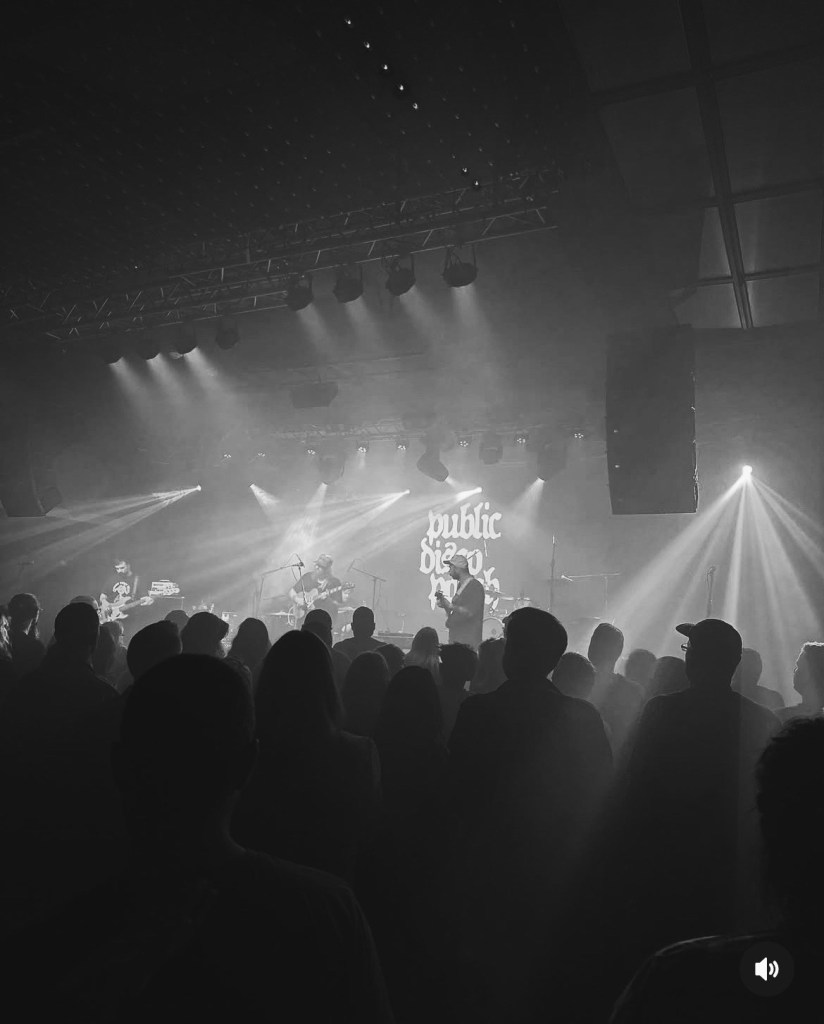
“That visual juxtaposition has been really exciting to play with,” he said. “You can be these characters in the moment of a set. It is very genuine – I want to play the violin as much as I want to play the guitar. But sometimes it’s harder to emote anger or frustration with a delicate wooden instrument than to kind of beat the shit out of an old guitar.”
The album’s tone continues its shift with “Transcendence for Personal Healing.”
“It’s a lot more open-sounding and vibey,” McCreary acknowledged. “The whole idea was to instill a sense of acceptance, a little bit more gentle. There’s also this play of the first half of the album being this sort of Old Testament wrath and the second half is a little bit more chill.”
It’s again peppered with nods to Christ: “I am leaving, to learn my name/Is it all wilderness?/Let it consume me.” He says he was “reading a lot of the King James (Version) when I was writing it.”
“When we have all of these different practicing paths of thought, it’s all good when the taxes are paid and Thanksgiving dinner’s out and the family’s around,” he said. “But when some agony shows up, (it’s) ‘well, God works in mysterious ways.’ That for me has been really challenging – that’s the one strand that I’m still pulling, probably even into the records to come.”
It’s a damning of religion, too, when he asks, “Are you bending down to clean the gore … Or still calling for some other morgues/To be filled up in your name.”
“Asking that question is the only other logical thread to pull – we still have wars that are going on that are charged in the name of God, and land disputes,” he said. “I think that these are important things to be talking about, or at least shepherding out to the public sphere, small as it might be.”
The mantra that closes the album, “All of My Body,” nicely reprises one idea from the opener, “Glossolalia”: “say it in your tongue … let me fall out from etymology.”
But it’s really almost a clarification of himself.
“If I am going to condemn – if I am going to point out things and say here’s my take on it, and here are all of the things that I built up as a backbone to feel good about a condemnation – what do I believe in, then?” he said.
“Sitting at that organ, looking out that window. I see the sun as it sets in the summer. Get outside, feel the sun on your face, put your feet into the grass that has as much dominion over you as you have over it. Worshiping something other than yourself. That is us, and Andromeda that hangs above us. That’s what I’m here for,” added.
There have been plenty of other bands who’ve had success tackling the metaphysical, the philosophical – most recently, the ‘90s band Live, who was also from the York area. So if they can sing about the writings of the Indian thinker Krishnamurti and draw listeners, there has to be a wider audience for Public Disco Porch as well.
“I think we would agree, but that really hasn’t been the goal,” McCreary said. “Maybe that will change, but I recognize that it’s a pretty big swing, as far as like we’re making an album, titling an album as such, and then populating it with (the) songs that we just did isn’t the most immediately accessible thing.
“However, with that, I think that when the people that need something like that find it, it resonates on a level that they’re in for the long haul, and it feels like it’s meaningful as much as it is for us. Obviously there might be more people that want to hear a breakup song or something, maybe. I don’t know. I think it’s its own path,” he concluded.


 Heavy Hags
Leave a reply to Stephanie Grauer Cancel reply