By Isabell Köster
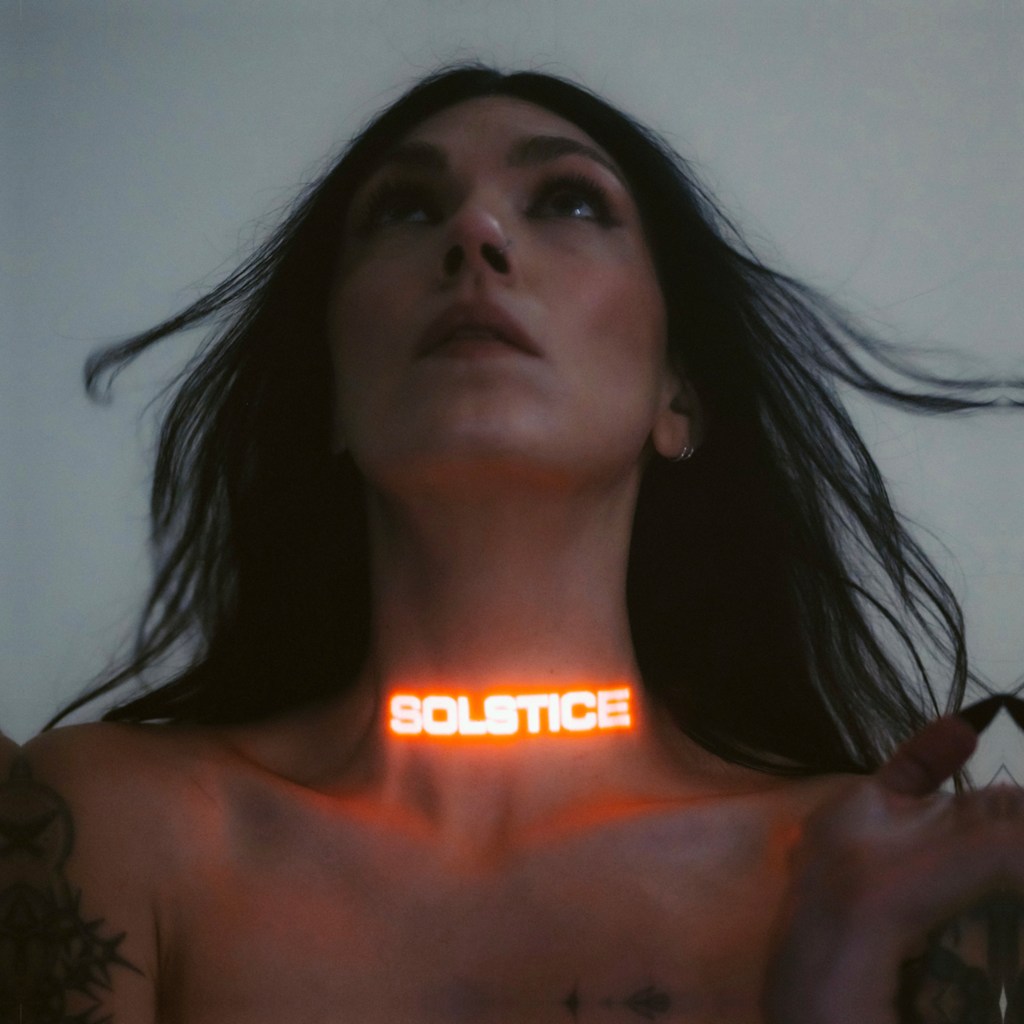
“You can’t have the light without the dark — they are two extremes that are completely different yet intrinsically linked.” On June 5th, English post-rock and dark folk singer/songwriter A.A. Williams unveiled “Solstice”, a sweeping, cinematic record born from the quiet spaces between love, loss, and transformation. From layering her own cello to create towering string quartets to decoding the paradox of freedom on her single “Poison,” Williams takes us behind the scenes of her most ambitious album to date. Here is our conversation about finding balance, learning to sing late in life, and gracefully walking alongside our inner shadows.
Heavy Hags: You have released your third album, “Solstice”, this June. The title naturally suggests a peak moment where light and dark hang perfectly in the balance. When and why did you choose this title?
A.A. Williams: The album title actually came to me very close to the end of everything being finished. Sometimes an obvious title presents itself right from the very beginning, but this one took a long time. I spent ages trying to figure out what I wanted the title to say, because this record is a collection of different songs rather than a strict concept album.
Eventually, I realized it’s a collection of songs about love, loss, and the murky, emotional territory in between. I often feel like I’m on a very slow journey between those two extremes, moving from one to the other and back again. The cycle continues round and round so slowly that you don’t even notice it’s happening most of the time. I really enjoyed the parallel between that internal movement and the physical rhythm of nature— the light and the dark, winter and summer. They are two extremes that are completely different yet intrinsically linked; you can’t have one without the other. I hope it makes sense to people when they listen to the record.
HHs: Does that rhythm of nature or the changing of light directly influence your songwriting process?
A.A. Williams: I wouldn’t say it directly influences the songwriting itself, but there is definitely a lot more hope in these songs than I’ve had on previous records. I think you need the dark, tricky things in life to appreciate that hope, to place more importance on it, and to recognize that you have to care for it rather than just dismiss it. When things are going well, it’s easy to dismiss one bad day out of a hundred great ones. But when you’re struggling and you occasionally get that one good day, it’s a real pleasure. There is more of a silver-lining element to this record. It’s still an introspective, vulnerable, and raw emotional record — as all my records are — but there is a little bit more optimism sprinkled here and there. I hope people can relate to that side of it.
HHs: You mentioned it isn’t a concept album, but do you feel there is still a loose connection or common thread that ties these ideas together?
A.A. Williams: Definitely. When you are the sole songwriter, the songs are naturally going to be linked because they are coming from your voice. Even though the tracks aren’t completely autobiographical, they are heavily influenced by my own experiences and the ways I deal with things. That common thread naturally weaves through everything I do. When you look back at a body of work after creating it, you realize, “Hang on, okay, these actually do fit together as a cohesive set.” But I’ve never sat down at the start and thought, “I’m going to write a whole record about forests today.” I’ve never thought like that. Maybe I’ll try it next time!
HHs: You have a formal background in classical music, but you are very often associated with the post-rock and metal scenes. How do these two seemingly different worlds influence your songwriting today? Do you still think in classical structures when you compose?
A.A. Williams: Not so much in terms of song structure, but definitely in terms of the theoretical framework. That classical training gives you harmonic knowledge and exposes you to a lot of different musical ideas that broader popular music doesn’t necessarily touch upon. It’s more about a way of thinking and utilizing certain composition techniques. I’ve learned music from a very young age, so that theoretical knowledge is just like speaking English to me now — it’s deeply ingrained, and I can’t really separate it from who I am.
Additionally, a lot of classical music is entirely instrumental. Because of that background, I’m very comfortable writing long instrumental sections. I genuinely enjoy developing them; it’s never a case of just throwing in a melody as an afterthought. There has to be development, movement, and a journey. I treat the instrumental parts with just as much importance as the vocal sections, ensuring everything gets the thought, care, and time it deserves. Maybe my background helps me pay a bit closer attention to those details. Who knows, maybe I’ll make a fully classical record one day.
HHs: On the record, you sing, play guitar, and play piano. Are those all the instruments you handle, or do you do even more?
A.A. Williams: I’m actually a cellist as well — that used to be my full-time job! Every single string part you hear on “Solstice” is just me layering the cello up in the studio to create my own little string quartet or octet, which is something I also did on “Forever Blue”. When you have a tool like that at your disposal, it’s wonderful to use it.
This style of music is quite cinematic, so it really lends itself to those big, sweeping lines, as well as the very intimate textures you get from strings that a guitar can’t quite replicate. You can probably hear that best on “Hold It Together,” which came out a couple of months ago. There are some very simple string arrangements accompanying the voice in the softer parts of the track. To me, strings feel incredibly human and organic in their delivery, much like an acoustic guitar or the human voice itself. Being able to play with those different textures is a fantastic creative outlet. If you can do it, why not?
HHs: It sounds like you handle almost everything yourself. Are there other musicians involved in the recording process?
A.A. Williams: Thankfully, yes! You have never heard me try to play the drums, and trust me, it is very bad, so we should all be grateful someone else handled that. My live band actually plays on this record. My drummer Wayne is on it, and my guitarist/keyboard player Matt produced the album, while also playing bass and some guitar tracks. It was really nice to have the exact same team working together off-stage as we do on-stage.
HHs: Was that a shift from how you recorded your previous albums?
A.A. Williams: Yes, the previous records featured a completely different personnel and a different team. This felt like a lovely opportunity to try a slightly different approach to gluing the instrumentation together. I’ve worked with Matt on stage for years, and we’ve always shared a massive amount of common ground regarding the music we enjoy and the art we want to make. When you work with someone for that long, it’s vital that you trust them enough to tell you when something is bad. You don’t just need people who constantly tell you everything you do is amazing; you need someone who will look at you and say, “No, that’s terrible. Make it stop.” Constructive criticism is absolutely essential if you want to keep developing as an artist. That mindset might also be a classical musician thing, because when you are training classically, you receive a massive amount of criticism constantly. It’s entirely about pushing you further.
I remember my cello teacher was fiercely committed to making me better; she absolutely refused to settle for mediocrity. She saw a seed in her students that she wanted to nurture, bloom, and grow. If you managed to get a “well done” out of her two or three times a year, it felt like the biggest, most monumental achievement ever. If a teacher tells you you’re great all the time, you stop pushing yourself. You need people around you whose praise really means something, otherwise everything just devolves into nonchalance and mediocrity, and I definitely don’t want that.
HHs: When you sit down to write a new piece of music, where does it usually begin? Is it sparked by a visual image, a specific sound, or a chord progression?
A.A. Williams: I actually keep a couple of running notes in my mobile phone that are just full of individual words that sound pleasing when spoken. For songwriting, it’s not just about how a word looks written down on paper; it has to physically sound good when sung. Sometimes those words don’t even mean anything specific initially, but I’ll flip through them to get a little creative prompt to start the process.
Usually, I’ll start with a small melody. There isn’t much of a visual trigger for me. Often, I’ll come up with a single line in response to a situation I’m dealing with, and if I have the time, I’ll workshop it right then and there. If I’m busy, I just throw it into my phone notes or record a quick snippet in my voice memos. Whenever I have free time to just sit down, play, and step into that creative space, I immediately hit record the second something interesting happens. Then I forget all about it.
When we’re out on tour and I’m sitting in the back of the van, I’ll go through all those old memos and make notes of which ones contain the best ideas. That acts as my starting point. You start expanding on one of those moments, a completely new idea sparks from it, and suddenly you have a song. It means I’m never starting from absolute zero; there’s always a little creative pot of ideas to draw from, which is a really comforting thing to have.
HHs: Did you always sing, or did finding your vocal voice come later when you transitioned away from purely classical music?
A.A. Williams: Singing came much later. Growing up, I was incredibly shy. The mere idea of public speaking was completely horrendous to me, so the thought of singing into a microphone in front of people was totally out of the question. Realistically, I actually picked up the guitar, started learning to write songs, and began learning to sing all at the exact same time. I was using songwriting as a practical way to explore and learn the guitar. In the process, I would just hum along to get a feel for what my voice could do, learning not to be afraid of what it sounded like and figuring out where its boundaries were. As my confidence grew with the writing, it boosted the singing, which boosted the guitar playing. It all fed into each other. I’m certainly not done developing; I still want to improve across all three of those areas.
HHs: Did you find yourself pushing your vocals into any brand-new territories on this specific album?
A.A. Williams: It’s interesting, because from a purely technical range perspective, I think without serious intervention from a vocal coach, I’m not sure I can physically get my voice to go any higher or lower than it already does. I’m not classically trained as a vocalist and I don’t know the science behind voices; I just know what feels comfortable and what my voice is capable of executing. When I’m writing, I don’t mind if a vocal line is tricky and requires a lot of practice, but if I physically cannot execute it, I won’t write it. I always write within the boundaries of what I can actually deliver live.
Where I did vary things on this record was in the delivery, the emotional intensity, and the deep intimacy of certain sections. But as far as pushing the outer edges of my physical range goes, I haven’t really explored that. Maybe a brilliant vocal coach could do some serious damage with me one day, but for now, I’m still in two minds about whether I’d even want to alter that.
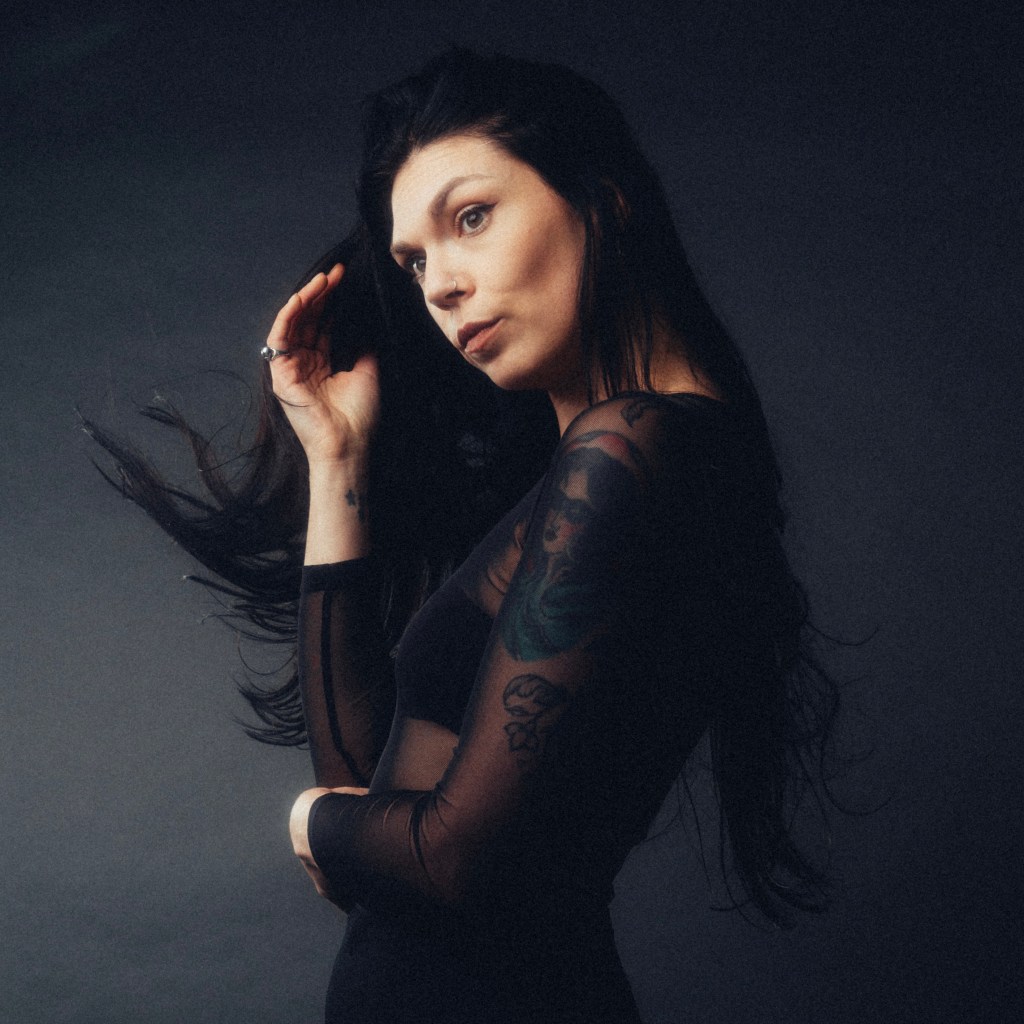
Photo: © 2026 Jake Owens
HHs: Was there a specific artist or a particular album from your youth that fundamentally shifted the way you looked at music?
A.A. Williams: Oh my gosh, so many. If we set aside the gradual discovery of heavy music — which was a massive, life-changing exploration for me in its own right — and look at a single, defining album, I would have to choose either Radiohead’s “OK Computer” or Placebo’s “Without You I’m Nothing”.
Until I heard those records around the age of 14 or 15, I didn’t realize music could express emotion in that specific way. It captured this intense sense of yearning and longing, but not in a sappy, radio-friendly way — it was introspective, introverted, and beautifully cold. Hearing that level of vulnerability and raw communication blew me away, and I completely lapped it up. I remember the first time I heard “Exit Music (For a Film)” and I honestly just didn’t know what to do with myself. When I was younger, most of the emotional music I had been exposed to consisted of sappy love songs sung by women on the radio. I had never experienced that specific kind of raw, fragile vulnerability in a male vocal delivery and text before, and those two albums made a massive difference to me.
HHs: Ahead of the album release, you’ve put out the singles “Hold It Together,” “Wolves,” “Just a Shadow,” and most recently, “Poison”. If we view these tracks as a sequential journey, where are they leading the listener?
A.A. Williams: I think they are a really great representation of some of the entirely new musical ground I’m exploring on this record. Tracks like “Poison” and “Just a Shadow” show a slight movement toward a dark, slightly gothic, 90s-esque alternative feel. I don’t entirely know how to classify it, but I wanted to lean into different directions and expand my musical vocabulary rather than completely shift my sound.
On the other hand, “Hold It Together” represents the softer, more delicate side of the record. But it also shows that I’m completely unafraid to let a track dissolve into a wild, space-dream sequence at the end. It’s actually one of my absolute favorite songs on the album. I love that it establishes itself as a very delicate, gentle ballad, and then completely shifts into something entirely unexpected for its final three and a half minutes.
On this record, I didn’t feel restricted by traditional pop structures. I didn’t mind making a track seven minutes long simply because I wanted to and because it made the most artistic sense for the source material. It’s not out of self-indulgence; I tried other structural options, but this was the format that allowed the song to speak best. There is a general expansion of boundaries across the music, the text, and the lyrical content. I’m incredibly proud of that willingness to try new things without fear.
HHs: That ties in beautifully with how you described “Poison” — learning not to fear freedom. Can you elaborate on that concept?
A.A. Williams: Exactly. It’s like standing right on the edge of a cliff and looking down; you know for a fact that it is better down there, you are absolutely certain of it, but that doesn’t stop you from being utterly petrified of taking the leap. Sure, sometimes you take a risk and it turns out to be the wrong thing to do — we’ve all been there — but eventually, you have to act. You can’t just sit on the edge forever staring at the thing you desperately want, whether that’s freedom, a new life situation, or a person. You have to do something. “Poison” is about that incredibly fine line between standing on the edge and taking a plunge that is ultimately good for you, balanced against the risk of pushing things a bit too far into something unhealthy. For me, life is just this constant, perpetual spinning of plates and trying to find that perfect balance, which I think most of us are trying to do. “Poison” is an exploration of that freedom.
HHs: The music video for “Poison” is visually stunning and very gothic — featuring heavy fuchsia and purple smoke, barbed wire, and imagery of insects. How did that visual concept come together?
A.A. Williams: It was a really fascinating process. When I first sent the finished album to my record label, they immediately asked what the visual concept, the album cover, and the single promos were going to look like. I honestly had no idea initially. I spent about a week sitting in my local coffee shop just staring at my laptop trying to figure out what this album needed to look like visually.
As a starting point, I decided to color-code the songs. If you look at our social media campaigns, “Poison” is assigned a bright fuchsia/purple, “Wolves” is blue, “Just a Shadow” is orange, and “Hold It Together” is green. I wanted a completely distinct set of promotional pictures for each individual single so that we could clearly differentiate them. Usually, bands take one set of album photos and pump the exact same images out for six months, which means audiences don’t realize when new information or a new song is being delivered.
From there, I wanted to collaborate with a different video creator for each song. I created a unified creative brief that I gave to everyone, outlining the specific color, objects, and textures tied to each track. For example, “Poison” was assigned barbed wire, thorns, and a scorpion, while “Just a Shadow” was paired with a dagger. I gave these abstract elements to the creators as a springboard and let them run wild with their own interpretations.
The treatment sent over for “Poison” by a production group called Group 13 was absolutely perfect — brilliantly mad, full of neon lights, thorns, and barbed wire. I flew out to Wrocław, Poland, where they are based, and spent an incredible day shooting my parts in a warehouse full of barbed wire and neons. They edited it incredibly fast, and I had the finished video within four or five days.
HHs: Did you actually have to work with real creepy crawlies, like a live scorpion, for those shots?
A.A. Williams: No, thankfully there were no real creepy crawlies involved! It probably would have been quite fun, but you quickly run into an absolute health and safety nightmare the second you try to bring live bugs onto a video set.
HHs: You mentioned the dagger motif for “Just a Shadow,” and I noticed that exact dagger design is featured on your new merchandise shirts. Is it all tied to that same creative brief?
A.A. Williams: Exactly. The merchandise was designed by an amazing artist named Paul Abraham, who runs the studio and also handled the entire physical layout for the album. He was given the exact same color-coding and object cues. I had never approached an album release like this before; I was entirely making it up as I went along, but I really loved the results. It allows each single to feel like its own standalone piece of art, and then when the full album drops, they all glue back together and make perfect sense as a whole.
HHs: Lyrically, what is the core theme behind “Just a Shadow”? Who are you speaking to in that song?
A.A. Williams: In a lot of my music, the lyrics use a lot of “I” and “you,” but the “you” isn’t actually another person. “Just a Shadow” is actually a direct dialogue with another element of myself. It’s addressing this darker, melancholic part of my personality that has literally always been there since I was a child. I’ve never been a naturally bubbly, happy-go-lucky person; I’ve always carried that deep streak of sadness and melancholy.
The song is about learning to coexist with that side of yourself, managing that internal balance, and adapting to a part of your mind that you might not particularly like, but which is fundamentally a piece of who you are. Even though you don’t love that melancholy, you find yourself wondering what it would be like if it suddenly vanished entirely. You think, “Maybe life would feel weirder or worse without it? At least this darkness is familiar.” It’s a song about the delicate balance between the rational, logical, happy part of your brain and that sorrowful sister living inside that you carry around every single day. It’s about learning to walk alongside it.
HHs: After stepping off a massive tour or finishing an intense studio recording session, how do you successfully recharge your batteries? What does true “stillness” look like for you?
A.A. Williams: When I first finish a tour and get back through my front door, those first two days are a complete write-off; I am usually so thoroughly exhausted that the time is just a total blur of sleep. Once I finally emerge from that fog, I find real pleasure in the simple, quiet, boring little things.
I absolutely adore being at home, spending time in my own little personal space, and curating it exactly how I want it to be. Someone once pointed out to me that the reason I love being home so much is probably because I’m away touring so often; if I worked a regular job and was stuck in the house all day every day, I’d probably get bored. But for me, it’s a sanctuary.
When I’m not on tour, stillness means immersing myself in music. Ever since I was a kid, one of my absolute favorite things to do is go out for long, multi-hour runs with my headphones firmly on, completely losing myself in records. I love exploring and finding music that is new to me, stepping outside of my own working headspace, and just luxuriating in the incredible albums other people have created.
HHs: What are your touring plans for the rest of the year? Will we see you back in Germany, especially in Hamburg, soon?
A.A. Williams: I would absolutely love to put together a full headline tour for the rest of the year to properly showcase all these new album tracks. On festival lineups and support slots, you are always strictly limited by set lengths, so you can’t play as much of the new material as you’d like.
As for Germany, I was actually a bit annoyed that our tour back in February didn’t manage to hit Hamburg. I absolutely love playing in Germany, and I have some of my fondest touring memories from Hamburg shows — like when we supported Mono at Uebel & Gefährlich, which is one of my absolute favourite venues to play. You can’t hit every city every single time, but I will definitely be back in winter, supporting the wonderful Chelsea Wolfe.
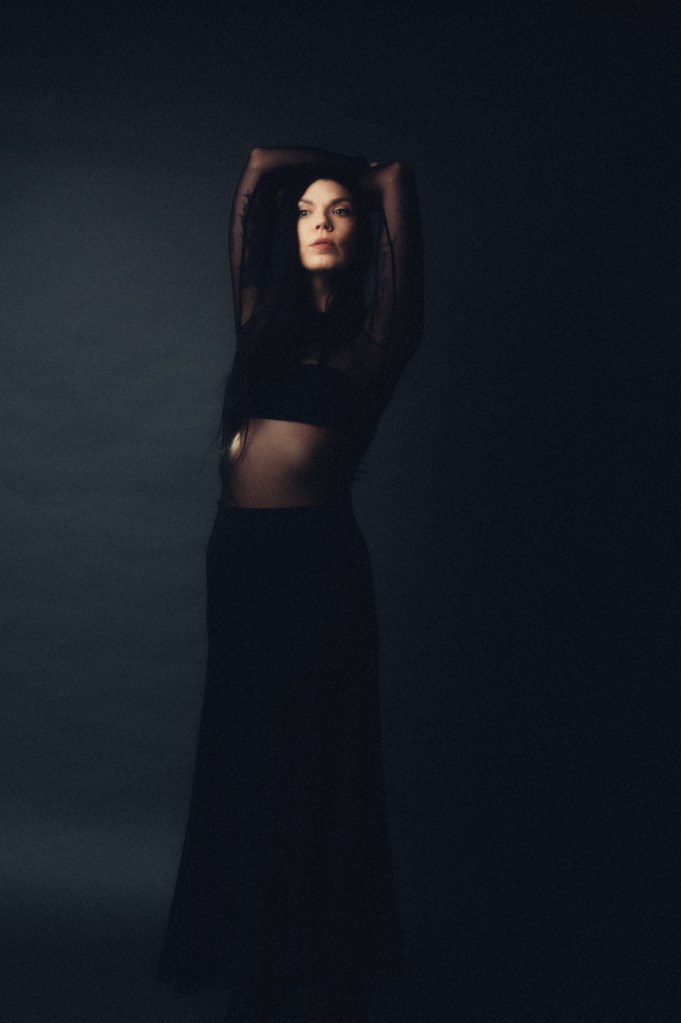
Photo: © 2026 Jake Owens


Leave a Reply