Getting started can be the hardest part.
Success is earned, one step at a time. One of the most invaluable skills a person can have is being able to clearly express what it is they want.


-
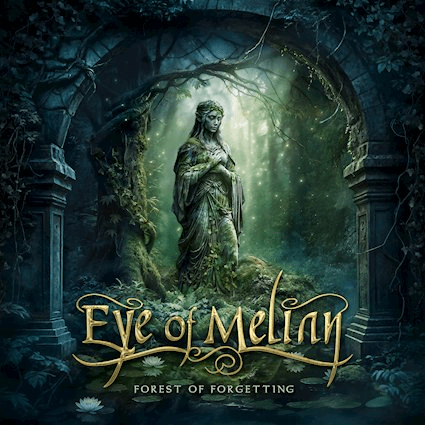
Eye of Melian, “Forest of Forgetting”
By Kira L. Schlechter
That endless font of musical inspiration, J.R.R. Tolkien, just keeps on inspiring – case in point, Eye of Melian and their dramatically dreamy debut Napalm Records effort, “Forest of Forgetting.”
The project’s name is taken from Melian, a singing spirit from the British author’s novel “The Silmarillion.” The band itself is a partnership between Martijn Westerholt of Delain (keyboards and orchestral arrangements) and singer/violinist Johanna Kurkela of Auri and also features Westerholt’s wife, Robin La Joy, on backing vocals and Mikko P. Mustonen on keyboards and orchestral arrangements.
Guest spots come from Patty Gurdy on hurdy-gurdy and Nightwish/Auri multi-instrumentalist Troy Donockley, giving tracks like “Elixir of Night” that Celtic feel that meshes so well with anything Tolkien-related.
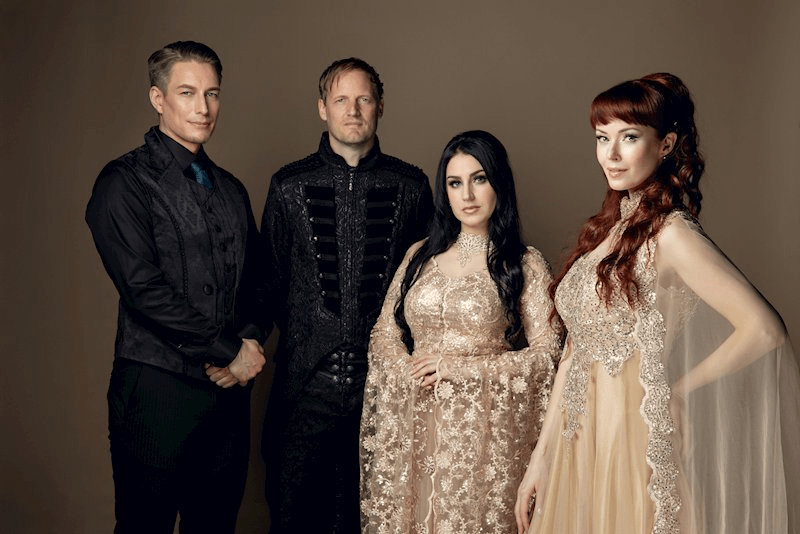
Photo credit: Tim Tronckoe
Johanna said in emailed responses to questions that the idea for the band came to Martijn as he “dream(ed) of another project to channel a more ethereal realm of music.”
“His wife Robin came up with the name, inspired by the character Melian … beautifully described as possessing the gifts of wisdom, beauty and magical singing,” she said. “We all love Tolkien’s world dearly, but it is our Mikko and Robin who take the cake in remembering all the tiniest of details about all its places, happenings, and characters.
“Even though our music is heavily inspired by the works of Tolkien and deeply resonates with the otherworldly energy of the elves, Eye Of Melian still stands alone as an entity of its own. At the core of our music lies deep appreciation, love, freedom, friendship, and (the) trust we share with one another. This is a labor of love. A connection from one heart to another, weaving bridges between hearts of kindred spirits all over the world,” she explained.
The album’s songs aren’t necessarily tied to “The Silmarillion” per se, she said.
“Lyric-wise, our songs are entirely their own entities.” she said. “Sure, we draw a lot of inspiration from Tolkien’s books, but none of the songs are strictly tied to any one story or character.
“In my own lyrical works, I always love to follow a theme that feels somehow current and personal to me. I find lyric writing a very cathartic process, opening doors to self reflection, release, and self discovery,” she added.
Johanna talked about some of those songs, like the opening track, “Of Willows and Shadows,” which acts very much like an introduction, like asking us to gather round and listen. It sets the stage and the imagery to come.
“What happened, happened very organically,” she said. “I love how there are many ways of interpreting music. That is the beautiful magic of it. It always invites the listener on a personal journey.
“The way I sing is the same. It is not so much the mind working to get to a certain outcome, but rather the body channeling out what the music stirs inside,” she said.
“Child of Twilight” was a track that stemmed directly from Tolkien’s work with its mention of “Lomion,” a reference to the character Maeglin. It’s an urging to “lift your gaze from your scars,” to stop living in the past and focusing on pain, and to “become the love you seek.”
“I found the story of Maeglin very inspiring – it provided the song title, the theme, and a starting point for the lyrics,” Johanna said. “But, again, as with any art, the lyrics are only loosely tied to this specific character.
“The character Maeglin serves as a universal archetype, providing a sort of mirror for a more wider, deeper inspection of these themes in each listener’s life. All human suffering happens in the mind. The lesson of learning to love oneself and others through the kind of love that sets you free is something all of us here as souls are faced with in one form or another,” she said.
“Blackthorn Winter” is a term to describe a spell of cold weather in May in rural England, and the song from which it takes its title seems to be a plea to send winter (with its “white callousing air,” a great phrase) back where it belongs. It also features several lines in Johanna’s native Finnish.“The lyrics for (this) song actually started unraveling for me from the Finnish word ‘takatalvi,’ which means ‘a returning winter,’” she said. “This song holds a very special meaning. Living in Finland, with snow, cold, and bleakness covering the land for the vast majority of each year, one cannot but be affected by its energy.
“To me, winter also represents the stagnant energy in life, when our passions are put to the test and made to wait for their most optimal time of bloom. The gift of winter is a teaching of trust and patience, that there is a divine timing for everything,” she added.
“Lady of Light” seems to depict a character on a quest, a journey through the Golden Wood, one who is beseeching said lady in prayer for safe travels. It was written by Robin, but the song makes Johanna think of Tolkien’s Lady Galadriel, she said.
“She is one of the inspiring, ever-graceful energies I try to channel in life when times get really hectic,” she said.
A question about the track “Dawn of Avatars” had Johanna take a metaphysical turn in her response. While it seems to be a wish for simpler times, it also may be a longing to return home after years of “aimless wanderlust.”
“This song indeed represents a mysterious longing to experience our unnameable universal home, the source of life we are all made of,” she said. “At the end of the day, we are all only brief visitors here on planet Earth. Ephemeral avatars. Where our true home lies, our human brains find hard to grasp.
“As humans, we often live in a trance-like state of dualities, suffering, and illusions, when in reality, everything is only energy, originating from stardust, manifesting itself in different ever-changing and evolving shapes and dynamics,” she said.
Keeping in mind what she called the “wider perspective of our human existence, ‘the home where we belong,’” she said, helps her ‘live my life more meaningfully, more freely, without getting too attached to things of no consequence – not even our own ephemeral earthly avatars, not who we think we should be or what we think we should do in life.”
“We have already arrived,” she concluded. “Irrevocably connected to all of life with each inhale and exhale. I find that thought endlessly reassuring and empowering.”
The title track then follows perfectly, that idea of finding a place of solace where you can forget all your woes. And “The Buried Well” continues that theme with a really lovely metaphor – the physical digging up of the well described in the track corresponds with the “excavating through my despair and dismay.”
“I really love this song and Robin’s beautiful lyrics,” Johanna said, “And the end conveys such a strong energy of hope and empowerment, doesn’t it! Life is always working out in our favor in the end, even at times when it least seems like it. Every challenge is like a new teacher that comes bearing gifts we need to take the next step in life.”
“Forest of Forgetting” ends with a cover of “Tears of the Dragon,” from Bruce Dickinson’s solo album, “Balls to Picasso.” Its message of letting go and letting yourself feel resonated with Johanna.
“This song was actually introduced to us by Mikko,” she said, “We were looking for a legendary heavy metal song to cover and when Mikko pitched (it), we knew we had found a winner.
The melody is absolutely beautiful and the lyrics, as you mentioned, convey a deep sense of release and healing. ‘The tears of the dragon for you and for me’ land, as if granting us all a permission for even the hardest facades to crumble and be vulnerable. It is this very epiphany: the key to true strength lies in all of us,” she added.
Johanna says Eye of Melian has just signed with Napalm Events; they have a series of shows booked in Finland this spring and are “currently in the process” of booking more.
“After that, (we) are looking forward to sharing live music magic with kindred spirits also elsewhere,” she said. “As soon as we have solid dates and venues confirmed, we’ll be announcing them on our socials. So stay tuned!”
-
A conversation with Danheim
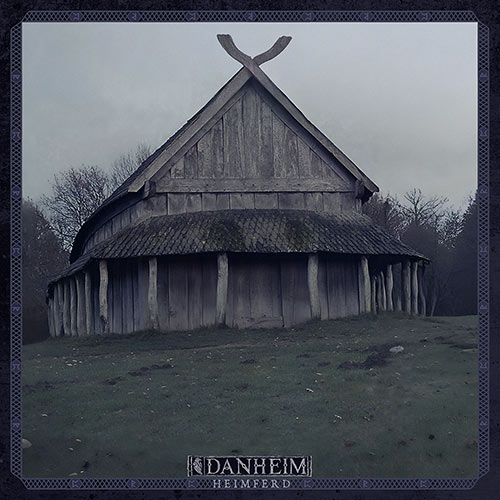
Hailing from the heart of Copenhagen, Danheim is the brainchild of Reidar Schæfer Olsen — a music producer who has spent ten years mastering the intersection of ambient soundscapes and ancestral echoes. Through Danheim, Olsen explores the shadows of the Viking era, channeling the grim beauty of Nordic mythology and Danish folk tales. The result is a hauntingly authentic experience that bridges the gap between ancient history and modern electronic craft — with music featured in multiple seasons of the popular TV show Vikings. We recently caught up with Reidar to dive deeper into the dark, folkloric world he has created.
HH: You mention the album evokes “a return to something older and deeper.”
What does that “older and deeper” mean for you — is it cultural,
spiritual, or emotional?
For me, it’s about reconnecting with the parts of us that existed before
we started over-complicating life. The older and deeper is something
beyond language, something instinctive ancient, and human. Its cultural
in the sense that it reaches back into shared memory, and spiritual
because it reminds me that we´re all connected through that same pulse.HH: You’ve described “Heimferd” as being guided more by instinct and
atmosphere than a fixed mythological story. What was it like to compose
from intuition rather than from legend? And is there still an underlying
motif that connects the songs?
To be honest, I often compose by instinct, but maybe this time around a
bit more even. Instead of building around a story, I let the sound
itself tell me where to go through imagination. There is still a thread
running through everything, but its more emotional rather than
mythological. The motif is movement, discovery traveling through
darkness toward a sense of belonging.HH: “Stormdans” and “Yggdrasil II” seem to bookend the album’s energy. How
do you see these pieces relating to each other within the overall
journey?
Stormdans is movement and a bit of chaos and just letting go – the dance
before the calm. Yggdrasil II is the reflection that follows, like roots
reaching downward after the storm has passed. Together they close the
circle, one beginning the journey, the other grounding it.HH: Was there a particular challenge or breakthrough moment while producing
the album?
I wouldnt say there was a single breakthrough or major challenge this
time. There is always a bit of uncertainty at the beginning – wondering
how a piece will start, where it will end, and if the flow will feel
natural. But once I give it space and allow my mind to wander, things
usually take shape on their own. The music finds its direction when I
stop forcing it.HH: How would you describe the album musically, compared to its
predecessors?
Its more varied in mood and texture than my previous albums, and maybe
more about tone and emotion. But I also touch on new themes – for
example, “Brenhin Llwyd” steps outside the usual Norse framework and
draws from Welsh mythology. It still belongs to the same atmospheric
world, but it adds another shade to it, a reminder that these old
stories and feelings exist across many landscapes, not just the Nordic
one.HH: Do you see “Heimferd” as a continuation of your earlier work, or as a
new chapter exploring different territory?Definitely as a new separate chapter, with a different/varied pace. I
see all my albums as connected in some way through Norse mythology and
my imagination of those times. But Heimferd feels like pausing to look
back before moving forward again.HH: How does your understanding of Nordic heritage shape the way you compose
and produce music today?
It reminds me that sound was once something sacred – a way to connect
with people, ancestors, and the unknown. That perspective keeps me a bit
grounded, I think. I approach music as something special, something that
can carry meaning or tell a story.HH: Finally, if “Heimferd” were a place, what would it look like? What would
we feel standing there?
It would be open and quiet, like a sunlit meadow in the rolling Danish
landscape, with a main wooden hall glowing with firelight inside and
smaller Viking houses scattered around. You would feel the cold in the
air and warmth in your chest. That mix of community and belonging, and
calmness after a long journey.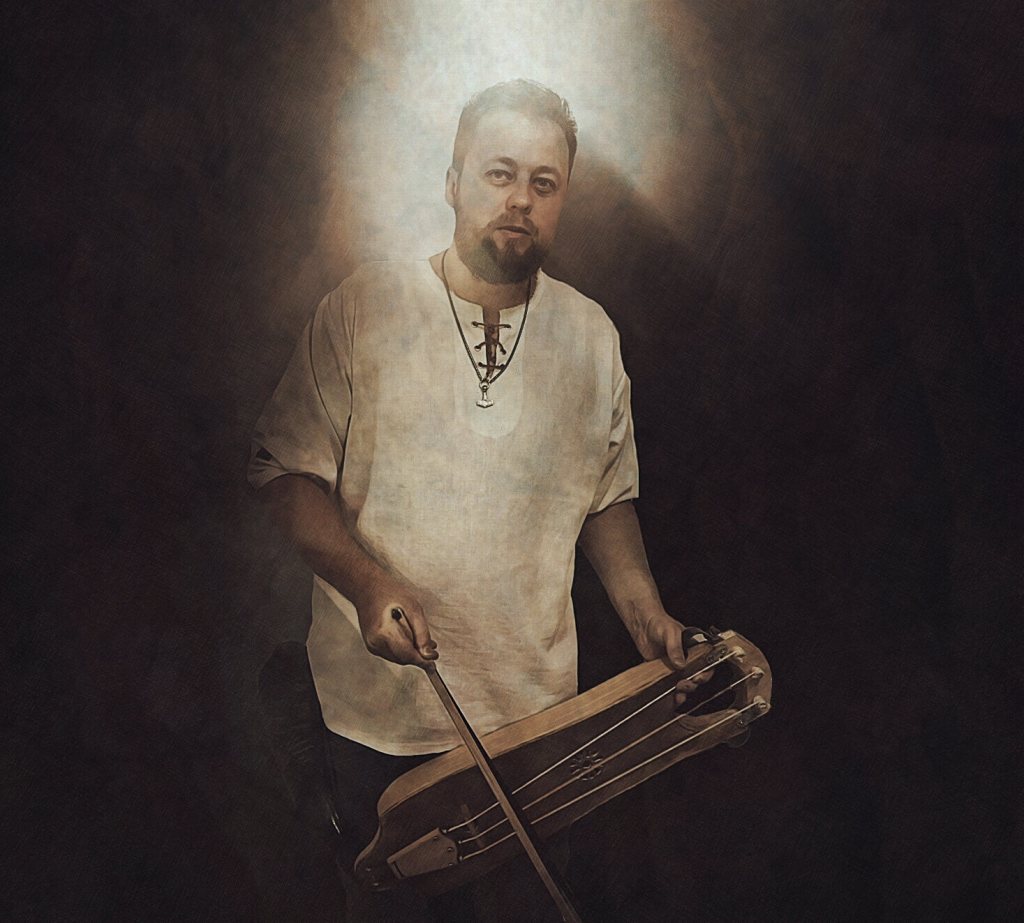
Photos: © Reidar Schæfer Olsen
-
Top 5 Albums of 2025
As we stand at the end of 2025, the landscape of heavy & dark music feels more vibrant and diverse than ever. A ritual of reflection: Our year-end standouts.
Kira L. Schlechter’s Top 5 Albums of 2025 (in no particular order):
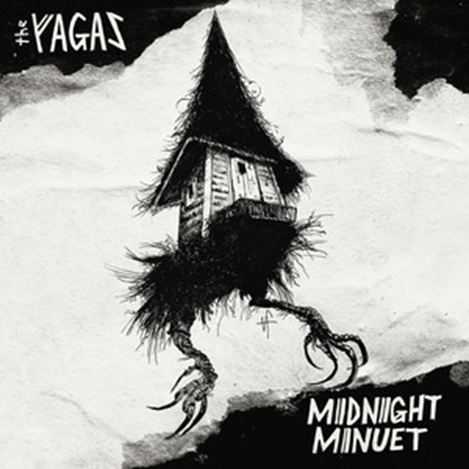
- “Midnight Minuet” by The Yagas: After teasing us all of 2024 with one spectacular track after another (beginning with the unforgettable “The Crying Room”), this enigmatic band led by actress Vera Farmiga at last delivered the entire set – one in which the deep cuts were just as stellar as the singles. Haunting and deeply personal and simply gorgeous.
- “The Spectrum of Human Gravity” by Hellfox: The fabulous lead single “Seaweed Braids,” which I had on repeat all year, was just the beginning of this markedly mature sophomore effort by the young Italian quartet. Thoughtful, introspective, and fiercely intelligent, these women have a really bright future ahead of them – some tour needs to pick them up as an opener ASAP.
- “Opus Noir Vol. 1” by Lord of the Lost: OK, I’m way late to the party (or behind the curve, or whatever euphemism you’d care to apply) on this veteran band that hails from my partner’s very hometown, but their mix of industrial, goth, and metal (with liberal lashings of Depeche Mode and pop) grabbed me with“Bazaar Bizarre” and solidified its hold throughout this solid first part of an upcoming trilogy. “Vol. 2” was just released in December; look for our upcoming interview with LOTL in the new year.
- “The Dark Tetrad” by TULIP: Just the first four songs of more to come in what will also be a three-parter by the Texas-based progressive symphonic metal band, these collaborations with artists as varied as booming alto Kristin Starkey and rapper Shaolin G are as complex and challenging as everything we’ve come to expect from Ashleigh Semkiw and husband Colin Parrish. Get there early and catch them in a short run of U.S. and Canadian dates in February with Seven Spires and Ad Infinitum.
- “Fast Lane” by Vulvarine: Full-on fiery feminist furor by these Austrians, filled with pointed, snotty tracks like “Equal, Not the Same” and “Fool” and sultry, moody ones like “Polly the Trucker” and “Dark Red,” this was a raw, rattling joy. Singer Suzy Q might have moved on, but these songs were delicious regardless of personnel.
A little aside on this one: Ashleigh and Kristin, together with newly announced Battle Beast frontwoman Marina La Torraca, were responsible for the song I couldn’t get enough of this year: a cover of the “K-Pop Demon Hunters” theme, “Golden.” What a banger of a track!
Isabell Victoria Köster’s Top 5 Albums of 2025 (in no particular order):
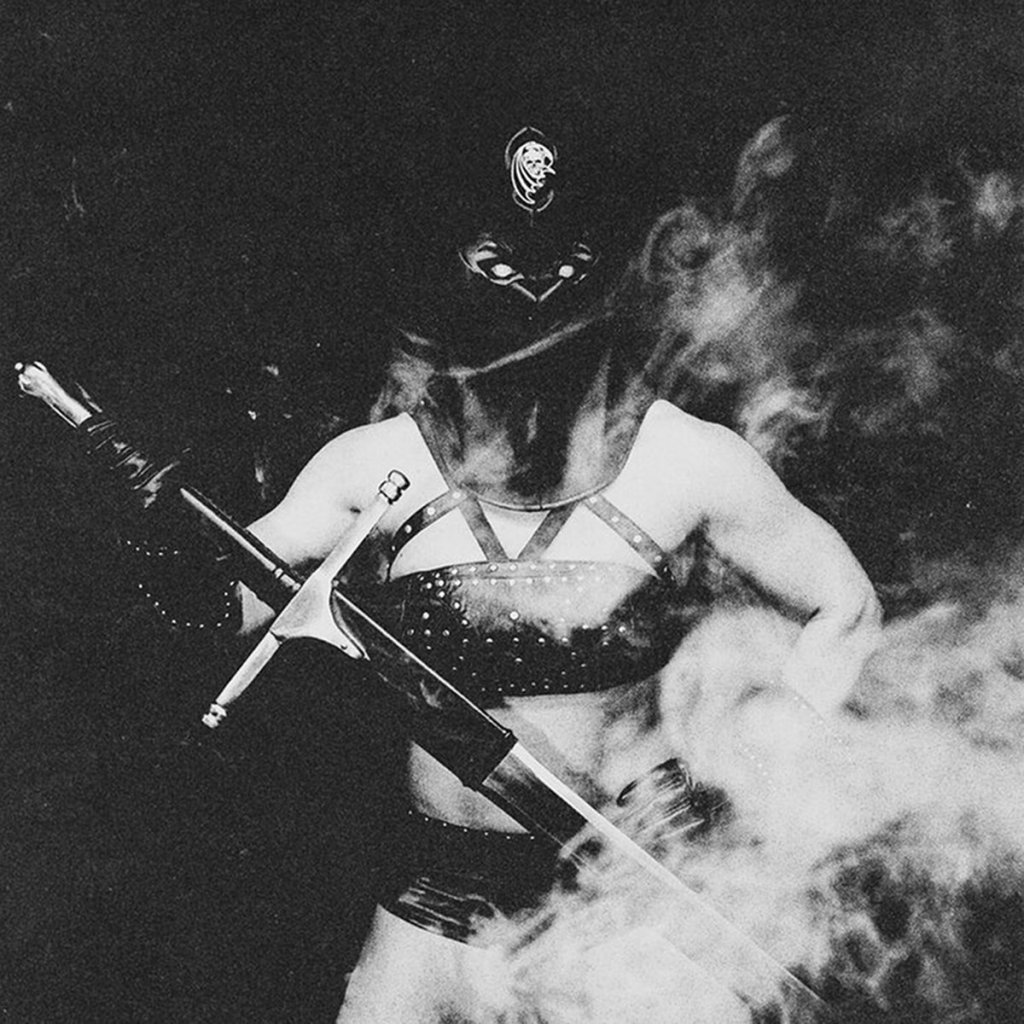
- “Sanguivore II: Mistress of Death” by Creeper: The English rock band stands out for their exceptional musical talent and captivating storytelling. As Creeper’s frontman, Will Gould, explains, the album’s narrative “follows a vampire rock band on a tour filled with violence and excess.” Their fourth album is a musical triumph, reminiscent of the styles of Jim Steinman and the Sisters of Mercy. From start to finish, it showcases epic rock with a rich goth flavour at its finest. Must listen: “Headstones” and “Razor Wire”!
- “Sorrows” by Cwfen: This Glasgow-based doomgaze band, led by the charismatic Agnes Alder, has been one of my most exciting discoveries of the year. Their feminist anthem “Wolfsbane” captivates me each time I hear it, with its intense, pulsating energy and empowering message of female strength and sisterhood. I’m looking forward to (hopefully) seeing them live with Paradise Lost in February 2026.
- “Heretics & Lullabies” by Frayle: Led by the exceptional Gwyn Strang, the Americans have once again channeled their ‘witchy,’ ghostly doom into a magnificent new album. While tracks like “Walking Wounded” and “Heretic” are standouts, the mischievous “Boo” is equally captivating. I was also fortunate enough to witness one of their spellbinding live performances in an intimate setting this year.
- “A Thousand Little Deaths” by Blackbriar: While their debut “The Cause of Shipwreck” remains a personal favourite for its unrivalled tracks like “Lilith Begone”, Blackbriar’s third album is just as enchanting. Its seamless fusion of gothic and symphonic metal shines in “Bluebeard’s Chamber” and “Floriography”, creating a hauntingly memorable listening experience, driven by Zora Cock’s ethereal vocals.
- “Howl” by A Tergo Lupi: Italian duo Fabio Del Carro and Camilla Margherita Ferrari masterfully weave dark neofolk atmospheres with industrial undertones in their latest album, “Howl”. It is a profound invitation to immerse oneself in nature, ritual meditation, and deep introspection. As the artists share on their website, the record “arises from the darkness of our anguish and the indispensable search for light… it is our catharsis.” This is music in its purest form. For the full experience, the tracks “Irae” and “Furia”-and their accompanying videos – are essential viewing.
For me, the definitive collaboration of the year has to be “End of You”. It’s a vocal masterclass featuring three of metal’s most impressive women: Amy Lee, Poppy, and Courtney LaPlante. Their combined energy is unmatched, and they truly deliver a knockout performance.
And 2025 was the year the Hags finally met face to face! I traveled to Isabell’s lovely hometown of Hamburg in June, and we had a wonderful time! From a seafood dinner along the Elbe River, to a stroll around town, to an evening of wine and pass-the-remote metal videos, it was an unforgettable, but too brief, visit. I’ll be back – up the Hags!
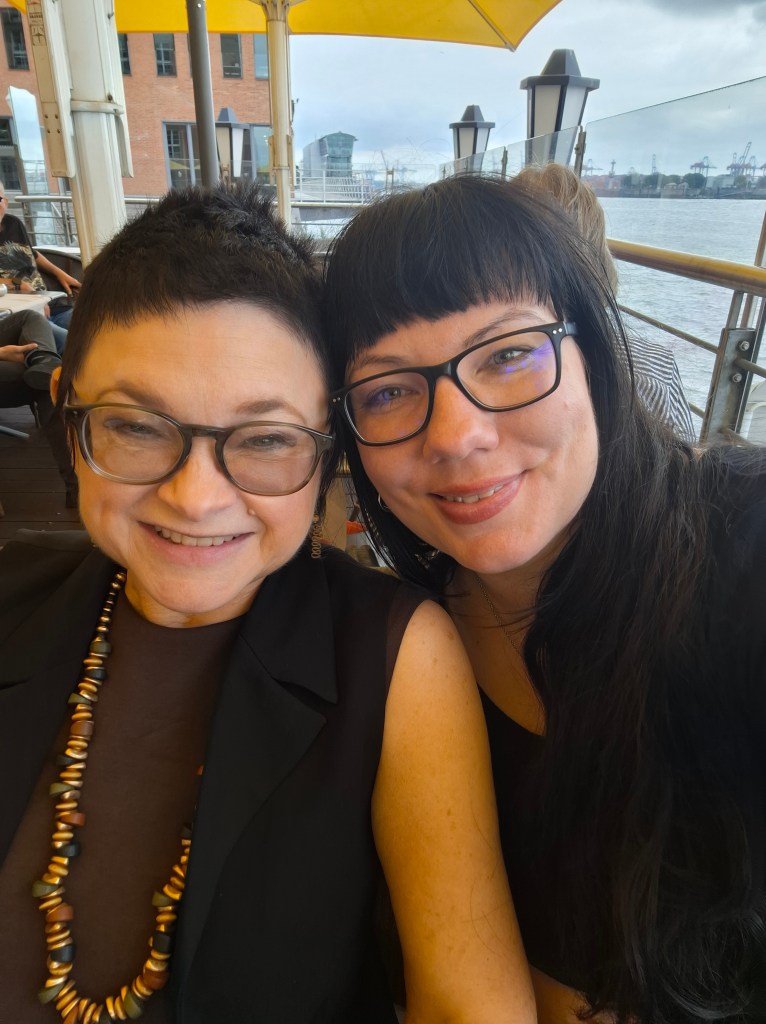
The Heavy Hags: Kira & Isabell
-
Solar Sons, “Altitude”
By Kira L. Schlechter

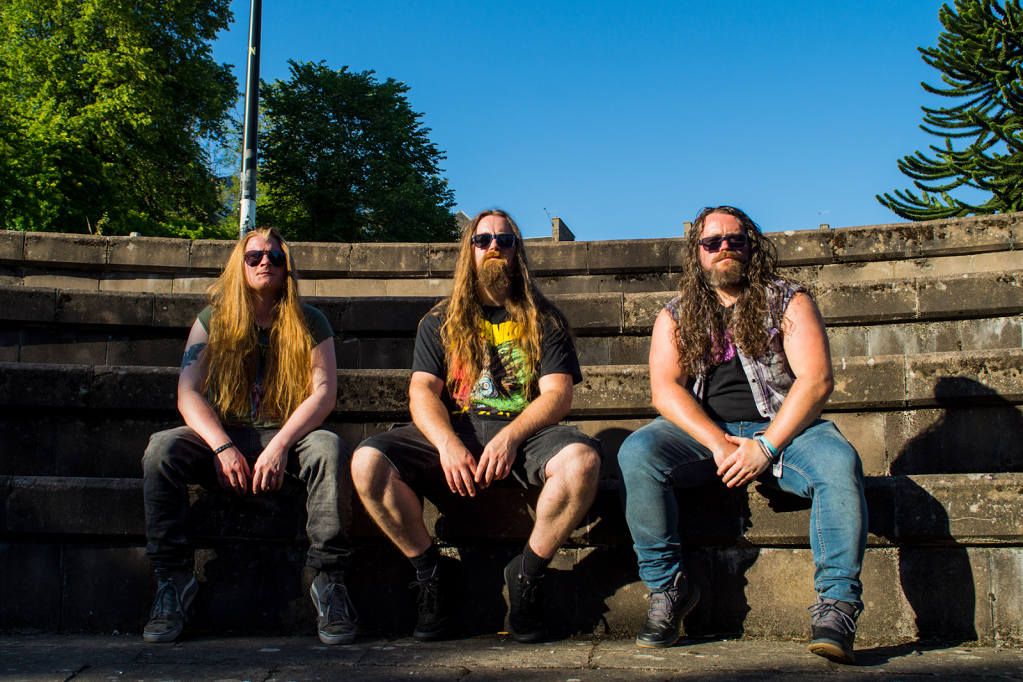
While the Scottish trio Solar Sons may have been shaped in their youth by heavier bands – “the Big Four and all the Bay Area thrash, and of course the NWOBHM” … and “modern rock/metal like Faith No More and Alice in Chains,” says singer and bassist Rory Lee, it’s the easygoing, wide-open vibe of ‘70s music that’s most informed their blend of metal, groove, stoner/doom, and prog.
“Growing up, we always had a love of classic rock and metal, bands like Sabbath, Thin Lizzy, Deep Purple, ZZ Top,” Rory said in an interview.
He elaborated on that in a beautiful way.
“But we do tend to lean back to the classic rock stuff. It was largely what we listened to in those formative teenage years, where our music tastes are formed,” he said.
“Soundwise, I think we like the space. Things land better with space to move. It’s complex without being over the top or doing things just to be impressive. The songs come first. Lyrically, that era is a little edgy, a little tongue-in-cheek, and always with a simple and relatable message. And it’s endearing, I think. Feels grounded in a way,” he added.
Their latest release, “Altitude” (Argonauta Records) is the sixth from the Dundee-based band – that’s Rory, his brother Danny on guitar, and their cousin Pete Garrow on drums. They say in the press release that the album is about “having a good time with friends, escaping the madness of the city, and pulling yourself out of any woesome funk” – and how ‘70s is that?
That vibe starts right away with the title track, which is about “escaping the daily grind, getting out of the city and getting amongst the trees and nature,” Rory said in reference to lines like “Light fades from the night sky/Dusk rumbles/Reminds me of time/Keeps me humble.”
“We’re lucky in Scotland as it’s never far away,” he said.
The whole idea of the chorus’ urging, “Grow in altitude,” is a message to stay grounded, to “keep the foot heavy” “and build a stronger self,” he said. The second verse is needing to get back to that idea after having lost sight of it, “getting lost in the haze,” as he said.
“Although it may be fun for a while, you can’t stay there forever, and it comes a time to push through and get back on track,” he said.
“Phoenix” is pretty self-explanatory, coming back from adversity and all that, but it poses a challenge too: “How far are you willing to take it?”
“Is that all you’ve got? I know you’ve got more in the tank, kind of thing,” he added. “But it could be listened to in a way that it’s pointing at someone, if that’s how the listener wants or needs to hear it.”
“Right On” is exhibit A of the album’s mission to pull you out of that aforementioned “woesome funk.” Its repeated shouted “oy”s are a distinct nod to AC/DC’s classic “TNT” and its message is to just, as it says, “let ‘em go” – “bad emotions, bad feelings,” Rory said.
“These things always pass and you will feel better – nothing lasts forever, so dust yourself off and get back in the saddle,” he said. “It’s an old adage used a lot in classic rock and we wanted to do our interpretation of it.”
One intriguing concept dropped in amongst those “let ‘em go”s is innocence.
“Letting go of innocence for me is acceptance,” Rory explained. “Knowing the world’s a mess, but being comfortable existing in it and finding fulfillment where we can. Not being defeated by the loss of innocence.”
The soulful, shimmery instrumental “Midnight” is an interlude, almost a moment of rest, between the heavy, beefy tracks that come before and after.
“This was a later addition to the album prior to sending the finals off to Argonauta,” Rory said. “Danny had this really cool piece that gave some breathing room between the two halves of the album, and we are really glad we put it in. Ties it all together nicely, we think. It’s an ode to those beautiful instrumental guitar pieces of the boss, Tony Iommi.”
“Shooting Star” is a metaphor for hope, “that thing in life that gives us meaning and purpose, trying to grab hold of it and run with it as far as you can,” Rory said.
“Some of us are lucky to find that thing, whatever it is. So if you do, be grateful and give it everything you’ve got,” he added.
In an album full of strong tracks, “Headfirst” stands out for its moods, its sonic changes, the psychedelic quality of the verses, and the prominence of Rory’s bass. It’s his favorite, too.
“(It’s) definitely the most dynamic track in terms of its range; it covers a lot of ground,” he said. Probably my favourite track to play with all the fun bass parts, but (it’s) also one of the harder ones to pull off live due to the vocals having a few different styles in the same song.”
Lyrically, it’s saying to stop being a slave to time, to the grind, and “run headfirst into the unknown,” to take that chance, whatever it is.
“It’s easy to submit to things – being resilient is much harder,” Rory said. “I think it was a Nick Cave interview I saw where he said about hope being a warrior emotion. It’s the opposite of submission.”
There’s a wonderfully reflective line in the song: “A gift to see ourselves/As others do.” It has its roots in the words of Scotland’s greatest poet, Rory said.
“(It’s) a spin on the Robbie Burns poem, ‘To a Louse’ – ‘O wad some power the giftie gie us to see oursels as ithers see us,’” he said. “It’s saying recognise the value in yourself – the value that others see, but is sometimes hard to see in ourselves.
“The Scottish have a knack for excessive humility, which can lead to being too hard on yourself or harshly self deprecating. While this can be a great source of humour, it’s sometimes a fine line between funny and sad,” he admitted.
The spoken-word section in the bridge veers between resignation – “If this is all there is, then that’s enough for me” – and optimism – “if there’s more, then let’s go find.”
“I think we sit on the ‘if there’s more, then let’s go find’ side,” Rory said of the band. “It speaks of the exploration which is hard wired into the human spirit. We always thirst for more.”
The closer, “O.G.,” is the most experimental track, stretching out, taking its time to meander and expand – or as Rory says, “it’s confident and stands its ground.”
“That energy it has is partly why it is the last track,” he said.
And its title does stand for the obvious, especially the “O” for “Original.”
“It was the first in this batch of songs and the spark that the others came from,” he said. “Some of these songs have been in the works for a long time, ‘O.G.’ and ‘Altitude’ in particular. They were riffs we would jam out and always enjoy, knowing they would one day become full songs, but we never felt ready for them.
“It was always called ‘O.G.’ and it just didn’t feel right calling it anything else,” he said.
It’s a trippy exploration through either madness, frustration, or overwork, or maybe all of those things.
“I think your description is pretty accurate,” he said. “It resolves with resilience at the end of the second verse with ‘Ripping, nerves of steel,’ like accepting struggle but then saying, it’s all good, we’ll get through it, rather than rolling over and giving up.
“The whole album has that message running through it. ‘O.G.’ is the bookend, riding off into the sunset with the slide guitar, contented and feeling like everything has come round full circle,” he added.
Scotland might not be the first place to come to mind when you think about metal, but there are strong scenes in major cities like Glasgow and Edinburgh, Rory said.
“There’s quite a good mix of genres,” he said. “Dundee’s scene is smaller obviously since it’s a smaller city, but it holds its own. People from different scenes will travel to the other cities. They’re supportive of one another and there’s not a lot of niche-y stuff between different genres.”
And the British Isles is where they’ll be focusing their touring efforts in the remainder of 2025 and into the New Year.
“We are currently doing a run of Scottish dates leading the year out and are working on a tour around England next year – it’s coming together nicely and will all be announced soon,” Rory said. “Aiming to play new places and reach a new audience.”
By 2027, they hope to get to mainland Europe.
“A band at this level, everything costs money, and if we break even we are doing well,” he said. “So a trip to Europe needs a bit of time and finances to organise.
“Our recent signing to Argonauta means we have a more direct connection with bands and promoters on the continent. So I’ll be tapping those shoulders and trying to get something organised for us,” he added.
-
Castle Rat, “The Bestiary”
By Kira L. Schlechter

From New York City by way of Boris Vallejo’s fevered imagination is Castle Rat and their latest stoner-fest, “The Bestiary” (King Volume Records).
Singer/rhythm guitarist Riley (The Rat Queen) Pinkerton is joined by The Count (Franco Vittore) on lead guitar and backing vocals, The Plague Doctor (Charley Ruddell) on bass, and The All-Seeing Druid (Joshua Strmic) on drums in a mission to save “The Realm” from their archnemesis, Death (The Rat Reaperess), according to the label bio.
“The Bestiary” is the follow-up to 2009’s “Into the Realm.” And indeed, it is a compendium of tales of beasts both real and mythic – and that includes those within humankind itself.
With her ankle-length loincloth, chainmail crop top that leaves little to the imagination, wild tumble of curls, and ever-present sword, Riley resembles a cross between Red Sonja and Conan the Barbarian’s latest conquest – a comic-book heroine sprung to life. The droning midrange and rounded tone of her voice melds seamlessly into the massive, bottom-heavy walls of the music.

Speaking of the music, Castle Rat’s is rooted firmly in the 70s, lusciously sludgy stoner doom, Dungeons & Dragons, all that good stuff, with at least a lyrical nod to Ronnie James Dio. Everything is mixed in the aural equivalent of Vaseline on a camera lens – blurry, shimmering, one sound bleeding into the other. And their videos are all B-movie cheesy special effects, with lots of sword-swinging and wandering through the woods. None of these are bad things, mind you.
The stately, dramatically bashing, guitar harmony-laden instrumental “Phoenix I” (bookended by the identical but acoustic “Phoenix II” at the end) fades out into the official first track, “Wolf I.” A buzzy, fuzzy guitar melody sets the pace as the Rat Queen embarks on the hunt for her prey, warning, “I am animal enough to find/Your heart before the morning.”
More guitars are added in spitting bursts before a 70s’-esque flourish heralds the dense, swirling, almost undermixed chorus – a pattern that continues throughout. The prey is aware of its pursuer (“Hackles raised/to the heavens”) but the remaining two verses leave the outcome deliciously unresolved.
Our Queen observes the “Wizard” from afar, acknowledging his power but noting he’s not as all-powerful as he seems (“I can see what you’re shielding,” she says, “Within you a creature is feeling/I can see it cower”) and she traces his downfall in real time (“the spells you’ve cast are broken” and “The creature has awoken”). Her use of the metaphor of the crystal – the wizard’s “crystal heart,” his “crystalled and glowing” wisdom – culminates with his ultimate end: “Within you the shards all shift and angle … your mortal soul entangled.”
“Siren” is pretty self-explanatory lyrically – trying to resist that seductive call – the hollow, ringing high-end drum sound at the outset melding perfectly with the Queen’s vocals that have been this time brought up in the mix. There’s no real chorus, just couplets of temptation: “I hear the sweetness of their song/Is to want to have it all so wrong?” and “Desire clawing at my breast/They claw until there’s nothing left.” That second one comes prior to a solo set to a more frantic groove and the Queen’s wordless cry at the end, leaving her ultimate fate a mystery.
The Queen’s dreamy description of the mythical beast that is the “Unicorn” (his “white hooves,” his “spiraled horn”) is lovely, but it bodes ill, as that same “cold sun” is also “glinting off of broadswords drawn.” The tempo shifts to a terse, erratic throb in the prechoruses as she warns the hunter that to kill this creature is an evil act that would have consequences – that “desolation shall doom your domain” – then noting in the chorus that one “pure of heart would not seek such thrill.” Alas, the deed is done and thus he is doomed – “Fields of carnage and ice/Where your kingdom lies.”
“Path of Moss” is a chiming, mournful instrumental interlude laden with guitar harmony, and it segues nicely into “Crystal Cave.” It seems we’re revisiting the Wizard here, perhaps, if we continue the storyline, as he flees to the cave that is his refuge. The Queen observes from afar, almost taunting – “Has your magic fled?” she asks, “Have you bled it dry?” – her voice almost sing-song. As the track builds in intensity towards the chorus, the airiness of the opening gives way to layers of fuzz and sludge as his fate awaits – “Behold what shines/Like blood, like ice.” That phrase becomes his eulogy as the Queen repeats it in a tender croon.
Set to a perfectly appropriate spiraling, twisty groove, the vocal and guitar melody mimicking each other, “Serpent” is a track delicious for its ambiguity (Is this an actual snake? Or a woman? Or the Queen herself?) and its clever rhyming: “Coiled figure/Born to slither,” for one, “Those who touch her/Risk her puncture” for another. It’s this mid-album point where the songs become even stronger and more memorable.
“Wolf II” is of course the logical conclusion of “Wolf I,” and lyrically, as the song describes, it seems to be a nod to the god Tyr of Norse myth, who indeed placed his fist into the mouth of the giant wolf Fenrir, who promptly bit it off. Its hypnotic melody, both on guitar and vocal, is so compelling – the Queen’s undulating treatment of the word at the end of each line in the verses, intertwining sinuously around the guitar, is just delectable.
A rolling, dirge-like groove is at the root of “Dragon,” whose lyrics seem to allude to Fafnir, the character of Norse myth who steals the dwarf Andvari’s treasure and transforms into a dragon to guard it. This is a more sympathetic treatment of the story, though, seeming to say that Fafnir succumbed to the madness of greed against his will – “creature of sadness/Born of the eldest of magic/Anger and fear hold you captive.” The Queen insists that man, “the fiendish one,” is the real beast, who projected the concept of greed onto the hapless dragon. The “spear in your side” will indeed “be their demise,” as the treasure brought nothing but sorrow.
“Summoning Spell” is just that, a brief, reverent interlude, heavily overdubbed and laden with violin and synth, calling the “mighty Beast/From between the Elms.”
The final track, “Sun Song,” contrastingly, is probably the longest one here, taken up mostly by a crushing, dissonant instrumental based on the repeating core melody from midway to end. Lyrically, it musingly poses some tantalizing, open-ended questions to not only the Sun (“In all you’ve done/Where did it gleam?”) but to the Moon (“In all your wounds/Were you alone?”), the Flame (“In all you’ve tamed/For what did you yearn?”), and the Flood (“In all your blood/What have you found?”). It’s a resolution of the album that resolves nothing, only opens more ambiguity.
Castle Rat’s U.S. tour just wrapped; their European swing starts Oct. 16 in Prague. Their live set apparently features a choreographed battle scene that would truly bring this lore-based, inherently visual music even more to life. Even without that element, though, “The Bestiary” provides plenty of food for the imagination.
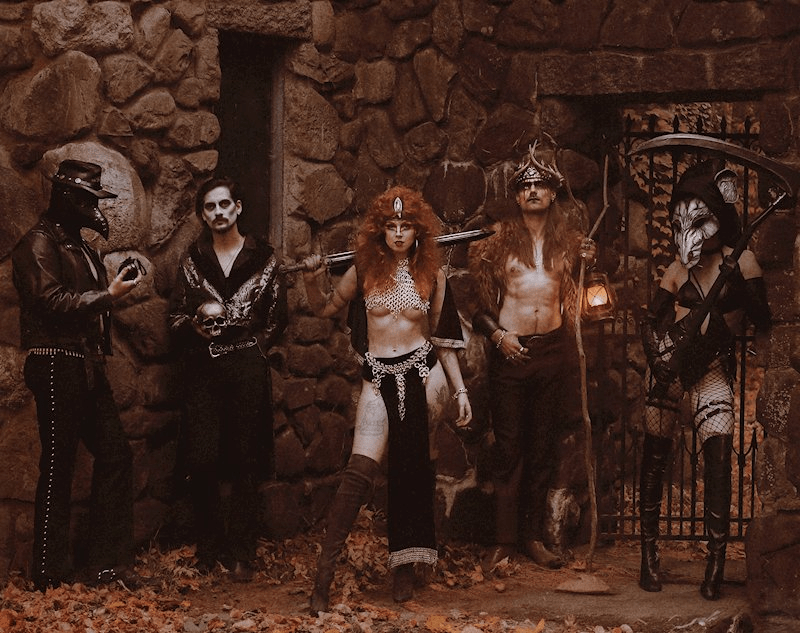
Photos credit: Courtney Hall

About Me
Sometimes the hardest part of finding success is gathering the courage to get started. The most successful people don’t look back to see who’s watching. Look for opportunities to lift others up along the way.
Follow Me On
Subscribe To My Newsletter
“Do not say a little in many words but a great deal in few.” – Pythagoras

