Getting started can be the hardest part.
Success is earned, one step at a time. One of the most invaluable skills a person can have is being able to clearly express what it is they want.


-
An interview with Turkey’s ASH MAGICK
In that sense, I believe music is very much like a talisman: something that protects and empowers you against the harshness of life.
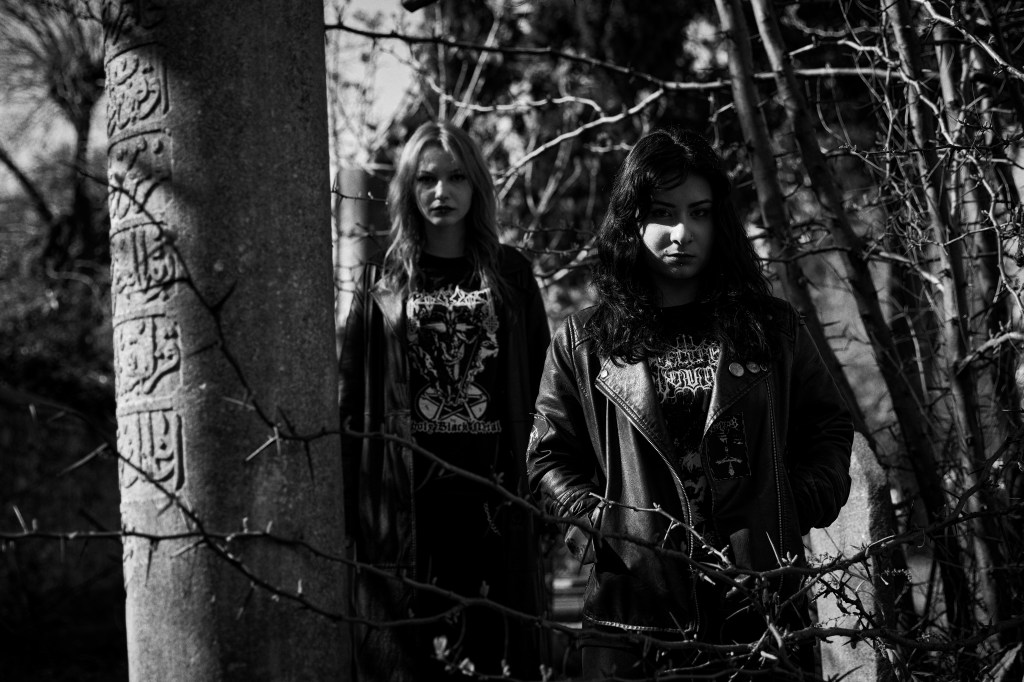
Emerging from the heart of Istanbul’s layered history, Ash Magick is a rising black metal project that blends haunting atmospheres with themes of mysticism, spirituality, and ancestral lore. Formed in 2022 by Necrosanctus and Graveyard Slut, the band has quickly carved out a distinct identity with their raw yet immersive sound. Their latest release, “Rituals of Anathematic East” (out since August 29th via Apocalyptic Witchcraft), takes inspiration from a pilgrimage to Mardin — a region steeped in Mesopotamian and Syriac mysticism. We spoke with Ash Magick about their origins, creative vision, and the rituals woven into their new album.
HH: Ash Magick emerged from “firsthand occult experience.” Can you tell us more about how that personal journey shaped the band’s creation? And how do your personal rites and invocations bleed into composition and performance?
Graveyard Slut: I wouldn’t say I personally have had many metaphysical experiences. Those actually came from my bandmate, who used to share such stories with me. I’m not someone who is blindly devoted or full of faith, but I’m also not dismissive of these things either. What drives me most is curiosity.
One of the events she told me about was related to something called ash magick — a kind of spell involving ashes. That immediately caught my attention, and I thought it could be a powerful name and concept for a Black Metal project. So, while it didn’t come directly from my own experiences, it was born out of the unusual metaphysical events my bandmate had within her family.
I’ve always been interested in dreams, energies, and esoteric subjects in general, they fascinate me. So, in a way, I was the one who connected these stories with Black Metal. The experiences belonged to them, but the vision to channel it into music came from me.
HH: How does being rooted in Istanbul — a city layered with history and mysticism — influence your sound and vision?
GS: One of the great things about Istanbul is that no matter where you look, there’s always a vision to be found. It can feed off the vision within yourself, so the more creative you are, the more the city nourishes you in return. For me, Istanbul has always been a place that fuels creativity.
I can’t say I’ve explored every historic site, but the ones we’ve visited left a deep impression on us. Even near my home there are historic cemeteries — actually, they exist in almost every district of the city. These places have strongly influenced us since the beginning. When we first formed, many of our songs and even entire albums were dedicated to particular cemeteries. So yes, living in Istanbul shapes us in a mystical way.
Of course, it also depends on being able to handle the city’s constant stress, only then can you truly discover its beauty. Whenever we find the time, Istanbul’s atmosphere, its water, its history, and even its religious sites provide inspiration. We’ve never strayed too far or explored everything in depth, but even in our close surroundings, Istanbul always manages to offer something that leaves a mark on us.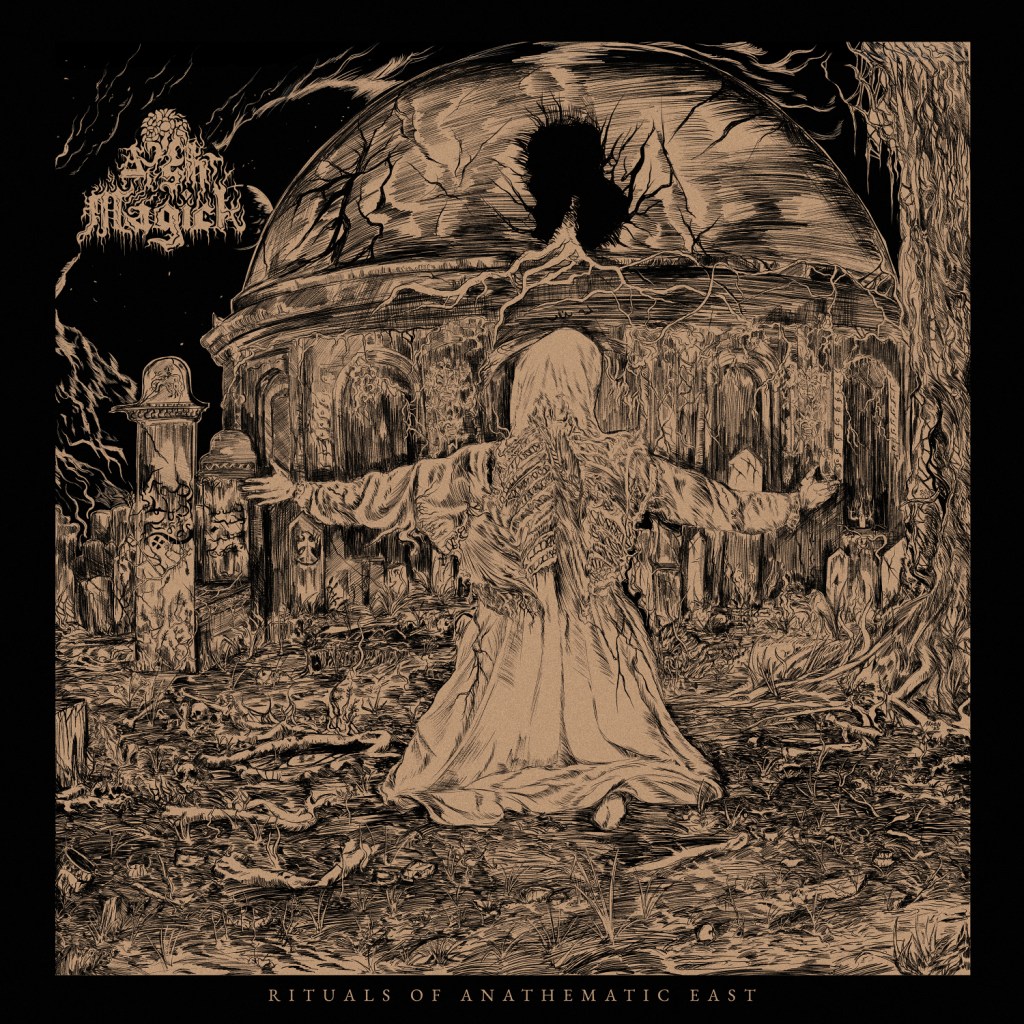
HH: “Rituals of Anathematic East” is your third release. How is it different from your earlier work?
GS: In many ways, it’s completely different from our previous releases. Composition-wise, this time I took full responsibility for writing everything myself. In the past, my bandmate’s style — rooted more in punk influences and riff-based transitions — was a bit present. On this album, however, there’s a stronger focus on arpeggios. We also pushed the tempo further; the BPM is much higher, the sound became faster, dirtier, and overall much more intense.
Another major difference is the effort and depth behind it. Our earlier albums were recorded almost spontaneously, in a very raw way, and while they had strong themes, they weren’t always grounded in a solid conceptual framework. This record, on the other hand, was built upon a very deliberate theme, with historical and esoteric roots. The storytelling is more cohesive, each track connects to the others, forming poetic narratives that carry a sense of reality and history.
Visually and symbolically, too, this release marks a new foundation for us. We changed our logo, and instead of using photographs for the cover art like before, we had a friend create an original illustration. This album represents a clear step forward in terms of identity and concept.
It also reflects a huge amount of work, nearly a year went into creating it. Compared to our earlier records, which sometimes came together in as little as a month, this one was a much more serious and carefully thought-out process. That’s perhaps the biggest difference: this album is the result of patience, intention, and relentless effort.HH: The album was inspired by a pilgrimage to Mardin. Could you share what that journey meant for you personally and musically?
When we went to Mardin, we didn’t have any musical goals in mind — it was simply meant to be a short trip, almost like a winter getaway. We stayed there for about three or four days in December, right in the middle of winter. But once we arrived, I realized how much inspiration the place gave us musically. The city itself is breathtaking. Its architecture, its history, and the way it has been home to so many different peoples and cultures throughout time is deeply moving.
On a personal level, it was also a very meaningful trip. Spending that time with my friend was wonderful, and the distance from our everyday lives gave it even more significance. Being Kurdish myself, visiting the East also resonated with me on a much deeper level. It’s in my blood, so experiencing that part of the world had a strong impact on me both personally and musically.HH: What do you hope listeners experience when they engage with “Rituals of Anathematic East”?
I don’t really have fixed expectations, it’s very much about the listeners themselves and what they bring into it. Everyone will have their own personal experience with the record, and that’s how it should be.
What I aimed to create, though, was something like a journey. Each track has its own atmosphere and its own transitions, but overall I wanted the experience to feel unsettling, especially at the beginning. The intro was designed to carry a sense of ritualistic discomfort. From there, that unease gradually transforms into passion, endurance, and finally into something like a spiritual passage. The interludes, for example, were meant to evoke a sense of ascension and purification. I drew on hymn-like, ambient elements to create that atmosphere, so that the music would move beyond aggression into something almost devotional.
But ultimately, I don’t want to dictate what people should feel. If listeners come away with a sense of intensity — whether that’s disturbance, catharsis, or transcendence —that’s enough for me. My intention was to shape something mythical, to reveal a certain mysticism. Whether I’ve fully achieved that, I can’t say, but I hope people can sense that spirit and interpret it in their own way.
HH: Black metal has always flirted with the esoteric — how do you see your approach as different, especially with your focus on Eastern mysticism and feminine energy?
I don’t really claim that what we’re doing is radically different. As for the idea of “feminine energy,” that’s actually something other people tend to highlight more than we do. We never go out of our way to say, we’re a female band, we’re channeling feminine energy. People can focus on whatever aspect resonates with them — that’s fine with me, but it’s not something we emphasize ourselves. Where I do feel we bring something different is in turning our attention toward the East. In black metal, I haven’t often seen themes rooted in Eastern mysticism or in the cultural and historical heritage of this region.
Musically, we may not be the most polished or the most professional, but what makes us unique is the world we’ve built and the themes we’ve chosen to explore. That’s what probably led you to ask this question. For me, it’s all about being creative and putting something of yourself into the work. It’s about asking: why does this affect me, and how can I translate that into something that will affect the listener as well? If you surrender yourself to that process, the rest follows naturally.HH: In Mesopotamian mythology, Lamashtu was a feared female demon — the daughter of the sky god Anu — blamed for spreading disease and nightmares. Did her story, or other ancient figures like her, play a role in shaping the new album?
GS: We didn’t really dive into Mesopotamian mythology in this album. What we wanted to focus on instead were the ways people in Anatolia have historically engaged with magic, rituals, and darker beliefs. So rather than mythological figures, we leaned more toward entities and ideas closer to Islamic folklore, things like the concept of the jinn, or even the devil himself, which felt more fitting within a Black Metal framework.
For example, in “The KneelingWretch“ we drew inspiration from a ritual involving braided hair, which we came across during our research. We also found accounts of villagers in Mardin sharing their experiences with researchers in what was called “Mardin Demonology.” Those files are actually available online. Many of the stories involve shadowy figures, strange illnesses, or dark presences, jinns… things commonly found in Islamic traditions. Whether or not they were “real” doesn’t matter; they reflect a living folklore that we found compelling.
That said, we didn’t want to overwhelm the album with too many creatures or demons. We kept things relatively minimal and instead focused on rituals and practices themselves, weaving them into a poetic and musical form. The mythological aspect is less direct—our emphasis was on the rituals and the atmosphere they carry. And honestly, I hadn’t known much about Lamashtu before you mentioned her, that’s actually really fascinating.
HH: Ancient cultures used amulets and incantations against Lamashtu’s influence. Do you see parallels between those protective rituals and the way modern music can act as a form of catharsis or empowerment?
GS: Honestly, I had never thought of this connection before, but it makes so much sense to me and I really like it. First of all, thank you for such a beautiful question. I definitely agree with you.
For me, music — whether modern or not — has always been a source of strength. In the beginning it was more about the empowerment side, but once I started making music myself, the catharsis part came in as well. It truly carries that kind of power within a person. Of course, carrying an amulet feels very different, because it becomes a tangible object. Music, on the other hand, feels more abstract, yet it lives inside us, both for the one who creates it and the one who listens. In that sense, I believe music is very much like a talisman: something that protects and empowers you against the harshness of life.
For me, the ultimate goal of making music is to let my energy out, to purge myself, to create. And being creative in itself is already a kind of protection. That’s why I really loved this question.
HH: Where does the path of Ash Magick lead — deeper into the forgotten East, or towards new occult terrains?
GS: I feel that with this album we’ve ventured deep enough into the Eastern realm, and for the time being, that chapter feels complete. What lies ahead for Ash Magick is a different path, one that I won’t fully unveil just yet, but I can say it carries an allure of its own.
Future projects will likely step beyond the East, reaching into wider and perhaps more unexpected territories (but still around). Still, the mystical spirit of Ash Magick will remain at the core, guiding the music wherever it goes. For now, though, I’ll keep the rest shrouded in a bit of mystery.
-
TULIP Previews Three-Part EP With First Four Tracks
By Kira L. Schlechter
The sheer act of putting out music in these days of streaming and listeners’ short attention spans demands as much creativity as making the music itself.
Singer Ashleigh Semkiw and her guitarist/harsh vocalist husband Colin Parrish of the Texas symphonic/progressive metal band TULIP are taking a crack at putting out three EPs of four songs each – released several months apart from each other – that will encompass a full cycle when put together.
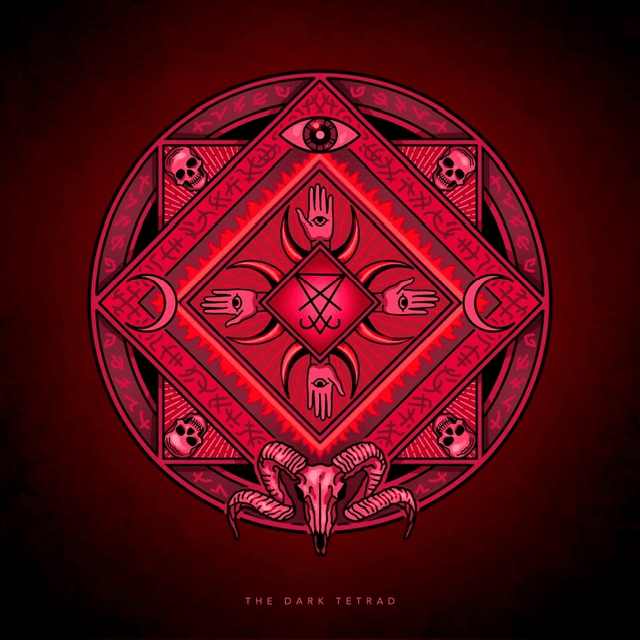
The first, out now, is “The Dark Tetrad,” comprised of “Arabella” (with Kristyn Hope), “Devourer” (with Kristin Starkey”), “Calliope” (with Dropout Kings), and “Ophelia” (with Shaolin G of Basement Ghost).
“These first four, we wanted all to be collabs.” Ashleigh said in a phone interview prior to the band heading to Europe later this fall for gigs opening for Ad Infinitum and Seven Spires (keep an eye out for my partner’s videos from the Hamburg show in October!)
Ashleigh talked about each song’s featured artists and touched a little on the subject matter of each:
“(Guest vocalist) Kristyn Hope is a very close friend of ours,” she said. “We played our first show in Texas ever as a band in 2018 with (her; Kristyn was in the band Aesop at the time). That’s actually where we found our guitarist Cody as well – she and her husband, Clay, who’s also in Daedric (Kristyn’s current band) were all friends.”
The two then became fast friends, Ashleigh said,
“We spend a lot of time together; our kids are friends,” she said. “They don’t live too far away, (so) we work with them a lot, not necessarily just musically. We help them with their music videos – our videographer, Michael Levine, does all their stuff – we kind of have this fun artist collective up here in North Texas now.
“They’re just all the best people, real hardworking, and I’m so excited that she’s blowing up now because she’s so talented. When we were thinking about a feature for ‘Arabella,’ she was just the first person that came to mind. She’s got this really interesting scream and it’s very consistent and also very scary. And she’s gorgeous and looks great on camera and is a great actress, so it was a perfect fit for that,” she said.
We plan to follow up with Ashleigh later on about lyrics and what’s behind each song, but she did touch briefly on the subject matter of “The Dark Tetrad.”
“We wanted it to be four different archetypes of women and that’s why (the songs) are all named (for) different women,” she said. “I had this book of symbols that I love and looked up the meaning of each of the women’s names.”
“I think (Arabella) means ‘graceful’ and ‘beautiful,’’ she continued. “The story of the video is Kristyn, her loss of innocence. She’s beautiful, pure, sweet, playing with the doll, and then she starts to go to the dark side. That one was personal for me too – different women in my life that turned out that way. Nobody starts out evil, right? So that’s where that came from.”
Ashleigh and booming contralto Kristin Starkey have been close friends ever since TULIP toured with Kristin’s band Temperance in Europe last year.
“We were living on a bus together for a month,” she said. “She has an opera background, same as me, and she’s just the most phenomenal vocalist.
“(The classical world is) such a cutthroat piece of the musical world. It’s very competitive, especially with women. So I was a little nervous to meet her because I thought, ‘OK, if this is going to be another opera diva, I don’t know what I’m going to do for a month,’” she said.
But as she said, she and the native New Yorker (who lives in Sweden with her husband), “became besties right away.”
“She’s so down to earth and really fun and smart and funny – we just bonded over our past classical music trauma and our love of being onstage. She would just blow me away every night,” she said.
“Devourer” came about on one of Kristin’s visits to the States.
“She stayed with us for a week; we recorded the song, wrote it together,” she said.
The title is based “on this concept that Colin really loves called ‘the devouring mother,’ sort of the dark side of the maternal archetype,” Ashleigh explained. The concept itself comes from Jungian psychology.
“We grew up in Canada, so we know a lot about (psychologist and author) Jordan Peterson – he’s into this idea of these overbearing mothers, just being controlled by guilt or fear,” she said.
The actual lyrics, though, written by her and Kristin, are not exactly in line with the title.
“The song is mostly about (how) she had been in an abusive relationship; I’ve been in abusive relationships, and escaping,” she said. “It’s (like) please love me, what more can I do, and it’s never enough, it’s never enough. It could be about a parent but we wrote it from the perspective of a romantic (thing).”
This collab, together with their fast-growing friendship, also led Kristin to tap Ashleigh and fellow powerhouse singer Marina La Torraca for yet another collab, on a cover of the “K-POP Demon Hunters” song, “Golden” (which, if you haven’t heard, is completely irresistible – their video has over 118,000 YouTube views).
“We have a TikTok, but I don’t have the app,” Ashleigh admitted. “Colin has all of that; I’m an Instagram girlie. I didn’t know anything about TikTok, but I do have kids, so I knew about this ‘K-POP Demon Hunters’ show because my daughters are obsessed with it. I already knew the song because they’ve been singing all of the songs all summer.
“So Kristin’s like, there’s no metal cover of it yet, could Colin make an arrangement of it? And he loves doing that, so he banged that out in a day and sent it to the girls. They sent him their parts back, and then Kristin put together that little video that we made.”
This may not be the only time these three join vocal forces.
“I think we’re going to do another one of the ‘Demon Hunters’ songs,” Ashleigh said. “(And) there might be a future for the three of us to do something (else). We get along great and our voices are all different, so we can all contribute different things to a song,” she said.
Unlike the first two tracks from “The Dark Tetrad,” the last two have a decided hip-hop bent, courtesy of their guest artists.
“We toured with (Dropout Kings) when we went out with Ill Nino,” she said. “We didn’t quite fit; we made it work. But we got along with them so well and they’re really great people.
“And then when they were coming through to tour, they came to stay with us at our house for a few days and we shot the video with them. And then we lost Adam, which was horrible,” she said.
Dropout Kings singer Adam Ramey died in May.
“He had just had a baby and we knew his wife,” she said. “You never know what somebody is going through. He was the happiest go-lucky, fun guy.
“We miss him. It was a shock.
“But it was good that we got to spend some time with him before he was gone, and we’re still going to keep in touch with those guys. We love that song and it’s hard to watch the video now because he’s in it so much. But it’s still a nice memory to have,” she added.
Calliope, of course, is the muse of music in Greek mythology.
Ashleigh plans to end TULIP’s upcoming European shows with this track.
“I’m most excited to perform that one live because I just think it’s so interesting,” she said. “Colin reached out to him because he also has a really interesting scream … and he’s also a great lyricist. We asked him to do it and he wanted to do it, (so) that was great.”
Ophelia, of course, is the doomed significant other of Hamlet in Shakespeare’s tragedy. But it also touches lyrically on Ashleigh’s own past.
“For sure, a hundred percent,” she agreed.
In a nutshell, she and Colin escaped a strict Calvinist Baptist church in Canada after the two (who were both married young to other people) fell in love. They both left behind families who are still in the church, including Ashleigh’s mother, with whom Ashleigh still has a very strained relationship.
“That ebbs and flows,” she said. “I can have empathy for her knowing that her life wasn’t perfect. All of us are a product of the things that happened to us in our life, and of course, there’s always a choice.
“It has changed. We made some strides there so maybe we’ll figure it out, we’ll see. I don’t know. It’s hard when people are set in their ways,” she added.
Ashleigh is unsure whether “The Dark Tetrad” will be released in a physical format.
“We’re working with our management on that; we’re trying to figure out the best way to release it,” she said, “We wanted to get the four (songs) out and get this algorithm running and give some music to our fans before we go on tour.
“And also, we didn’t want to tour on old material. We’re still going to be doing some of our stuff that people are asking for, like our bigger songs, but the set will have these new four in it,” she said.
The second EP will be titled “The Depths,” based on a graphic novel written by one of her 12-year-old twin sons. The music is finished; Ashleigh is currently working on lyrics and vocals and she anticipates a fall release for it.
“I want to take so much care with these next four (songs) because we both love them so much – they’re very special,” she said. “So I want to make sure that I have the time. … And also our management is like we need to keep this momentum going.
“We have a really great artist named Will and he’s going to be doing almost like a film with it. It will be a cartoon, but it’s going to be beautiful. (The music is) very progressive. It’s much truer to the traditional TULIP sound,” she said.
The graphic novel is about a boy being separated from his mother, Ashleigh said.
“This little boy named Axel (is) walking through a forest and he falls into The Depths, he calls it – it’s like a pit,” she said. “He encounters all these different bad guys, different characters, who are trying to get him. His mom saves the boy and then they get out of the pit together.
“The first song for sure will be a lot more storytelling than allegory, but sort of similar to what we’ve already done,” she added.
The final EP will be titled “The Light Triad” and that will also have a few collabs on it, she said. It should be out in the New Year.
TULIP’s inclusion on the Ad Infinitum tour came after Marina’s band, Phantom Elite, who was originally slated to open, suddenly disbanded. Ashleigh says it was partially because of Marina that TULIP filled the vacancy.
“She’s someone that I never even met in person, (so) that was really very generous of her,” she said.
“I’m going to be doing a little bit of a collaboration with Melissa (Bonny of Ad Infinitum) on a song; I just recorded that for them. We’re leaving on October 20 and we’ll be there for a few weeks. I think it’s going to be awesome. This community is so warm and welcoming and lovely and everybody wants to bring each other up and I really like that,” she said.
TULIP is considering “doing something in the UK, maybe in January or February,” but that’s not definitive.
“Our management’s German, (so) they’re always trying to get us to come there,” she said. “We also have an American booking agent and he puts us up for stuff and sometimes we get it and sometimes we don’t.
“The U.S. side is trickier for our style – and people don’t really want to go out anymore after Covid. It’s hard to get people to go to a show,” she said.
-
Hellfox, “The Spectrum of Human Gravity” interview
By Kira L. Schlechter
The women of the young Italian band Hellfox aren’t able to devote themselves fully, day and night, to their music. They are the true definition of “working” musicians. But needing alternate means to support themselves financially has absolutely no bearing on the quality of the work they’ve put out to date.
They’ve just released their wonderful sophomore album “The Spectrum of Human Gravity,” the follow-up to the equally terrific “The Call” (2022) – an album that solidifies their sound and showcases the magnitude of their formidable ambition and intelligence.
The band is guitarist (and fellow Amorphis sister) Gloria Kaps, clean singer Greta Antico, growler and bassist Priscilla Poe, and drummer Fedy Piscopo. Greta explained in emailed responses to questions how they first came together in 2019 and filled us in on each member’s day jobs.
“Priscilla and I met up for a beer in a local pub; we’d been in the same band for many years but had lost touch,” she said. “At that moment, she agreed to play with me, and from then on, I worked hard to find the other members: first Gloria, who I thought would never respond, and then Fedy, for whom I had to fight hard – she wasn’t convinced, she didn’t play our style, blah, blah, blah.”
Greta teaches in a high school and sings at a music school, she said. Priscilla works in an office. Gloria has a business, “a mega alternative fashion store in Bergamo” called StarKaps, and Fedy teaches drums. Greta also explained the meaning behind the album’s intriguing title.
“We thought that to encapsulate the album’s entire concept, we needed something almost ‘scientific’ that conveyed the sense of research,” she said. “The spectrum of human emotions, understood as the range of emotions a human being can experience, changes with different gravities from person to person.”
“Just as gravity on the moon is six times less than that on Earth (and varies from planet to planet), so among us there are things that touch and ignite different emotions in completely different ways, with different weights. Man is therefore a planet in a vast relational space, and everyone has their own gravity, which is why it is important to put yourself in the other’s shoes (without distorting yourself) and approach without fear,” she added.
Greta and Gloria discussed the album’s equally introspective songs; their responses follow.
HH: The lyrics of the opener of “Nautilus/Seaweed Braids” are where I really get a folk feel – it could be taken literally (the leviathan as lover, in a way), but it’s also symbolic, the idea of being shunned and finding release or salvation elsewhere (maybe in music) – would you agree?
Greta: I like to discover new meanings in my lyrics after releasing them into the ether. When I write, I try not to be overly descriptive, to allow for just that. When writing “Seaweed Braids,” I thought of a modern Hamlet, no longer mad, who thinks back to his Ophelia and sees her, as in the Pre-Raphaelite painting, immersed in the river while her hair is woven with seaweed. He can’t live in the present because they expect him to move on; he can’t live in the past because it’s painful. This is Leviathan, the monster of depression that mercilessly preys on its victims – the sweetness of a memory that’s nice to relive, but hurts because it’s no longer here.
It’s all in the first person, and there are no genre indications, to make it easier to internalize the song and find something personal.
Gloria talked about the track from a sonic standpoint.HH: I hear an Amorphis influence here – is that accurate? And I especially love that breakdown, your riffing melody that goes over the rhythm guitar, the kind of erratic structure it has, how its rhythm differs from the 6/8 tempo of the rest of the song – can you talk about that?
Gloria: The inspiration for this song came from Insomnium’s latest album, but yeah, the influence of Amorphis is definitely present in everything I write.
Priscilla and I also really love prog metal, in the right doses. In some Hellfox songs, there are small references to this genre as well. In ‘Seaweed,’ we wanted to add some prog elements, since it’s a very linear song, to change its flow.HH: It seems to me that “Empty” is about a relationship, about no longer getting what you need out of it (that first verse especially, “oh here we are again,” and the second, “A human body filled with someone else’s pain”) – having no more feelings left (“A stone, my mind/My body’s like a grave”) – would you agree? How personal was that?
Greta: Nothing personal – as always, I try to empathize with someone else, and this is what came out. There’s always a bit of social anxiety in the background. It was a bit of a desire to talk about violence in general, whether physical or psychological, without delving too deeply so as not to sound insensitive or out of context. At the end of the day, tired and confused, we just want to be empty.
HH: What I love about your music is how it can be straightforward and how it can also be almost freeform, like “Water on the Ceiling,” which has a verse-chorus-verse format, but has plenty of tempo changes within it – can you talk about that?
Gloria: ‘Water’ is my favorite song. Previously, when I wrote it instinctively, it was much longer. Fedy and our producer, Alessio Lucatti, gave it more dynamics by removing several parts. Now it’s truly an energetic and powerful song. The structure is still fairly standard, except for the double bridge after the second verse, a structure that’s often used in metal.
–HH: It’s obviously about how we can’t seem to shut off our minds sometimes and how it keeps us up at night – how personal is that for you, what do you find yourself worrying about at those times?
Greta: I wrote the concept one night during lockdown. I saw the reflection of the river water on the ceiling of my room. I couldn’t sleep, and I was thinking about how to dissipate the energy I hadn’t managed to expend during the day. I was spellbound. I had no real worries, I simply couldn’t, as you say, turn my head off.
HH: “Pareidolia” is defined as “a tendency for perception to impose a meaningful interpretation on a nebulous stimulus, usually visual, so that one detects an object, pattern, or meaning where there is none.” The song describes just such a sensation, with the idea of the “human shapes in every corner.” Where did that come from? Did it happen to one of you?
Greta: Always! It is normal for human beings to see human shapes and faces in inanimate things. Here, we simply gave it a less ‘funny’ and darker meaning. It is my favorite song of the whole spectrum.
HH: What I so love about your band too is how Priscilla and Greta are foils for each other, of course the dark and the light, one acts as the commentary for the other, and it goes back and forth depending on who’s singing lead – can you talk about that?
Greta: We really like to think that Hellfox’s dichotomy always comes first in this. But be careful, because light and darkness aren’t always obvious. Lyrically, Pri’s growl is often the clarifying voice, helping the protagonist get out of the situation or evolve, while my clean, “angelic” voice (how I hate it when people call it that!) is often the one that highlights the most uncomfortable parts.HH: “Atlas” seems to be about that feeling of bearing the weight of the world, but can you explain the reference to “that far nebula?” I really liked the reference at the end to the actual Atlas myth (“The will of the fake gods/Pressed down/By the burden of the globe/The final sentence in the eyes/Of those passing by”) – that’s a really nice touch, can you talk about that?
Greta: The ‘nebula’ that Atlas sees from under the weight he carries somehow symbolizes salvation, the end of suffering, whatever that is, and it’s very far away in reality, but (there’s) so much hope. We drew on the myth of Atlas, but imagined it as fitting each of us. Each of us carries our own weight, made up of social anxiety, expectations (ours and others’), and people’s judgment, which may or may not be important, but is still there.
HH: Is “Six Times Lighter” any sort of reference to social media – the idea of being “a closed book to everyone,” “the ghost of a human being”)? And then the chorus might be saying “here the rain falls differently,” “the pain hits differently,” like in real life, and that’s the real “distance between us”? If that is accurate, was there a particular impetus for this observation?
Greta: Actually, “Six Times” was supposed to be the title track of the album, so it embodies everything I’d already explained regarding the album title itself. Each of us is a world apart, and as such, presents a different ‘gravity.’ If I were to enter into a relationship with you, then I would experience your gravity and you mine. So that’s why “here the rain falls differently,” “the pain hits differently,” because we can never experience the same things to the same extent.
HH: I think there’s a lot of perhaps political commentary in “The Centipede” – the whole second verse, “There you are, sleeping/Bound to your convictions firmly/Hopelessly corrupted by so much lack of ambition,” all the references to “the swamp” – were you directing it at anyone in particular if it is indeed political?
Greta: ‘The Centipede’ is a reading of society, of all those who consider theirs the only possible normality when normality doesn’t exist. I imagine these people, convinced they are perfect and flawless, suddenly finding themselves trapped in a swamp where imperfection, difference, and alienation reign supreme.
HH: I love how you start with the chorus in “The Warrior, The Child, The Healer” – “the light you see on the bias shows/All the pieces of yourself” is an interesting line – do you mean maybe when you eliminate bias, you do see “the pieces of yourself”?
Greta: Who knows? It’s really difficult to truly know and accept yourself; it would be enough to start by seeing yourself for who you are.
–HH: The two verses, the juxtaposition of yourself as warrior, hiding any vulnerability, being “angular and stiff” (I love that line), hearing “only the inner voice of duty” (that is, being responsible, doing what you’re supposed to); and then yourself as the little girl who IS vulnerable and emotional – that’s a real journey there – how personal is that for any of you, where did that come from?
Greta: The entire song is the summary of three years of therapy on myself. It’s a way of understanding and exorcising the parts of me that have a voice and trying to make them all equal. The warrior was the part that came out first, always on the defensive and ready to attack, in response to trauma and difficult situations, while the child is my emotional part, often unheard.
–HH: And then in the bridge when you mention the “enchantress” who heals you and you say, “Now I know who I really am,” does that mean you really are a combination of all those things and it’s OK to be that way?
Greta: It’s okay to be the one who makes us feel good. The enchantress is the adult part, who almost magically brings all the others together and leads them by the hand.
HH: The closer, “Voices” is really beautiful, with that overdubbed wordless singing – is that all of you or just you, Greta?
Greta: ‘Voices’ was composed by Maestro Roland Erulo especially for us. He’s a great friend of mine and I think he did a great job. ‘Voices’ is awkward because it sounds like a classical piece, but in reality, it’s full of dysphonies. And yes, that’s just me.
After several dates in Italy this summer, including an album release show in June, Hellfox is now working toward the fall.
“(We’re focusing on) perfecting the show, combining the new album with the old,” Greta said. “We’ll definitely have a couple more live shows in Italy in September – six at Alchemica in Bologna and twenty-eight at Druso in Bergamo.”
They do plan “many more” live dates on their Facebook page, but hopefully we’ll see this preternaturally talented band beyond the borders of their native land soon, as they are a secret too good to keep.
-
CWFEN
By Isabell Köster
“Medusa symbolizes something powerful: the horror, the rage, the refusal to conform to beauty or softness. She’s about embracing that darkness rather than hiding it. That’s how I feel on stage too—I’m not trying to look beautiful. I want to be imposing, intimidating even. There’s strength in that. That’s why she resonates with me so strongly.” – Agnes Alder
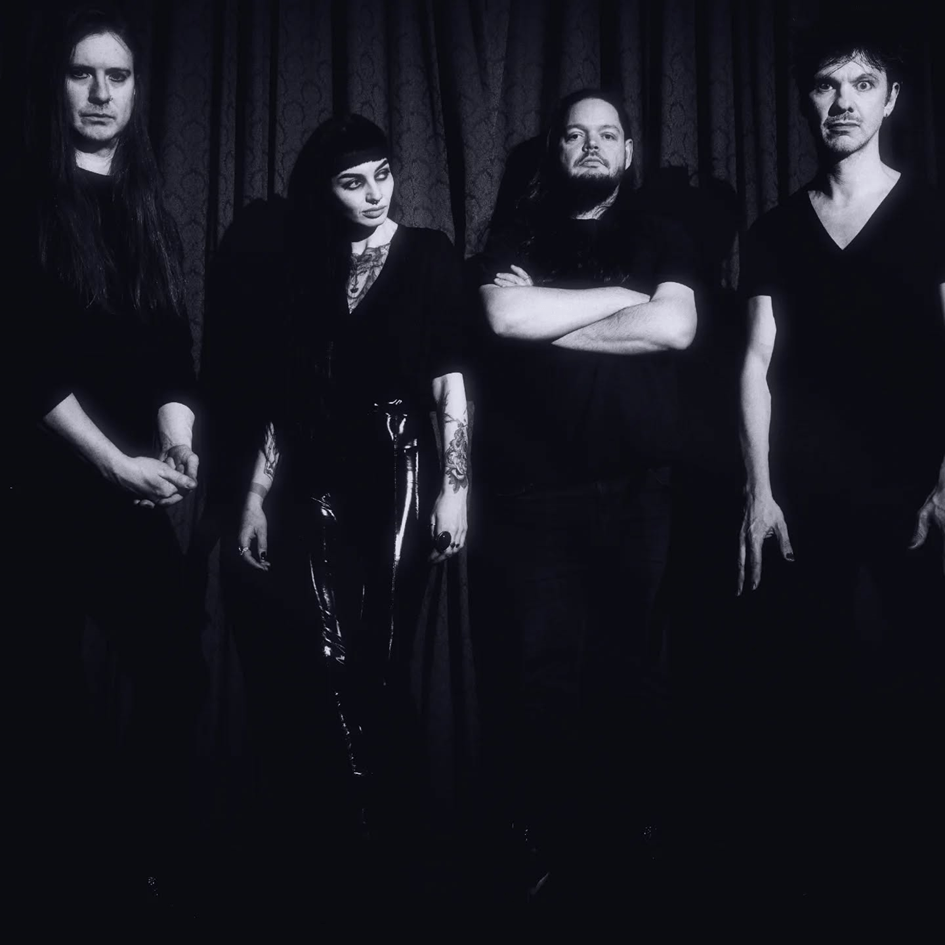
Photo Credit: Adam Moffat
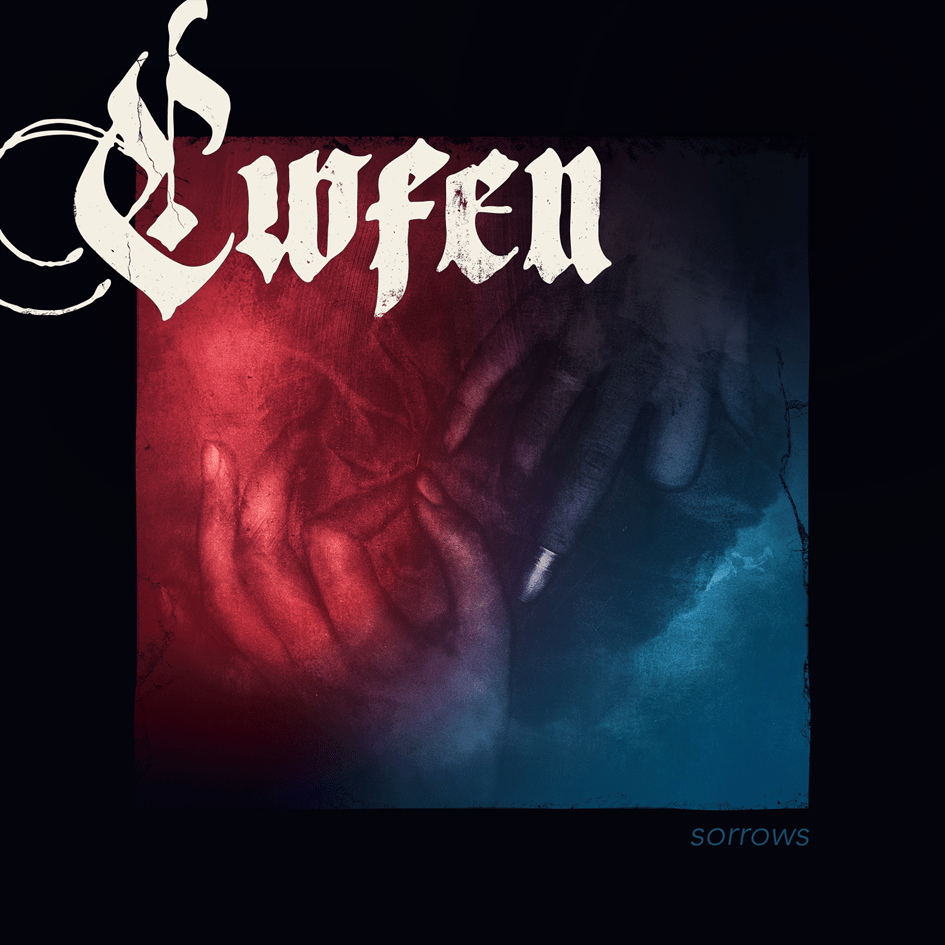
Since emerging from the Glasgow underground just 18 months ago, CWFEN (pronounced: Coven) have been growing not only their reputation but also their fanbase, selling out shows and attracting a growing audience to their doomy fever dream. Their debut single “Reliks”, released in October 2024, was a hit with fans and critics alike and their debut album “Sorrows”, released on May 30, 2025 via New Heavy Sounds, received several glowing reviews – and rightly so!
The Scottish quartet is vocalist and rhythm guitarist Agnes Alder, guitarist Guy deNuit, bassist Mary Thomas Baker and drummer Rös Ranquinn. We recently sat down for a chat with frontwoman Agnes Alder and talked about the roots of CWFEN, her musical influences and her favourite female mythological figure.Heavy Hags: What motivated you to found CWFEN?
Agnes Alder: I’ve played music for most of my life. I joined my first band when I was about twelve and spent years writing and performing in various forms. But there was a period where I stopped—life just got in the way. When the Covid pandemic hit, it prompted a bit of soul-searching, as it did for a lot of people. It made me reflect on what really matters and what I truly wanted to be doing once things returned to normal. For the first time in a long while, I felt a real urge to write again—and what came out was much heavier than anything I’d written before. At first, it was just a solo project—me, my guitar, my bass, and some drum tracks. Then I wrote a couple of songs and shared them with Guy. He said, “This is really good—you should do something with it.” So, from there, we just kind of beckoned our friends into the band. It was never meant to become what it has—it all happened quite naturally because we loved playing together and realised, we were making something different from anything we’d done before. We thought we’d maybe play one or two shows. But people really connected with it, and we just kept going. And now, here we are.
HH: The first song that I listened to was “Wolfsbane” and I was instantly captivated by the music and lyrics. I read online that it’s about female anger, which I think is necessary nowadays, in the face of rising extremism and conservatism everywhere. Tell me a bit more about the song, please.
AA: “Wolfsbane” — I’m so pleased that song is resonating with people. I wasn’t in an angry place when I wrote it — it was something beyond anger. I’ve been a feminist for a long time, and I guess I’m old enough now that I’ve seen progress… and then, for the first time, I saw things moving backwards. I felt this deep, bodily anger — watching what was happening to the LGBTQ+ community and just seeing all of it unfold. For me, writing is about getting the feelings out of my body — that’s where most of the songs come from. And part of me felt like: we’ve been polite about this for a long time. We’ve asked nicely. We’ve written things. We’ve used all the ‘acceptable’ channels to try and get people to listen. And it’s not working. It’s not cutting through anymore.
Art — whether it’s music or any other creative expression — has always been, for me, a way not just to channel emotion, but to respond to the world around us. When I was writing “Wolfsbane”, I was writing it for myself, for my daughter, for my friends — imagining something provocative. Like: what if we just poisoned all the men? Obviously not literally, but it was about speculating — saying the thing you wouldn’t be allowed to say in polite company, in writing, or out loud. What if a song could hold that rage, that frustration — and make people think differently about whether politeness is still appropriate in the face of everything that’s happening? It’s a song I really enjoy performing — especially live, because you can see how the women in the crowd respond. There’s something cathartic about screaming in men’s faces.
HH: Where did you film the video for “Wolfsbane”?
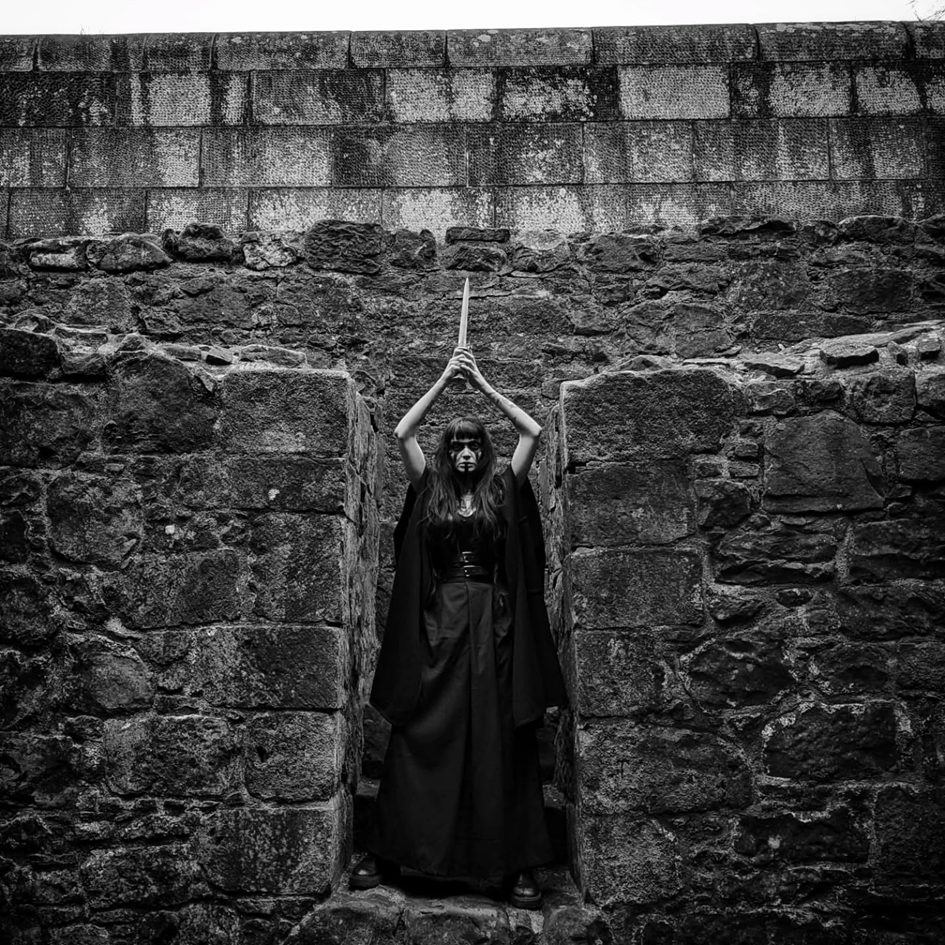
AA: There’s a ruined castle near a residential area in Glasgow. Scotland has many random castles, which is very cool. We take it for granted living here. For the video, we needed a spooky, gloomy place with few visitors. Our friend Richie, who did the filming, suggested it. We said, “It looks good; we’ll come and see.” He was right. It was a large vault space, and you could climb up to some of the castle’s ruined floors. Since the flooring was missing, you could look down. I’m afraid of heights, so I didn’t go up but did everything on the ground floor. The background was simple, moody, with light and shadow, not fully natural light.
HH: You live in Glasgow. Would you say that the city has in any way influenced your music?
AA: Yes, I think it has influenced us in several ways, probably without us even realizing it. The music scene in Glasgow is unique. I’ve lived in other cities, but I’ve never experienced anything quite like this—especially in the heavy music scene. People don’t stick to their genres. Death metal fans will come to your shows. Goths, old-school hard rock fans with battle jackets—they all show up. People genuinely support each other. There’s a lot of exciting stuff happening in Glasgow right now. You’ve got bands like Mrs Frighthouse, Coffin Mulch, and others doing something very different from the rest of the UK. We all go to each other’s gigs. We’re friends now, and seeing what others are doing pushes us to raise our game. There’s a great sense of creative cross-pollination.
Glasgow is also a working-class city with politics at the forefront. It’s very left-leaning, pro-immigrant, pro-social justice, and queer-friendly. That mindset is part of the city’s DNA. If we were making this music elsewhere, it might not be received the same way. But here, it resonates because the environment fosters that kind of expression. This is a city that actively participates—whether it’s protesting against anti-abortion campaigners who try to intimidate people at clinics, supporting Palestine, or advocating for LGBTQ+ rights. When you’re surrounded by that passion and activism, it naturally influences the art you create. There may not be a single “Glasgow sound,” but there’s a powerful mix of a vibrant music scene, social consciousness, and working-class roots that shape what comes out of it.
HH: “Sorrows” has just been released. When and why did you choose this title?
AA: The title came together quickly after the album was finished and we’d spent some time listening to it. I didn’t want to rush into choosing a name—I wanted to sit with it for a while. It felt like an album of lament. In Scottish culture, laments have a deep history—sad songs used for grieving, mourning, or storytelling. That resonated with me, especially in terms of the narrative aspect of the music. Still, the word “lament” didn’t quite feel right. Then, in a moment of unexpected inspiration—when I wasn’t actively thinking about it—the word “Sorrows” came to me. I saw it clearly, as if the album had named itself. I went back to the band, much like I did with our band name, and said, “This is the album title.” Whether it was my conviction or that it simply felt right, they immediately agreed. The emotional impact of the album stayed with me. Although it’s only just been released, I’ve been listening to it for about a year through the mixing process. The songs felt like a mirror, teaching me about the emotions I was experiencing. When I listened back, I realized there was real weight to the music—not because all the songs are sad, but because they hold a time capsule of intense feelings. “Sorrows” just felt like the right word to capture that.
HH: Is there an underlying concept that connects the songs?
AA: I always write from the point of view of a feeling. Whether I start with a riff, a melody, or a lyric, it usually stems from an emotion triggered by something else. I read a lot, so it’s often books, art, news, or history that sparks that urge to write. The songs aren’t linked by a central concept—it’s not a concept album—but they’re unified by expressions of sorrow in different forms. Some reflect personal experiences, like the loss of belief and the vulnerability that follows. Others respond to events in the world. “Wolfsbane” and “Rite” fall into that category.
“Embers” is the one that makes me cry every time I sing it—I even cried while recording it. It’s about women falling in love at a time when doing so meant persecution. It still does in many places. That theme feels especially urgent now. There are historical elements, political themes, and personal reflections throughout. But I don’t see the songs as being about me or my life. It feels more like I’m channelling something—just the messenger. That distance helps me sing them more freely, with fewer inhibitions. When I was younger, my songwriting was more introspective. Now, it feels like a response to the world around me. At nearly 38, I’ve lived more, felt more, seen more. I don’t feel the need to be literal. I can just sit with the feeling and let the song emerge from that.
HH: Maybe you can tell me a bit more about what, for example, “Bodies” is about. It’s an interesting track.
AA: “Bodies” came from a slightly different place. The first two songs I wrote for the band were “Wolfsbane” and “Bodies”, written back-to-back over two days in the studio. I think “Bodies” came first, and it was more of a speculative exercise. At the time, I was reading a lot of philosophy and thinking about the idea that women are expected to create—to produce, to have children. I’d been dealing with some personal health issues and reflecting on all of that. The question that emerged was: what if there were a vast, feminine energy that wasn’t small or passive—not something designed just to produce, but something powerful and consuming, almost on a cosmic scale?
That idea led me to the concept of the “monstrous feminine.” The lyrics — “I am the darkness”— were my way of flipping the narrative. What if I could sing from the perspective of everything women are taught not to be? That defiance felt important. I think that shift in perspective is also shaped by where I am in life. I have an adult daughter now, and I see her navigating the same challenges I once faced. I don’t feel the need to be polite anymore — or to care what people expect. So “Bodies” came from a place of imagining the feminine not as a gentle creator, but as a powerful destroyer – an act of resistance in itself.
HH: You also have a Medusa tattoo on your chest. Do you have a favourite female mythological character?
AA: I have a large tattoo of Themis—the Greek goddess of justice—on my thigh as well, but Medusa is the figure who resonates with me the most. It ties back to the idea of the monstrous feminine. There’s a brilliant book by Natalie Haynes called “Stone Blind”, where she retells Medusa’s story with more nuance and empathy.
I’ve been fascinated by Greek mythology since I was a child—ever since watching “Jason and the Argonauts”. In the original myths, Medusa is portrayed as this terrifying figure—so ugly that looking at her turns a man to stone. But there’s something deeply perverse about how that image was used. Roman soldiers wore her likeness on their armour for protection. So, there’s this contradiction: denigrating a woman while using her power for your own safety. To me, Medusa represents a figure whose story has been twisted and maligned. She wasn’t born a monster—she was made into one. She was raped and then punished for it, while the man, the god Poseidon, walked away unscathed. That injustice speaks to me deeply, especially from the feminist perspective I carry at this stage in my life.
Medusa symbolizes something powerful: the horror, the rage, the refusal to conform to beauty or softness. She’s about embracing that darkness rather than hiding it. That’s how I feel on stage too—I’m not trying to look beautiful. I want to be imposing, intimidating even. There’s strength in that. That’s why she resonates with me so strongly.

HH: I think one of the most painful parts of the Medusa story is that she’s punished by a woman. That always struck me as the deepest betrayal—that another woman would do that to her. Medusa is a victim, and yet she’s the one who’s blamed and transformed into a monster. That aspect of the story has always stayed with me.
AA: That’s also why I love the new Medusa statue so much—the one where she’s holding the head of Perseus. I almost got it tattooed at one point but thought that might be pushing it a little. Still, I find it incredibly powerful. What happened to Medusa was cruel on so many levels. And as women, when we really engage with the story beyond the simplified version we’re taught, we start to see ourselves in it. We recognize parts of our own lives and experiences in her. That’s why the story continues to resonate—it speaks to injustice, survival, and reclaiming power.
HH: How would you describe “Sorrows” musically?
AA: It’s difficult to put what we do into a single category. I know people have started using the term “doomgaze,” which is nice—but we’re not actually shoegaze fans. We just love reverb and spaciousness. What people tend to say about our music is that it feels emotionally heavy—not just sonically heavy. There’s light and dark. The album is full of contrasts: tender moments, explosive ones. It’s expansive and, I’d say, quite lively too. Most of it was recorded live, with only a few overdubs. A lot of the takes are first takes. We didn’t isolate instruments—we played together as a band, like we do on stage. We used room mics and production techniques you’re probably “not supposed to” use, but they gave it atmosphere and energy. The sound touches on several genres without fully belonging to any of them. People hear goth, black metal, even dreamier textures. But to me, it’s more about a sonic palette—we work with a specific set of colours, and with those, we paint very different pictures. Some songs are quiet and introspective, others like “Wolfsbane” are more rabble-rousing, and then you have something deeply emotional like “Embers”. Each track sounds like us, but none of them sound the same.
HH: I read that you started doing harsh vocals only like during the pandemic. How did you get into that?
AA: I taught myself how to do that—entirely on my own, in my car and in the shower. So, apologies to my neighbours. It definitely hurt at first.
Why did I do it? Honestly, it was a response to big emotions, to everything happening in the world. I’ve always listened to a lot of heavy music. My taste is broad—I love black metal, Diamanda Galás, anything that feels slightly unhinged. For me, harsh vocals aren’t about sounding aggressive for the sake of it. They’re a way to express intense emotion—something deeper. I’ve sung since I was a child. I was in choirs at school and church, like many kids, and my music teacher taught me to sing properly from the diaphragm. I’ve always had an alto voice, powerful but not suited for soft or “pretty” songs. So singing was always something I did privately, for myself. But then I started seeing other women doing these intense, harsh vocals, and I wondered: could I learn to do that safely? I watched videos, practiced, and surprisingly, it came to me quickly. I think it helped that I was already trained in diaphragmatic breathing and was very conscious about protecting my voice. The first time I did it properly, I shocked myself. I’d never heard a sound like that come out of my body. I remember trying it during practice in front of the band—I just said, “I’m going to try something,” and let out this huge noise. Their reaction said it all. Since then, I’ve kept going. It’s now one of the things I enjoy most, and I’m proud of being able to switch between harsh and clean vocals so fluidly. It feels like I’m using my whole instrument—and it’s been a really fulfilling journey.
HH: You stated that listen to many different styles of music. Which bands or artists are your all-time favourites?
AA: Gosh, this is hard to pick. I love heavy music, but I also grew up in a house with goth, new romantics, punk, and glam rock. If I had to choose my absolute favourites… Nirvana was the first band that made me want to buy an electric guitar. I had an acoustic before, then someone gave me “Nevermind” and it changed everything. So, they’re number one. PJ Harvey is another. Around the same time, I was given “Rid of Me”, and it blew my mind—spiky, weird songs, and seeing a woman with a guitar, which was rare back then. I also love Type O Negative. As problematic as they are in some ways, their music was huge for me as a young goth. And Nick Cave—I absolutely love him. Outside of typical genres, Bohren & der Club of Gore is one of my favourites—doom jazz at its best. I also love Hildegard of Bingen—early spiritual, sacred music. I listen to so much and draw from all over. I’m a musical magpie, really. It changes all the time, but those are the artists who’ve consistently meant the most to me. ■

-
The Yagas, “Midnight Minuet”
By Kira L. Schlechter
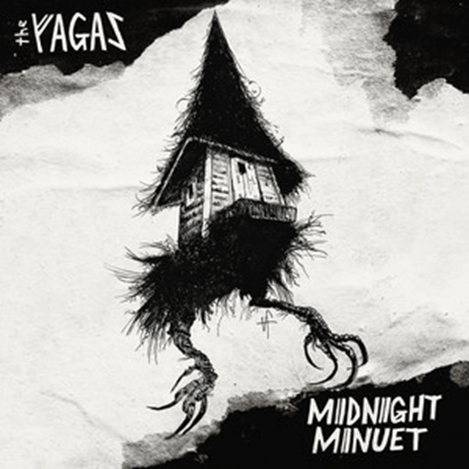
My partner on this site sends me links to songs all the time (because she’s amazing and her musical taste is impeccable). Late last year, she sent me this song from a new band:
It starts nicely enough – a jangly little alt-rock guitar melody, a creepy keyboard counterpart, a shambling groove, adding intriguing layers as it goes. The singer has a deep, sardonic, deadpan drawl in the verse and switches to an airier, wistful tone, full of sorrow, in the brief drift of a chorus.
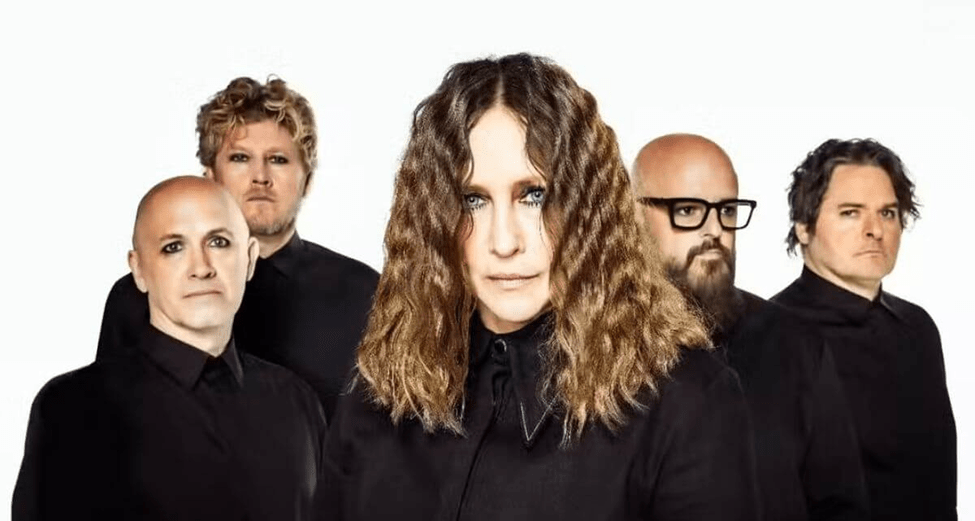
It’s that napalm-bomb breakdown, though, where she bursts into a primal, primeval howl, clinging to the mic like a lifeline, with the band exploding around her, that grabbed me hard and didn’t let go. Then it subsides away on a variation of the same initial melody, the singer crooning it to its end. That singer is Oscar-nominated actress Vera Farmiga, and the track, “The Crying Room,” by her band, The Yagas, is about experiences her extended family has had during the war in Ukraine. Her love interest in the video is frontman Eugene Hutz of Gogol Bordello.
Plenty of other actresses have forayed into music, but none have tried their hand at anything remotely as heavy as The Yagas can be. Not to mention, she is 51 years old, god love her, and boy, could we have had a conversation.
Trouble is, The Yagas (named for the Russian folk character Baba Yaga, by the way) are about as impenetrable as Fort Knox, and all my queries – for an album stream, for an interview — went unanswered (if you’re reading this, Vera, we’d still love to have you).
Along with Vera, the band is Renn Hawkey (also of Deadsy, keyboards; he also produced the album), Mark Visconti (guitar), Mike Davis (bass), and Jason Bowman (drums).
We’ve already discussed “The Crying Room,” so here’s a look at the other tracks from The Yagas’ debut album “Midnight Minuet,” with commentary Vera provided on each on the band’s Instagram page:
“I Am”:
She says this is “about helping my Granny, ‘Baba Nadia’” who had Alzheimer’s disease, before she passed away; she had been orphaned in Ukraine and survived Russian occupation.
Similar in sound to the lead track but decidedly more metal-tinged, its repeated chorus (“Voices surround/Fall to the ground/Falling, calling/Mother save me”), as well as the agonizing spoken-word portion that ends in a cry, are indeed a poignant rendering of someone drifting slowly into madness while still trying to hold onto their individuality.
“Life of a Widow”:
She says this is “about a widow pirouetting through her angry grief, mourning like Ophelia…her beloved deceased finally appears in the outro.”
Set to a tense, echoing keyboard melody and a more-alt-than-metal feel, it’s edgy and nervy and atmospheric. Vera’s voice is full of need and unrequited desire as she goes through the stages of grief – first that anger as she almost taunts her dead spouse. “Deceased is easy like, it’s easy like one two three,” she snarls, as if to say it’s going to be much harder for those left behind.
The bridge is crushing, dissonant, frustrated, but it leads to the next stage of grief, acceptance, albeit reluctant – “I’m healing now/Believe it now/I feel you once again,” she sings, with a resigned tone.
“Anhedonia” (defined as a mental illness described as loss of interest or pleasure):
Vera says she means the word “not as a symptom, (but) as a lover…the kinda lover who shows up uninvited, eats all your joy, and somehow you’re still asking them to stay…A love letter to absolutely nothing…feeling passionate about dispassion.”
This one is almost purely goth, the guitar smirking commentary alongside Vera’s deliciously snide lyrics, so perfectly from the perspective of a mature woman who’s seen it all. “I’ll try to fake it/Try, let out a squeal for you/Oh here I come now/Here comes something real for you” – I mean, we’ve all been there, right?
The third verse is even better, and there’s almost a bit of self-hatred in there as she dispassionately observes, “There you are lurking from the shadows/You smirk to see me in my robe/You seduce me, kiss my blue eyes black/Find your way inside me.”
The first real guitar solo of the album, frantic and crazed, leads to a bridge where Vera demands to feel something, anything: “Touch me, press me down so hard/Take this void and carve it out/Pound me on the blossom floor/The way you did that time before.” Just a brilliant, brilliant track.
“Pendulum”:
She says this is “about perimenopausal mood swings and whiplash…about being tender and deranged.” I’m sure I have no idea what she’s talking about – HA.
Tender indeed at first, with soft guitar and wordless, torchy vocals, Vera begins by insisting – morosely – “I feel so happy/I know that it won’t last.” And indeed, it all goes to hell in the crashing chorus where she alternately begs, “Don’t leave me/I’m so outta control/Don’t touch me” and “Just hold me/I’m so outta control/Ah please love me/Calm me down again, that’s your role.”
There’s a bit of wryness in the bridge where she acknowledges how ridiculous, and unfair, this situation is to both her and her partner – “Your role for me, you keep me sane/My role for you, to keep us blue.” But she’s helpless to change it as she swings into that chorus yet again. It’s hard to say how wonderful it is to get mature lyrics from a mature person for once.
“Charade”:
She says this one came about “when you realize your someone is wearing a mask stitched from half-truths and practiced smiles.”
Reminiscent a bit of Concrete Blonde sonically, it’s wistful and dreamy and shimmering, Vera musing to that someone, “I wish that we/We could end this game/This perfect mystery.”
“Bridle”:
The title refers to the scold’s bridle, a medieval punishment device used on women who dared speak their minds or otherwise “disobey”; it kept their mouths shut with iron bars, bolts, and a tongue depressor, she says.
Twisty and undulating, it’s not hard to equate the imagery of this song with what’s going on now with the silencing of women’s voices worldwide. She might be asking nicely to be freed – “I feel so frail locked up … unlock me” – but there will be hell to pay later – “I yearn to scream my head off/Unleash the fire” and “I feel the rage exploding/In my prison walls.”
“Pullover”:
Vera describes this as being about an anxiety attack she had when she signed up for an adult Rock Academy (where she and the band first came together).
Blending piano and guitar, it’s almost monotonic. You can feel the anxiety; it’s lyrically repetitive, the same way your brain goes round and round covering the same ground over and over when you’re stressed. “I need to scream out, I need to shut down,” she says, and in a bit of humor perhaps to her bandmates, she says, “All of your big ideas/They’re gonna have to wait.”
“She’s Walking Down”:
She says this recalls “an awful nightmare about my child being abducted … but really she’s ascending into her power.” The accompanying video is just as harrowing.
And so are the lyrics. The heaviest of all the tracks, somewhere between death metal (the blistering guitar riffs) and The Cure (the keyboard melody), it’s an awful tale – “He found me, oh my/Now I’m his concubine … Dowry paid, I bite my tongue.” Innocence is stolen (“I’m bleeding at first meeting,” she screams in the chorus), but she gets her revenge in the end. It’s imagery to which all mothers can relate; it’s savage and cathartic.
Title track:
She says the closer is “about waltzing with dead people … all spinning together, dancing barefoot amongst the graves.”
In 6/8 time, thick and dense, it is a reminder about how our dead are with us (“I have always been here”) and that eventually we will join them (“Hold me close/Hold me down/Turn with me underground”). The trippy bridge is spoken, almost shouted; there’s a lovely bit of drumming in the swirling outro. A sober, meditative way to end.
If “Midnight Minuet” is nothing but a one-off for The Yagas, we are indeed fortunate to have just that. If it’s the beginning of a career, we can’t wait to see what’s next after this most auspicious debut, my album of the year to date.


About Me
Sometimes the hardest part of finding success is gathering the courage to get started. The most successful people don’t look back to see who’s watching. Look for opportunities to lift others up along the way.
Follow Me On
Subscribe To My Newsletter
“Do not say a little in many words but a great deal in few.” – Pythagoras

