Getting started can be the hardest part.
Success is earned, one step at a time. One of the most invaluable skills a person can have is being able to clearly express what it is they want.


-
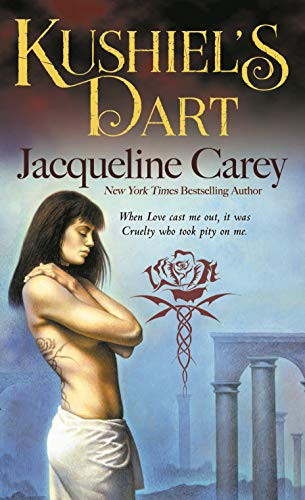
“Kushiel’s Dart” 25th anniversary
By Kira L. Schlechter
As our mission statement states, we here at Heavy Hags will tackle any subject that suits our fancy. When it came to my attention that this year marks the 25th anniversary of the release of one of my favorite books ever, “Kushiel’s Dart,” I wanted to celebrate by speaking to its author, Jacqueline Carey.
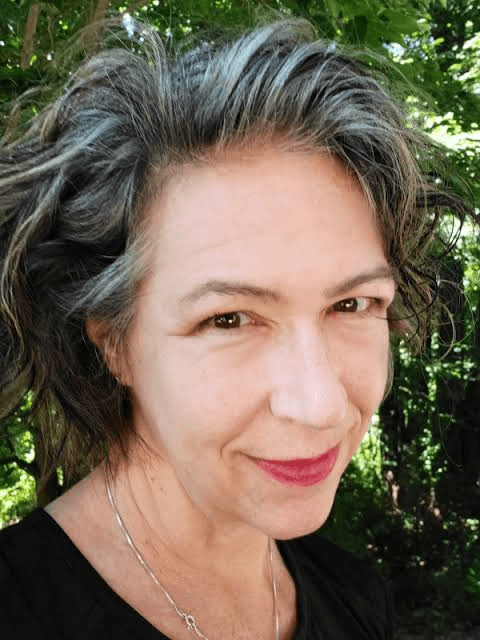
Photo courtesy of www.jacquelinecarey.com
The beloved book, released in 2001, begins the Kushiel’s Legacy series, a total of 10 books in all.
Set in Terre d’Ange, the “land of the angels,” based on France (and in other locations based on various European countries), “Kushiel’s Dart” is told from the first-person perspective of Phedre no Delaunay. “A whore’s unwanted get” (self-described), she is sold by her mother into one of the houses of the Court of Night-Blooming Flowers, Terre d’Ange’s sanctioned system of sex workers.
Now before we get all hot and bothered, let’s back up a little and explain:
Terre d’Ange was founded by Blessed Elua, a god born from the blood of a Jesus-like figure, Yeshua ben Yosef, mixed with the tears of the Magdalene and “nurtured in the womb of Earth,” as Carey writes in a later book, “Kushiel’s Avatar.” He had Eight Companions, who left the One God to follow him. Elua’s main tenet to his believers is “Love as thou wilt.”
The two Companions who factor in Phedre’s life most profoundly are Naamah (goddess of love and sex; in her, all forms of pleasure are sacred) and Kushiel (god of punishment and redemption through pain). So the Court of Night-Blooming Flowers is where Naamah’s worship – and all forms of consensual physical love – is practiced and celebrated.
As Phedre matures, it is discovered that she is the first anguisette born in many generations – one who derives ultimate sexual gratification through pain and whose existence “redresses an imbalance in the world” (a quote taken from a later book, “Kushiel’s Scion”). This attracts the attention of nobleman Anafiel Delaunay, who purchases her bond-price (to later free her from the house) and who ukltimately trains her to be a spy.
Another notable figure in the D’Angeline pantheon is Cassiel, one of the Eight who followed Elua through his travels across the Earth – he believes himself to be damned for abandoning the One God. He is celibate and demands such of his followers, his Brotherhood, including Phedre’s protector (and later romantic partner), Joscelin Verreuil. More on him later.
Carey, 61, was born in Highland Park, IL, and attended Lake Forest College, where she earned bachelor’s degrees in English and psychology. “Kushiel’s Dart” was her debut novel.
“It’s not the first one that I’d written,” Carey clarified in a phone interview. “I have a good three novels that will never be published. With every rejection, I kind of pushed myself to stretch further, be better, be a better writer.
“This was kind of my make-it-or-break-it book – it was a big concept, it was a scary concept. I wasn’t sure if it could be done, if it should be done. But I decided, alright, this is it, and if this does not sell, then I would have gone back to grad school and probably pursued psychology,” she said.
The world-building, the alternate Europe, she creates in the book “started with a conjunction of two things,” she said.
“One being the fact that I had read the book “Holy Blood, Holy Grail” (by Michael Baigent, Richard Leigh, and Henry Lincoln) a very long time ago, when I was probably in my teens. This nonfiction book … essentially lays out the theology and the history supporting the belief that in fact Mary Magdalene did make landfall in Provence and had a child who was the bloodline of Jesus Christ,” she said.
“All of that was in my subconscious when I traveled to the South of France and spent a couple of weeks bopping around and really fell in love with the quality of the landscape and the light and this history, theology, landscape. (It) all kind of conflated into, oh, I could build a world here,” she added.
The religious pantheon of the book, the Eight Companions, “comes straight from apocrypha,” she said.
“They are actually all drawn on angelology. The book of Enoch details this idea that there were fallen angels who taught many secrets to men and then God was like, uh-oh, too much. So that part I drew directly on. And then Elua himself was kind of the idea of merging the celestial hierarchy with the more hedonic tradition of a Dionysian wandering fertility god and bringing heaven and earth together in a literal sense,” she added.
Bringing Naamah into the mix, she said, was to add a female figure of divinity – in the mythology, Naamah offers herself to the King of Persis to free Elua from bondage and sleeps with strangers to support him in his wanderings.
Needless to say, and with all this in mind, “Kushiel’s Dart” may not be a book for everyone. There’s a good bit of suspension of belief and acceptance that has to occur before you can be comfortable with what’s happening.
“The initial reaction is offset, as one reads, by the realization that we are viewing this through the lens of a culture that legitimately regards sex as a sacrament,” she said. “Once that locks into place, it does change the perspective. But I never intended these to be wholesome. I don’t know if it’s any less shocking now than it was 25 years ago – it shouldn’t be.”
The book, as well as its two direct sequels, are written in first-person, from Phedre’s perspective. Carey spoke about how that affected her in the writing process, particularly in some of the more harrowing scenes.
“You talk about suspension of disbelief – you have to suspend identity in a sense as well to write that intimately,” she said. “In a way, I almost feel like I can’t address it for ‘Kushiel’s Dart’ because it gets so much worse in the final volume of the trilogy (‘Kushiel’s Avatar’).”
(Trust me – it gets a hell of a lot worse in that last book.)
So how much of Phedre is in Carey and vice versa?
“Not something I have a real good answer for,” she said. “I’m a researcher, I’m a plotter, I do not start writing until I have a really solid idea of what the structure of an entire novel is, and possibly more than that.
“However, for me the one mystery with a capital M is where do characters come from, and I do not know the answer to that. I do know that from the very first arc of inception, Phedre, her nature, was what it was – she was an unabashedly, divinely-touched masochist. I am not. I also don’t think I have the nerve to make a particularly good spy. But I am quite clever and observant, so there’s that,” she added with a chuckle.
Phedre is a unique character in fantasy in that for one, she is uniquely, unapologetically herself – she never tries to be anything other than that. She has no magic or superior abilities. She is adept at mastering languages. She pays attention, as her mentor Delaunay taught her. She’s intelligent and resourceful and repeatedly underestimated, to the peril of many.
“I think those are the qualities that make a really excellent spy,” Carey said. “Her character from that first inkling, as I said, was kind of a terrifying idea: am I actually going to write a masochistic female heroine epic fantasy? Is that a thing that’s even doable?
“It was a question of subverting what we think of as the usual tropes to find the ways in which she is deceptive. She is patient, yielding – those are not strengths we traditionally see on display in somebody who is saving the world,” she added.
Or as Phedre describes herself in “Kushiel’s Avatar,” it is “an odd legacy of Kushiel’s dubious gift that taught me to yield without surrendering. Endurance, and love – those things were all the power I’d ever possessed.”
And ok, yeah, Phedre is a courtesan, after all, a servant of Naamah, so there’s sex in the book. A good bit. But it’s not the main focus, nor does she use it at every turn. She does it as part of that service to her goddess. She does it out of love. And at critical points, she does it in order to survive.
“The theology of Terre d’Ange is very much centered on Blessed Elua’s precept, ‘Love as thou wilt,’” she said. “People take that often to be a statement of license – it’s actually a commandment as well: ‘To Love.’
“And if you buy the idea that love has divine agency, that is her superpower. The ability to find an element to love in all of these encounters, one way or another, is the lever that moves the mechanism of the plot,” she added.
“Love as thou wilt” is one of three big philosophies of not only “Kushiel’s Dart” but of the entire series. Devoted fans have turned each of these into tattoos. Each is at the root of, or can be traced to, many, if not all, of Phedre’s decisions, actions, and choices (and actually maybe all of the characters in one way or another).
Carey spoke about them, beginning with the first:
–“Love as thou wilt”: In keeping with this one, monogamy in this world is not a thing to be aspired to; it’s neither encouraged nor discouraged. Joscelin and Phedra have a relationship, yes, but she is first and foremost a Servant of Naamah and he understands this.
“D’Angelines do pay attention to this because they have human concerns about succession and inheritance,” Carey said. “But by and large, monogamy is considered a little peculiar, because why would you? It’s just not viewed as a societal necessity.”
Carey has said on social media that the “default” of the book is bisexuality. She herself is bisexual and many of the characters, including Phedre, have liaisons with both sexes, for reasons political and personal.
“With D’Angeline culture – I was really thinking about that after writing that – one of the things we see is none of the Abrahamic religions have a whole lot of sway,” she said. “The major force that has condemned homosexuality as sinful does not exist in this world.
“Instead, the D’Angelines (make) quite a few references to (and have a) certain affection for ancient Greece. So they’re looking at a throughline where the highest form of love might be, say, Achilles and Patroclus. So when you sidestep the contemporary attitudes and make it more palatable, it feels more natural in a fantasy setting,” she added.
–“All knowledge is worth having”: This is a tenet drawn from Phedre’s mentor, Delaunay, and a precept of Shemhazai, another of the Eight Companions. Phedre never stops learning, and is continually underestimated for the depth of her learning and the scope of her intellect.
“If you don’t worship that particular deity, you are not obliged to live by that precept,” she pointed out. “And there are some things, like the manner of the death of a loved one, that maybe is not worth having. But on the whole, that does, exceptions notwithstanding, kind of (fall) in accord with my own feelings.
“We are living in a time when so many people are putting their heads in the sand and going it’s too much, I just can’t, I can’t bear another atrocity, I can’t bear another injustice,” she added.
–“That which yields is not always weak”: Phedre’s dearest friend, Hyacinthe, says this under the “dromonde,” or his ability to see into the future. Phedre’s “yielding” is often treated as a vulnerability by others when it is actually her greatest strength.
“I don’t know when something like that, which can be a measure of compassion, can be a measure of grace, can’t be a strategic tactic – being regarded as weakness,” she said. “I think it’s good to have that reminder in existence in the world. There are all kinds of strengths and that is one of them.”
We also spoke about the three other main characters in the book:
Joscelin: The ultimate protector and Phedre’s main love interest, who sacrifices all for her and for the cause of keeping Terre d’Ange safe and free. The Cassiline motto “I protect and serve,” one he fiercely clings to, is put to the test time and time again.
“He does experience an ego death,” she said. (He) realizes OK, I cannot presume what the gods want of me, and I have been doing that. Apparently what they really want has to do with her.”
Melisandre: The ultimate nemesis, whom Phedre alternately despises and cannot resist. And the feeling is mutual – “oh yeah, absolutely,” Carey agrees.
She calls her “dynamic and exciting.”
“I can’t help but also love Melisandre, because she is a great villain – mostly by virtue of how freaking smart she is, and (also) her beauty and ability to manipulate. She is a whole plan ahead of everybody else,” she added.
Hyacinthe: The ultimate best friend, he was Phedre’s first friend and even though they were lovers, it’s that deep, abiding friendship that binds them forever. They know in some way that they are not for each other in terms of a relationship.
“I think both of them feel like I wish I did feel that way, I want to so much, I almost think I do,” she said. “But no, we are not that to each other.”
It goes without saying that “Kushiel’s Dart” is a deeply feminist work, “simply because of the context and what it’s pushing back against,” Carey said.
“If you look at the blurbs on (your) battered old copy, you will see Robert Jordan on the front,” she said. “On the back, I think we’ve got Piers Anthony, who we do not speak of anymore (he’s been accused of normalizing pedophilia and misogyny in his work), (and) Eric von Lustbader, who was best known for writing spy thrillers.
“Fantasy was very much dominated by male authors, male heroes. George Martin is an exception in that he did write some strong and wonderful female characters – however, really horrible stuff befell them on the regular. So to have one lone female heroine saving the world, yes, I absolutely think that in the context of epic fantasy, it’s a very subversive and feminist work,” she added.
Nowadays, of course, there is a plethora of female writers and strong female characters in epic fantasy and in the genre in general, which Carey said she loves to see – albeit with reservations.
“It does worry me a little bit – right now, it feels like a lot of people are trend chasing and trying to be the next somebody rather than the first themselves,” she said. She did have praise for “Black Sun,” by Rebecca Roanhorse, which she described as “really fun and exciting.”
Carey hopes readers take away one main theme from “Kushiel’s Dart” after these past 25 years, whether it’s their first read or one of many.
“The idea of love as a divine force with agency in the world – if you can use that as a throughline, looking at the different ways it manifests, would probably be at the top of my list,” she said.
She says her own relationship with the book “has certainly changed a lot over the years.”
“It’s still the thing I’m known best for, and that, depending on the day and my mood, can be wonderful or demoralizing,” she said. “I’ve written a lot of other things that I love equally. So there is always going to be a tremendous amount of love and gratitude, but also in a bittersweet way because it’s overshadowed so much else that I’ve done.”
Kind of like a band who has that one huge hit that they always have to play?
“A little bit,” she acknowledged. “I feel like that’s a little too harsh, but after 25 years, it’s not entirely untrue.”
Looking to the future, Carey is currently at work on a new stand-alone novel, due next June, “something completely different,” she said.
“It is a near-future blend of magic realism and psychological suspense called ‘The Avalon Society,’ with a protagonist who was raised in a cult of magicians,” she said. “Something cataclysmic happened, but she doesn’t remember exactly what happened when it all went down.
“It’s a totally new avenue for me and I had a lot of fun writing it,” she said.
-
DOOM, DRUM MACHINES & FAIRY TALES
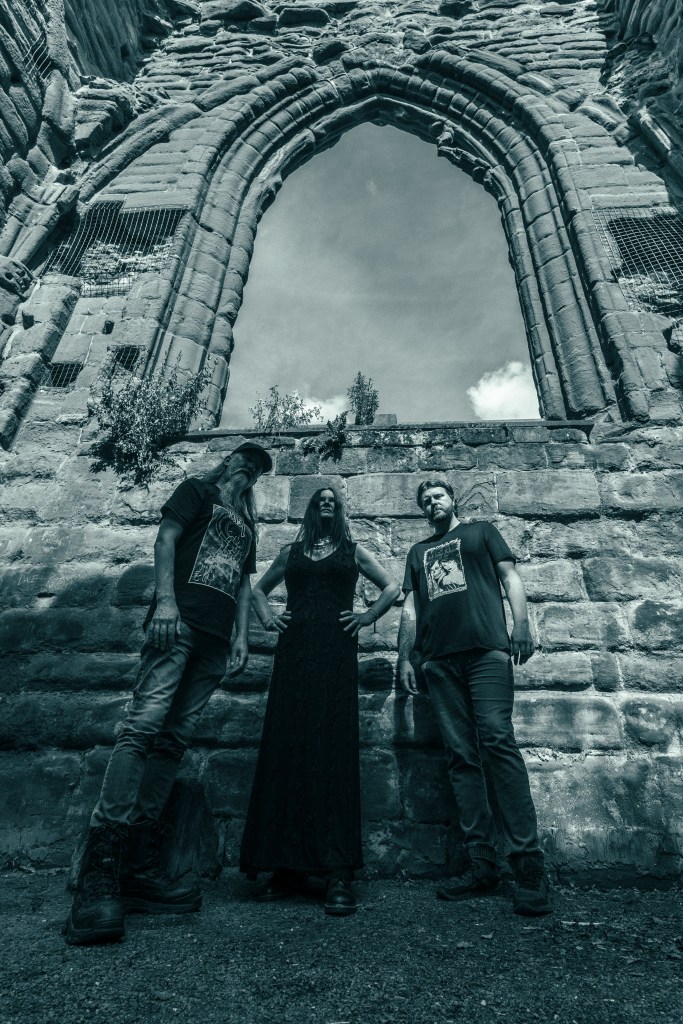
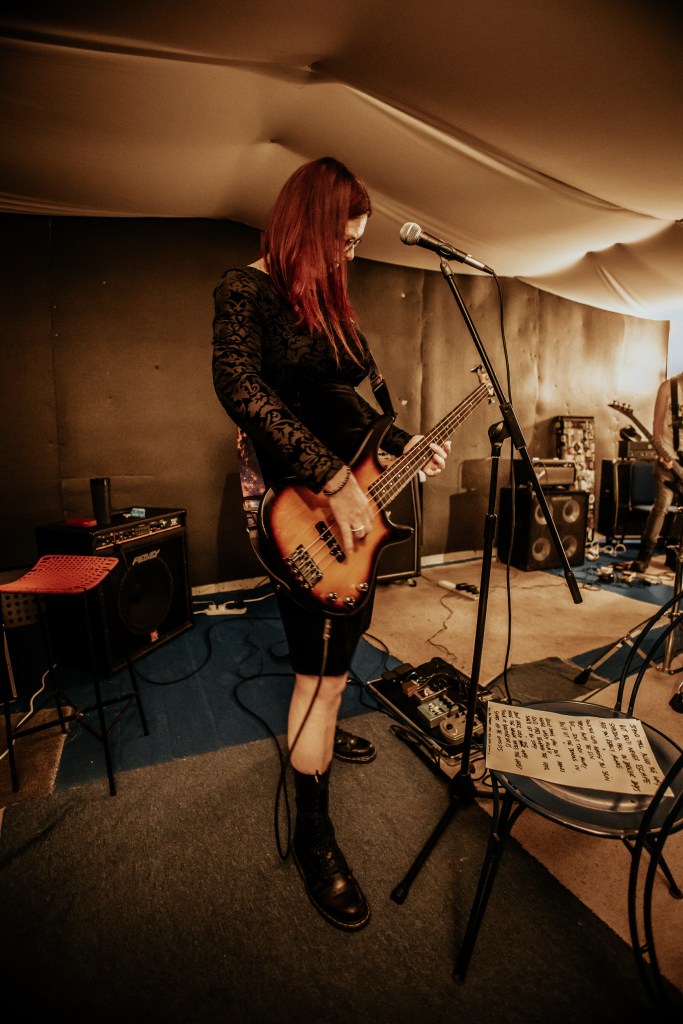
TWO BASSES, DRUMS, BEWITCHED DOOM AND MISERY. Formed in 2021 in the grim North West of the UK, Warlockhunt blend heavy, atmospheric soundscapes with pure DIY passion. Not long after the third edition of their very own North West Doom Fest in Chester, frontwoman La Rainey sat down with us to discuss stolen instruments, filming music videos with plastic guns, and why two bass guitars are infinitely better than one.
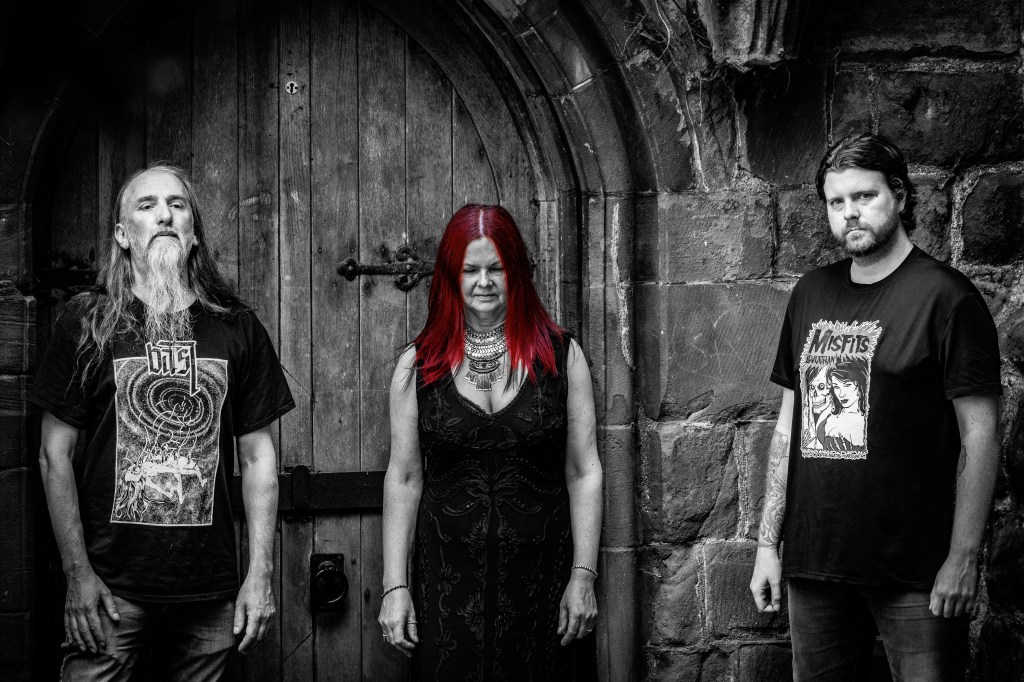
LINE-UP:
La Rainey – Bass & Vocals
Murky Watters – Bass
Toby Sure – Drums
Cocktails, Red Wallpaper & The Saddle Pub
Heavy Hags: It is so great to finally sit down and do this interview after meeting at your festival, the North West Doom Fest in Chester! The atmosphere there was fantastic. I loved the room—it had this wonderfully atmospheric, gothic vibe with the red wallpaper and black sconces, which perfectly suited the sombre music. How many times have you run the festival now?
La Rainey: Thank you so much for coming and for supporting us! That was actually our third edition. We already have the headliners and most of the billing sorted for the fourth one next year. We also had a spontaneous idea after a few too many cocktails to put on a smaller, one-day event this summer, so we’re keeping busy.
HHs: That’s great! How did you even get started with organizing a festival?
La Rainey: Well, my bandmate Murky has been in bands forever and used to put on gigs. He lives in Conwy, and unfortunately, the music scene in North Wales isn’t what it used to be—the venues have mostly disappeared. He started putting gigs on to get people over there, using the fact that Wales is beautiful as a selling point.
Later, we started hanging out at The Saddle pub, which is our local rock hub where I live in Chester. They let us use the upstairs room for free. At first, we just thought, “Hey, we can play here ourselves for free.” We’d play, Murky’s other band would play, and mid-week we’d host a few other bands who asked to get on the bill. The very first Doom Fest we did was just a one-day event, and we were so pleased with the response. Everyone told us we had to do it again. Coming out of Covid, people were slow to start attending live gigs again, but fast forward to now and we’ve successfully completed our third edition. The second and third iterations both expanded into two days, so we’re really happy with how it’s growing.
HHs: Who handles all the booking and organization for the festival?
La Rainey: Murky and I split it between us. A lot of it just comes down to going to gigs, playing shows, and meeting people. We try to book bands within the genre that we personally love. There’s a lot of messaging back and forth, and eventually, it all comes together.
For example, Pantheist, who played on Friday this year, is a really big band in the scene. We supported them a year or two ago, and when you meet people and chat, you build a friendship. Because of those connections, they were happy to come down and play. Now that word has spread, bands are actually starting to approach us to ask if they can play.
“Honestly, I think we could have learned to play the drums ourselves faster than we figured out how to program that drum machine!”
Lockdowns, Stolen Basses & “Doom Pop”
HHs: Two bass guitars, drums, bewitched doom, and misery. How did that unique concept first come together?
La Rainey: It started during Covid, back in those dark times when you were only allowed one walk a day and had to stay within a strict social “bubble.” My bubble was Murky. He was working all the way through lockdown, and I work in a school, so early on we spent a lot of time walking around the mountains in Conwy, just being a bit silly to get through it. We thought, “Let’s take some photos and start a band.” Murky wanted to put it online immediately, and I had to stop him because we hadn’t actually written any music yet!
My son had left his bass guitar at our place when he went off to Bangor University. I picked it up and was surprised to find that writing lyrics came quite easily to me. Given the time period, there was a lot of heavy stuff to sing about. At first, it was just the two of us using a drum machine because we didn’t have a drummer. Honestly, I think we could have learned to play the drums ourselves faster than we figured out how to program that machine! Our first double-single release was completely drumless. I just really fell in love with the entire process.
HHs: Had you been a musician before starting Warlockhunt, or did you step straight into playing bass and singing?
La Rainey: Murky has played bass since he was a teenager in thrash bands, but I had always been strictly on the audience side of the stage. I’ve always loved going to concerts, but I was perfectly happy being a fan. However, I realized that the intense emotion and immersion you feel as an audience member extends to the stage as well—the adrenaline is incredible. As for the singing, it just evolved. I always imagined I was Janis Joplin in some sort of fairy tale, but I’d never actually done anything about it. When we started the band, I just thought, “Well, who else is going to sing this miserable stuff?”
HHs: Where did the name Warlockhunt come from? Is it true it started as a joke?
La Rainey: It completely started as a joke! We were talking about witch hunts, and we thought, “Well, what about a male witch? A warlock hunt.” But when you say it out loud quickly, it sounds a bit… rude. I suggested “Warlock Hunter” because I wasn’t entirely sure about the joke, but the original name stuck because it was just so funny to say. It’s a bit silly, but I don’t know any other band with that name, so it makes us recognizable!
Fake Moustaches, War & The Welsh Hills
HHs: What was the very first song you wrote together, and what inspires your lyrics?
La Rainey: The very first things we did were “Sleep” and “Heal,” which came out as a split double-single. “Sleep” was inspired by going to see Doctor Sleep, the sequel to The Shining. It was a great, supernatural film that transported you into this ethereal atmosphere.
For other songs, a lot of inspiration comes from supporting friends through tough times—like a bad breakup—and from the world around us. You only have to turn on the news to see awful things happening, and it gives you immediate, heavy material to write about. For example, we put out a song called “Whispering Words”, which I wrote when Ukraine was invaded. Looking at what’s happening in Gaza now, you just find yourself asking why this is still happening. After that EP, we released our album, Susurrus, and then we put out Prey last year.
We record everything in a wonderful little studio over in Penmaenmawr in North Wales. The producer puts us all in one room to track the instruments live, and then I go into the vocal booth. We usually track everything in a couple of days because we hammer it out in rehearsals for weeks beforehand to make sure we’re as sharp as possible.
HHs: I love the music video for “Sacred Skin.” The black-and-white aesthetic and the church location create such a powerful atmosphere. Where did you film that?
La Rainey: That was filmed at a beautiful little historic church out in the mountains of North Wales. It’s open to the public, though they still hold services there on Sundays. We walked up there carrying our bass cases like they were coffins!
Generally, we love having fun with our videos. You should also check out the video for “Sad Hill Blues.” We travelled to Burgos, near Bilbao, to visit the Sad Hill Cemetery where the final shootout of The Good, the Bad and the Ugly was filmed. We turned up armed with fake moustaches and plastic toy guns to reenact the final Clint Eastwood scenes. We definitely have a laugh with it.
“You can’t help but draw inspiration from the standing stones, the hillforts, and the deep history of the landscape. It bleeds into the atmosphere of the music.”
HHs: As a fellow folklore and history enthusiast, I have to ask: does the landscape and history of Northwest England and North Wales shape Warlockhunt’s identity?
La Rainey: Absolutely. We aren’t quite Paradise Lost—who come from Yorkshire—but the history is steeped into everything around us. I’m only an hour away from the mountains, and on a clear day in Chester, you can look right across the border and see the ancient hillforts lining the Welsh hills. You can’t help but draw inspiration from the standing stones, the hillforts, and the deep history of the landscape. It definitely affects you and bleeds into the atmosphere of the music.
Dual Basses & The UK Scene
HHs: How does the songwriting work between the two of you? Do you write the bass lines simultaneously?
La Rainey: I’ll usually start noodling around with a very simple idea on my bass and write a vocal melody that follows the notes. I’ll take it to Murky first to see what he thinks. From there, we’ll expand the sound. Because I play standard tuning and Murky tunes down to something heavy like B-flat, our two basses naturally occupy different sonic spaces, which creates a really distinct, thick sound without needing a traditional guitar.
Once we have the skeleton of the song, we send it to our new drummer, Toby, who joined us at the end of last year, to see what he wants to do with the rhythm. We take it into practice, fine-tune it, and if we’re excited, we throw it straight into our live set to get it ready for the studio. I’ve set a personal goal to write at least one song a month this year, and I’ve already got several on the go, so the process is moving quite naturally.
HHs: How would you describe the current UK doom and heavy underground scene? Are there any particular bands you feel a kinship with?
La Rainey: It’s an interesting scene. A reviewer once described us as “doom pop,” which made me laugh because I don’t really know how to classify us! Murky loves heavy grindcore stuff, and I lean toward bluesy rock, but doom is where our tastes meet. We prefer clean, melodic singing rather than shouting.
There are so many fantastic, diverse bands under the doom umbrella right now. The ones we booked for the last festival, like Cruel Mother and Sleeping Mountain, are completely different from one another. Cruel Mother plays this incredible, dark doom-folk, while Sleeping Mountain has a bluesy but incredibly heavy vibe. There is so much talent coming out of places like Glasgow and Cardiff right now.
HHs: Who are your personal musical idols—the artists you always find yourself returning to?
La Rainey: Going back to my teenage years, it was always the classics: Deep Purple, Black Sabbath, AC/DC, Janis Joplin, and old blues. Over time, my tastes just got heavier.
As for modern bands, I think Darkher is absolutely magnificent. I also loved SubRosa—we saw them a few times and I was sad when they split up, but they are playing a festival again this year, which gives me absolute goosebumps. Amenra is another one; seeing them live is just immense, you completely lose yourself for an hour and a half. I know their style of performing—where the singer often turns his back to the audience to stay fully immersed in the music—can be polarizing, but I love that level of dedication to the atmosphere. Even outside of heavy music, I appreciate anything with a great rhythm and beat, whether it’s 80s stuff like Duran Duran or even the Bee Gees!
What’s next on the horizon?
HHs: What is next on the horizon for Warlockhunt?
La Rainey: The main goal is to get another album together. We’ve been self-releasing everything so far, but we might try shopping the next one around to some record labels to see if there’s any interest. We also might splash out and book a residential studio where we can stay over for a few days to try a different recording environment.
Performance-wise, we’d love to play in mainland Europe. Our friends in the band Lusca are based in Vienna and are putting on a festival later this year, so we’re hoping to head over for that. We’ve also just released a limited vinyl with them that is pretty special: Each band has done a PJ Harvey cover, as we all admire her. She rocks!
We also have a few UK summer and autumn gigs lined up. And the guys from Old Horn Tooth, who headlined Saturday night at North West Doom Fest in April, stayed at our house for the afterparty, and we talked about putting together a killer line-up in London with Warlockhunt, Sabbat Wolf, and Cruel Mother. If that comes together, it’s going to be an incredible show!
-
An Interview with Amberian Dawn
By Kira L. Schlechter
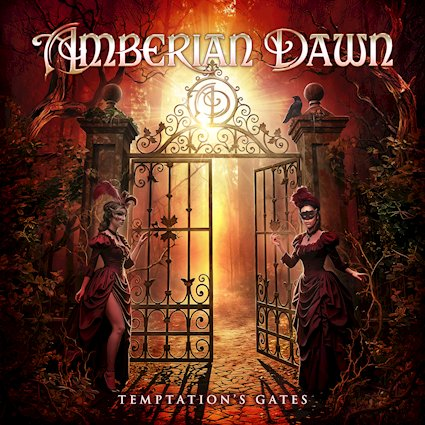
Finnish symphonic metal band Amberian Dawn has returned this summer with not only their first album of originals in six years (their last effort was the 2022 album of ABBA covers, “Take a Chance: A Metal Tribute to ABBA”), but also with a new singer and a reinvigorated sound and perspective.
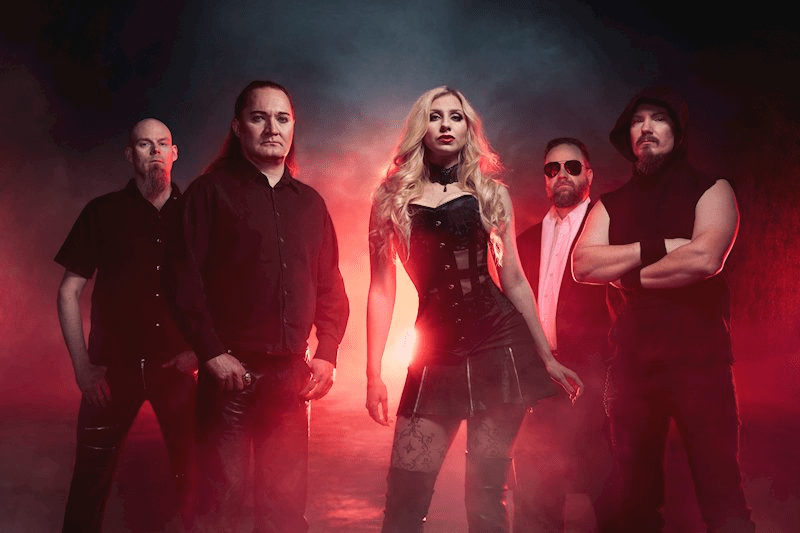
Nicole Willerton joins the veteran band for their latest, “Temptation’s Gates.” They’re led by guitarist-keyboardist Tuomas Seppälä and joined by guitarist Emil Pohjalainen, bassist Jukka Hoffren, and drummer Joonas Pykälä-aho.
She and Tuomas spoke in an email interview about how they found each other, the writing process, and the album’s songs. Our questions and their responses follow:
HH: How did you all come together, how did you find each other (the band’s previous singer, Capri, left due to scheduling reasons)?
Nicole: I was out and about when I received a message from Tuomas asking if I’d be interested in recording a cover of an Amberian Dawn song. At the time, I had been sharing quite a few vocal covers on my social media, so I thought, “Why not?” I had enjoyed their music for years and was familiar with their sound, so I decided to give it a try.
Before I even had the chance to send the cover to him, Tuomas contacted me again and explained that Amberian Dawn was actually searching for a new lead singer. He asked if I would be interested in auditioning for the role. It definitely caught me by surprise, and I had a lot to think about, but I decided to approach it with an open mind, put my own spin on the song, and see where it might lead.
I didn’t have any particular expectations, so it was a wonderful surprise when they later told me they really liked my voice. After that, I recorded a few more covers of their songs to explore how my voice fit with different styles in their catalogue. Eventually, I was invited to Finland to meet the band and join them for our first rehearsal. From the very beginning, the guys made me feel welcome. We connected instantly, got along great, and it has been an absolute pleasure working with them ever since.
HH: How much did you participate in any writing or recording, Nicole? I’d read that Tuomas said there weren’t many songs written before you joined and that the collaboration between you was really rejuvenating – would you say, Tuomas, that that was simply just having a new person to work with who had new ideas, or do you credit that to Nicole specifically, and why so?
Tuomas: When we started working on the album with Nicole, I only had a few songs ready. We began with those songs first, and Nicole wrote the lyrics and recorded the first demo vocals for them. We quickly realized that the collaboration was working really well. Nicole then recorded the final vocal parts. After that, I got a lot of new motivation, and new songs started coming together very quickly. The process was the same as it has always been with Amberian Dawn – I first create a demo version of the song at home and then send it to the singer. After that, the singer writes the lyrics for the song. Working together with Nicole was fast and very efficient.
Nicole: I received the songs one by one and wrote the lyrics during the recording process … to get the raw feeling from the vocals of what I was feeling in that exact moment. I did have creative freedom in writing backing vocals and ad-libs. It’s been a great process!
HH: Nicole, you said that a main message in the album is “embracing one’s true desires and accepting and acknowledging one’s honest feelings” – why was that idea important for you to address, and had you had trouble doing that in the past? If so, what’s changed that’s allowed you to do that more?
Nicole: So many people spend parts of their lives feeling trapped by expectations, whether those expectations come from society, other people, or even from themselves. It’s easy to suppress certain feelings, desires, or dreams because you’re worried about being judged or because you feel like you have to fit into a particular role. There have been times when I felt held back by fear of judgment and found it difficult to fully embrace what I truly wanted or how I honestly felt.
Over time, though, I’ve realized that there’s a lot of freedom in accepting yourself and living authentically. No matter what you do, people will always have opinions, so it’s more important to stay true to yourself than to constantly seek approval from others. That idea of breaking free from feeling trapped and having the courage to embrace your true desires became a natural theme throughout the album. It’s about allowing yourself to pursue what genuinely makes you feel fulfilled – accepting who you are and choosing what you love.
HH: Nicole, you said the title track is about “facing your inner desires and accepting what you truly like and want,” of “finding liberation … between who you think you should be and who you truly are” – how personal is that for you, have you had to do that?
Nicole: I can absolutely relate to that. I think many people struggle with the fear of being judged or with the feeling that others expect them to act or live in a certain way. I’ve experienced that myself at times. It has been important to learn to trust myself, embrace who I am, and be proud of the things I truly love. It’s not always easy, but I believe that accepting yourself is one of the keys to finding real fulfillment.
HH: The distinction musically between the darker-sounding verses and the brighter, optimistic chorus really drives the temptation theme home – was that intentional?
Nicole: It’s difficult to say whether it was entirely intentional or consciously planned. A lot of my lyric writing happens quite intuitively. When I write, I often listen to the music and sing ideas out loud while recording, and the words tend to emerge naturally from that process. I think the music definitely influences both my emotions and what I want to express lyrically, even if I’m not fully aware of it at the time. So while I can’t say that I deliberately set out to create that contrast, I do think there’s a strong possibility that the darker verses and the bigger and more major-driven choruses subconsciously shaped the themes and emotions that found their way into the lyrics.
HH: Nicole, you also said you love “Les Fleurs du Mal” by Baudelaire and that those poems were an inspiration for the lyrics – was that just for this song or for the whole album?
Nicole: It was mainly an inspiration for this particular song. With “Temptation’s Gates” and its almost diabolical undertones about desires, it felt natural to draw inspiration from Baudelaire’s work. I love the vibe of his poetry, especially the way he explores beauty and temptation from a darker perspective.
Human beings are complex, and it’s not always easy to admit to yourself what you truly want, let alone embrace it. The idea of being true to yourself and acknowledging what you genuinely want from life is definitely a recurring theme throughout the album.
HH: “The Vision of Dreaming” is obviously about finding that ultimate connection with someone, yes? But there’s a little twist at the end, that maybe this is a memory of something that happened and is no longer going on, like you’ve experienced it and you’re mourning its loss (“I wish those memories/Could be what I see”) – is that accurate?
Nicole: What “The Vision of Dreaming” essentially is about is indeed the deep connection between two people. As for the line you’re referring to, my interpretation is rather than mourning a loss, I see it as a desire to hold on to those memories and keep them alive. It’s about cherishing the moments you’ve shared with someone and not wanting them to fade away, because those memories are meaningful and become a part of your inner visions and who you are.
HH: I like the economy in your songwriting, nothing overstays or drags on or gets repetitive, which can sometimes happen in symphonic metal just because of its nature – can you talk about that?
Tuomas: My Amberian Dawn songs have generally been quite short. My songwriting style has evolved over the years, but the basic approach has remained fairly consistent. I’ve never really enjoyed writing long songs, and I feel that many artists artificially stretch the length of their compositions. There seems to be an assumption that a song’s length somehow correlates with the composer’s skill, that writing a long song is more difficult than writing a short one.
Maybe it’s actually the other way around. It can be more challenging to fit a wide range of emotions, moods, and ideas into a short song than into a long one.
HH: Musically, “Moon” is kind of not what you’d expect, if that makes sense – when I first saw the lyrics, I thought it would be dreamy and slow, but it’s certainly not – can you talk about that dichotomy?
Nicole: I can understand why you would think that. The moon is often associated with luminous beauty and a sense of calm, so it would be natural to imagine the song as something more dreamy.
However, “Moon” is really about remembering the beauty that still exists in life, especially during dark and challenging times. We’re constantly surrounded by news about conflicts and all kinds of difficulties, and it can feel overwhelming to take in all that is happening in the world. While it’s important to be aware of those realities, I also think it’s important not to lose sight of the beauty that exists alongside them. We need to remember to appreciate life, nature, and the things that bring us hope.
The music itself also influenced the lyrics. It has an almost folk-inspired atmosphere, which made me think about my Nordic roots and the deep connection to nature that is often present in Nordic culture and mythology.
HH: The moon is such an inspiration for women especially: we see her as healing and benevolent (“Brighten up the darkness that we are fighting to release”), and maybe in a broader way, too, she helps us keep a sense of wonder in our lives. Is that the case for you, Nicole, and was there a specific inspiration for the lyrics here?
Nicole: That’s a really nice way of putting it, and I think it connects well to what I meant. The moon really does have that mesmerizing and almost hypnotic beauty to it. It’s one of those things that can instantly ground you and bring a feeling of tranquility, just by observing it.
HH: “Unchained” is an interesting track musically, all the tempo changes, the structure (there’s no real verse/chorus thing happening) – can you talk about where that might have come from?
Tuomas: It contains many unusual elements, such as the swinging groove underneath the chorus. I can’t remember hearing many heavy metal songs with growled vocals and a swinging rhythm like that.
The rhythm also changes quite a lot between the different sections of the song. Despite that, the structure developed very naturally – it was simply the direction the song wanted to take as it evolved.
HH: Nicole, was this the first time you’d tried harsh vocals, or why did you see them as being important to use here, maybe on the specific lines you used them on?
Nicole: Actually it was something Tuomas wanted to explore in terms of songwriting. He gave me a rhythm and I created lyrics around that. I do think it works well and adds a cool twist to the song.
HH: I really like in “Eternal Flame” how the chorus spirals up and up melodically (and the overdubs in the last one are really effective) and of course the keyboard/guitar duel in the solo section – can you talk about those aspects a little?
Tuomas: The chorus really does contain a lot of variation in pitch for the vocalist. It’s technically very challenging. To be honest, I didn’t think much about the vocal technique required when I wrote the chorus. Fortunately, Nicole was able to sing it perfectly.
We’ve always used a lot of backing vocals. That’s probably one of our trademarks. The guitar and keyboard parts after the choruses are also something we’ve always done. That kind of instrumental stuff has been part of our music from the very beginning.
HH: The title is kind of a metaphor, something we need to keep burning within ourselves even while “the world” wants to “tear freedom forcefully,” if that makes sense – true? I think the second verse is all about that, ignoring the naysayers and doing what you know to be right – true?
Nicole: “Eternal Flame” explores more the idea of claiming your individuality, finding your inner fire, and refusing to let outside forces define who you are. It’s a kind of transformation from oppression to empowerment within yourself. Lines like “walking my own path” or “I never wanted to be that way” speak to the idea that there isn’t one fixed way of living or being. We all have to find our own direction in life and ultimately stay true to ourselves because we are all different.
HH: Is “Life is Art” directed at art itself, kind of like saying that creativity is the cure for “this agony,” that it helps you to “Let me feel what the meaning of this life is”?
Nicole: In a way, everything we do can be seen as art because we are constantly creating our own experiences, memories, and stories. In the case of “Life Is Art,” though, the song is primarily a romantic story about the connection between two people rather than a song about creativity itself.
The chorus melody and some of the lyrical themes were inspired by Verdi’s “La Traviata,” particularly the idea of two people being separated while still longing for one another. The song reimagines that kind of story, showing how a deep bond can remain unbroken despite distance or circumstances. Even when two people cannot be together physically, love still finds a way to endure and connect them. Of course, life itself is always a source of inspiration for art, and emotions such as love and longing.
HH: “This Night is Waiting For Me” is kind of an anticipatory feeling, yes, this situation hasn’t happened yet but it’s waiting, it’s pending – was there a certain inspiration for this one?
Nicole: It was inspired by the experience of being about to meet someone from the other side of the world, someone I never thought I would actually get the chance to meet in real life, even though I had wanted to for a long time. For a long time, the idea of meeting that person existed only in my imagination, almost like a dream or a fantasy. Then suddenly it became real, and the song captures that feeling of that dreamy anticipation.
HH: “Undying Colours” is an interesting ballad in that as much sorrow as it’s describing, there’s also optimism and forgiveness, and those “undying colours” will remain bright and vivid no matter what’s happened – true?
Nicole: “Undying Colours” is a difficult song for me to listen to, because I wrote it during a period when I was going through the painful process of separating from someone who had once been very close to me. At its core, though, the song is not really about loss. I often think of it in a way similar to the Death card in Tarot – not as an ending, but as transformation. Something may come to an end, but that ending creates space for something new to begin.
Just as the death of a caterpillar becomes the birth of a butterfly, our experiences and relationships evolve into new forms. That’s what the “undying colours” represent to me. The love was always there, but the palette of colours and emotions will be different. The line “my healing heart will forgive me” is about accepting the pain and that eventually what has been sacrificed will become part of the story, rather than something that carries sadness.
HH: There’s a real Garden of Eden vibe with “The Garden,” with the imagery of the chorus (“a hunger breaking free/A forceful sin we cannot flee/There is a beauty born in pain/And our desire is to blame”) – was that what you were going for here, and if so, what got you thinking about that?
Nicole: I see what you mean! I was also inspired by the work of the novelist Mirbeau when writing the lyrics. “The Garden” is about human souls trapped within a controlling and restrictive world – metaphorically represented as a garden – where desires continue to grow and bloom despite the limitations imposed upon them. It’s highlighting the intertwined beauty and pain of passion.
“The Garden” is closely connected to “Temptation’s Gates” – both deal with the struggle to embrace and reach for one’s deepest desires.
HH: And the closer, “Phantasmagoria,” is basically being at a crossroads, of dealing with the past and wanting to go forward, but not being sure what that entails or how to do it – realizing that the phantoms and the ghosts and the obscurity are ionly distractions and not permanent?
Tuomas: “Phantasmagoria” explores the struggle of navigating the shadows of one’s own mind, where memories and emotions once felt create haunting nightmares that distort reality. The song reflects the tension between feeling trapped in your own experiences and yearning for release, clarity, and a guiding light to find a way out of the nightmare.
Nicole: Yes, I think that’s a very valid interpretation. For me, “Phantasmagoria” is about getting lost in the shadows of your own mind, where memories, fears, and emotions can start to take on a life of their own and distort reality. It’s that feeling of being trapped in a nightmare created by your own thoughts, while at the same time desperately wanting to break free from it.
The song is really about that struggle between feeling stuck in those experiences and searching for clarity. So in that sense, it is about confronting those “phantoms” and finding a way through them rather than letting them control you.
Tuomas closed the interview by talking about a few of the band’s touring plans – their album release show was June 28, a club gig at On the Rocks as part of the Tuska Official After Party in Helsinki, Finland.
“We are also planning for 2027 and hope to put together some touring opportunities for that year,” he said.
–Photo credit: Kanerva Mantila
-
Black Rose Rebellion, “Hail the Rebel Queen”
By Kira L. Schlechter
In the northern part of the state of New Jersey, guitarist Dave “The RockDoc” Rosenfeld (a dentist by trade) and his drummer wife Karen were about to quit music altogether. The songwriter and singer they had had in their band wasn’t a good fit for them.
In the southern part of the state, about two hours away, singer Trybe (that’s Brianna Felice) was about to do the exact same thing – quit music. Until both sides got a phone call.
“We had a mutual friend, a booking agent/promoter that knew us both, and she reached out to us,” Trybe said in a phone interview. “She says, this guy Dave has got this original band that I think you would be great for, please hear him out.
“And then I imagine on the other end she said the same – hey, I know this girl, she’s a great person, she’ll be a great fit for you. So she linked us up and then we had a phone conversation that led to an in-person conversation. And then the rest is history,” Trybe concluded.
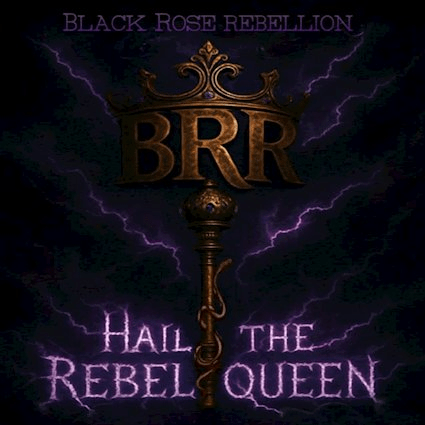
That history became Black Rose Rebellion. The hard rock/metal band released their very solid debut album, “Hail the Rebel Queen” (Pavement Entertainment), May 29. Along with Trybe, Dave, and Karen, Michele Mayhem is in on bass.
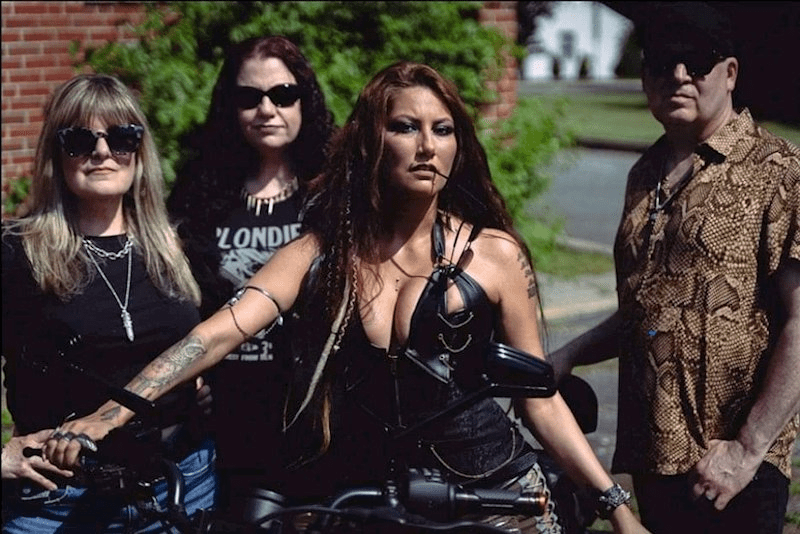
Trybe started her musical journey on an instrument not commonly associated with hard rock. OK, not associated at ALL with hard rock.
“I started clarinet very young; I was still in grade school,” she said. “Guitar, piano, drums, all that stuff ran in my family already, (but) I was just really interested in the clarinet and stuck with it.
“I was very good at it – I wrote my first song on the clarinet, I was in the All South Jersey Band for clarinet. And then somewhere along the line, I started piano lessons. I don’t remember if I stopped before high school or sometime in high school, but I went as far as that music teacher was able to teach me. I never pursued any advanced piano lessons from there,” she said.
As far as singing, she called her parents, who both sang, her biggest influence.
“I couldn’t tell you when I started singing – probably when I started talking,” she said with a laugh. “Probably as soon as my vocal cords could make noise, I was probably singing a tune. In elementary school, I did chorus, choir in high school, just sang any chance I had.”
After high school, Trybe served 13 years in the U.S. Army in various capacities: the JAG Corps (that’s Judge Advocate General; the legal department of the U.S. military); in Civil Affairs; in Operation Enduring Freedom (the first stage of the war in Afghanistan); and as a drill sergeant. She has a degree in legal studies from what is now called the University of Providence in Montana and has worked as a paralegal.
“I had thought about the military all through high school,” she said. “My grandfather was in the Navy in World War II; my brother was a high school dropout, got his GED, (and) went into the Army. Military was just kind of on my radar in my family.
“I was just looking for a challenge and to prove something to myself. I also needed a way to get through school. My senior year in high school, my parents divorced. We had no money for me to go to college – I was working three jobs for the first year and a half out of high school once I graduated. I was like, this sucks, so that’s when I finally decided to commit to the military,” she said.
It allowed her to go to college and get that degree. She said she had then wanted to go to law school, but after becoming a mom, she said her “priorities shifted.”
She left the military “officially, on paper, in the fall of 2021,” saying she “stayed in as long as they let me.” Going back to civilian life, the album bio noted, was “a challenging transition.”
“I think that’s a struggle most servicemembers encounter when they’re getting out of service,” she said. “I was medically retired; I didn’t get out voluntarily. The service tells you thanks for your service, since you’re no longer an asset to us, then they send you on your merry way, and then you’re just kind of lost.
“For some of us, soldiering is the only thing that we ever do. It’s the only thing we know we were good at, that we had a place in. I was always the kid that didn’t feel like I really fit in anywhere. I just really didn’t know where my niche was in this world. And then I earned that uniform and then that whole world was just all I wanted to be a part of,” she added.
Her husband and kids were a help, she said, but it was still a struggle to find her identity again.
“I went from like go go go all the time and having purpose, discipline, and structure and purpose,” she said. “That was my thing, that’s who I was as a person, and I just didn’t know what to do with myself.
“Now that I was left to my own devices, it gets the best of you. The mental struggles that you have, that stuff consumes you when you don’t have anything else to think about or do. When you don’t know what your purpose is anymore, you feel like your life has kind of been taken from you,” she said.
Getting back to music – and volunteering with the Veterans of Foreign Wars organization – helped her to “come back around and find my purpose again,” she said.
The songs for “Hail The Rebel Queen” were written in a back-and-forth collaborative process that neither Trybe nor Dave was accustomed to, she said,
“Dave sent me a bunch of demos that he already had, (and) I had notebooks full of poems and songs,” she said, “I would do a voice memo and send that over to him and have him write the instrumental part to what I was sending him. And then I was writing lyrics and melodies to what he was sending me.
“It was backwards to what we were both used to. But I really appreciated that, because it pushed us outside of our boundaries and it forced us to open our minds and be a little more creative. I think it just made for a really, really great product,” she said.
She’s right on that one – it’s not just a great product, but a distinctly personal one. The opening track, “Burn It Down,” references her own past, especially in the chorus and second verse.
“The whole album is a reflection of that journey that I just talked about – my whole life of being this really insecure, introverted kid who ended up being in the military, who (then) became this very liberated, strong woman, and then fell back on her face trying to figure life out and then found it again,” she said with a laugh. “That whole journey is what this album’s about – it’s resiliency and strength and empowerment.”
She also pays homage to her mom in the track – and while she didn’t actually say “Don’t ever quit your daydream,” as the lyric goes, she was always supportive.
“She’s always encouraged me to pursue whatever it was that made me happy and also be smart about it – she would help me but not do it for me,” she said. “When I think about my relationship with my mom and the things she said to me, that phrase kind of came out.”
“Welcome to the Winner’s Circle” is equally autobiographical, speaking to past naysayers.
“Dave and Karen went through the same thing; they had a falling out with their old singer and they had naysayers as well,” she said. “When I joined this band, there was a couple of people out there that weren’t very happy about it and they tried to bully us and harass us – from calling Dave at his day job and making threats.
“It’s basically to the naysayers – to past bandmates who used us as doormats, took advantage of us, that didn’t believe in us, that tried to bring me down. (It’s) basically saying, now you can watch me from the sidelines,” she added.
The spoken bridge is really specific in its detail of how they were wronged – “you threw dirt on my name like it’d bury me” – and how they not only survived, but flourished – “Every win is a suture for the wounds you thought were terminal.”
“Dave put in that instrumental piece there, so when I got to the studio, I was like what are we going to do with this?” she said. “And he was like, I think you should say something.
“We simmered on this in the studio. Over one or two Gentleman Jacks (that’s whiskey, FYI), I was just really getting in touch with the feelings of this song and I came out with this verse. What’s on the recording is the one take – it fit perfectly,” she said.
Trybe said the bridge is directed at one person specifically.
“That was a friendship that had broken up, (someone who) really took advantage of me and used me and my family,” she said. “You were the shade when I tried to shine; you ghosted when I needed you. I was there for you, you weren’t there for me.
“So this song is my victory anthem – well-played but it’s not consuming me, it’s not phasing me. I’ve moved on and I’m doing really well and you’re not,” she added.
The title track feels very much like a feminist anthem. Trybe says it has a much broader reach.
“I’m a feminist in the sense of men and women are equal and we can do the same things,” she said. “This is an anthem for everybody – everybody’s got a rebel queen inside of them and you just have to dig it out. You are your own advocate; you are your first line of defense and your last line of defense against anybody that tries to bring you down.”
She spoke of the song’s mythological references, particularly the Valkyrie.
“If you die in battle, it’s the mythological warrior women who escort you to Valhalla – in the Army, whenever somebody passes away, we say ‘to Valhalla,’” she said. “That’s our way of saying strong warrior, we will see you in the afterlife.
“I’m leading from the front, telling all of these people in our rebel army you can stand up for yourself. You can do your own thing. You don’t have to toe the line anymore. You are perfectly perfect the way that you are, no matter where you are in your journey in life,” she said.
It’s also the band’s personal anthem, she said.
“It’s that rebirth from the ashes; it’s starting over,” she said. “It’s not conforming. It’s being personally liberated and finding your purpose and your individuality.”
The metaphor of the title, “Walk Along the Grave,” is keeping perspective – temptation or ruin is always in sight and you have to beware.
“Just picture yourself literally walking alongside a grave – are you going to allow yourself to fall in it and give up on yourself? Or are you going to keep going?,” she said. “Walk towards the horizon and give yourself another day.
“Myself, many others, have buddies who fell into the grave and didn’t give themselves another chance. It’s definitely a song of hope and of letting go. It doesn’t matter where you came from, what environment you grew up in, you can be better and you are worth something. And it’s up to you to see that,” she said.
On a lighter note, “Dead Man Running” is pretty self explanatory – a kiss-off to that shitty guy who messed with the wrong woman.
“I was inspired by a specific person, (but) it’s a song about those people who come and go from your life, whether it’s an intimate relationship or a friendship or a business relationship,” she said. “It’s those people who come along and milk you for whatever they can get out of you and then they go along their way and leave hurt, broken people in their wake.
“So this is just reframing that very sad ideal – I got you, I see what you did, and that sucks for me, but I am going to play you harder and I’m going to make you pay and I’m going to hold you accountable for it,” she said.
A real highlight is their blistering cover of “Toxic” (yeah, that one – by Britney, bitch). Trybe said it was Dave’s idea to do it.
“I’m not sure if he knows why he chose ‘Toxic’ other than it’s just a really cool song that everybody likes,” she said. “As we were playing, we developed it into our style.
“There’s a lot of pop songs out there that are meant to be rock songs and people don’t believe me until it gets remade into a rock song, and it fits – that song and the theme (is) very similar to ‘Dead Man Running,’” she said.
Plus it gave her a chance to experiment, she said.
“I love Britney Spears, and being able to sing it shows different elements of me vocally,” she said. “I go from that baby-doll singing in the beginning to just screaming in the bridge. It was very cathartic for me to do that song, especially when I got to screaming it – it’s just so fun and it fit the theme of the album and the rest of the songs.”
The closing ballad, “Affliction,” was written, Trybe said, “(during) that couple years of turmoil once I got out of the service and I was going through a really hard time.”
“‘Affliction’ is me pouring my heart out to my husband and everything that I put him through – feeling like that burden, feeling like you’re the strongest man ever but I’m bringing you down,” she said. “That’s a song where I’m just crying out in guilt.”
Now that Black Rose Rebellion has made their album debut, they’re looking for live opportunities.
“We’re in talks with a lot of different places,” she said. “Different bands have asked us to be on a ticket with them too, which is really awesome – we’ve had so much support from the other local bands. It’s a really good community. We’re just trying to figure out what makes sense and what works for us scheduling-wise.
“Dave has his own practice, (so) he can’t just pick up and go – logistically we’re still working that out. But we’re trying to take whatever opportunity we can. We want to get out in front of as many people as we can and have that dialogue with people, with fans – meet new fans, meet new people and just really get our band and our music out there,” she said.
-
Lord of the Lost, “Opvs Noir Vol. 3”
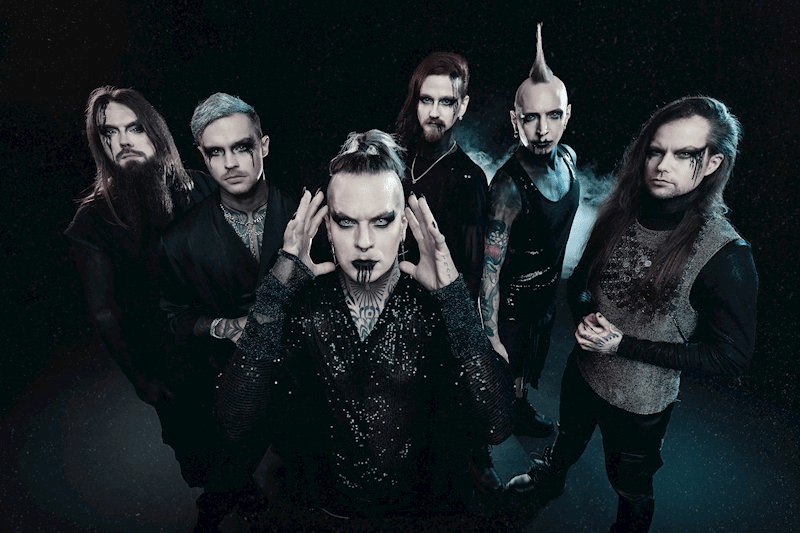
–Photo credit: VDPictures
By Kira L. Schlechter
My partner Isabell is continually amused that I’ve become rather obsessed with Lord of the Lost, who after all hail from HER hometown of Hamburg.
But here I am, and after missing out on an interview in conjunction with “Opvs Noir Vol. 2” because of the band’s relentless touring schedule, I wanted to get a review in for “Vol. 3” (Napalm Records), the wrap-up to the trilogy.
LOTL is enigmatic, chameleonic singer/guitarist Chris Harms, guitarist Pi Stoffers, guitarist/synth player Benjamin “Benji“ Mundigler, bassist Klaas Helmecke (currently on leave from the band’s live lineup), pianist/synth player/percussionist Gerrit Heinemann, and drummer Niklas Kahl.
They gained worldwide traction seven albums into their career with “Blood & Glitter” and its title track, which represented Germany in the 2023 edition of the Eurovision Song Contest. Their sound is a swirling blend of goth, metal, industrial, classical, and European pop. And the economy in their songwriting is notable – each album clocks in at around 45 minutes, but nothing ever feels incomplete or rushed.
It’s interesting how the opening tracks of each volume differ: from the hypnotic expanse of “Bazaar Bizarre” on “Vol. 1” to the pointedly political commentary of “The Fall From Grace” on “Vol. 2” and now to the just-wanting-to-hide-from-it-all plea of “Kill the Lights.” They play with tempo changes, stately to driving to light and airy, in this urging to embrace the darkness, literal or figurative, in order to heal (“sorrows seem so far/In twilight’s cold embrace”). The dark, they say, is a place to be together (“all as one unified into the night”) – you could even equate that particular sentiment to the darkness of the concert hall, where audience and performer merge to purge emotion and find joy.
As in each volume of the trilogy, “Vol. 3” is loaded with collabs. “I’m a Diamond” (featuring Alea of Saltatio Mortis) is pure positivity, the metaphor clear as, well, a diamond – “we are born raw” and we are faceted by our trials and tribulations, but beneath it all is that “shard beneath the mud … the purest part of us.” The anthemic chorus previews the statement that is the second verse, and can’t all us weirdos relate: “You tried to fit me in your frame/Your mind can only work that way/However much you looked around/In your lexicon I cannot be found/I am so much more than you describe/And I don’t care if you get it right.” Amen to that.
“My Funeral” might be the best encapsulation of what LOTL – and maybe metal fans in general – are all about. How could you not love the quirky contradiction of the chorus, “Black is my happy colour/I wear it every day/it’s black, not a shade of sorrow/I’m gonna wear pink to my funeral,” I ask you? It’s in perfect keeping with the band’s androgynous, makeup-and-nail-polish image, fearlessly wearing and presenting – in black or anything else – however they damn well please. Chris cracks wise about what others might think about wearing black: “It doesn’t mean I creep through the cemetery /And follow every hearse that I ever see/Or cackle when I read an obituary/That’s just Sundays.” It’s just a color, get over it. And it’s not even just about wearing black, either, it’s about self-expression in general, as he so cuttingly points out: “If you dress in what delights you/There are those who will begrudge/So grease your middle finger when they judge.”
The chugging, galloping “I Hate People” (featuring Wednesday 13) isn’t mindless nihilism, mind you – this is hating people who bloody well deserve it. The first half of the song is hating those who are victimized by others’ hate, those who are “being told what they are,” who are “silenced by outsiders abuse,” who fear “death for expressing their views,” who are “told who they love is a sin.” And the second is directed at those actual people – those who are “telling me what to do to conform,” who are “making martyrs from the day they were born,” who are “waging wars as the innocent mourn.” This is catharsis at its best. Let’s not forget, though, Chris says, that we ourselves have not always escaped being the brunt of someone else’s hate, as his self-reflective mea culpa says: “I’m part of ‘people’ as well/ Should I turn this hate upon myself?/I’m so sorry for the times I imposed my will/The hand that you’ve been dealt/And how it must have felt/Sorry.”
The piano-based midtempo quasi-ballad “The Shadows Within” is basically saying that our experiences, our sorrows, our shadows, are what makes us who we are and that we need to touch base with them now and then to see how far we’ve come. They keep us grounded and we learn from them, as Chris sings: “I have known them for so long, I make them stay/When I long for them I know I have a price to pay.” It’s this deeply personal, yet universal quality of the band’s lyrics and outlook (an outlook that sounds negative, but often is not) that makes them stick in listeners’ minds and stand out among their peers.
The mournful “La Vie Est Hell,” with its rollicking, rolling groove, is sung mostly in French and features Hannes Braun, formerly of Kissin’ Dynamite. His rich, resonant voice is such a nice foil for Chris’ rasp and it is given even more emotional weight courtesy of Benji’s aching piano.
“Square One,” with its mix of a repeating keyboard line and walls of frustrated guitars, is a tale of a relationship in limbo, neither here nor there, neither happily continuing or completely over – “where nothing changes in this endless ever.” Rather than angry, it’s more a mix of resigned and regretful, at a point where what the next move should be is unclear.
It’s at this point where the songs here rather mimic those on “Vol. 2” in terms of the breakdown of that relationship. “When Did the Love Break,” featuring Ambre Vourvahis of Xandria, is that next step, where the two have begun to drift apart, avoiding each other and the feelings they no longer share. Amber sings the second verse, prechorus, and chorus before they duet in the bridge and last chorus, and the futility and sorrow in their delivery is palpable without being sappy or histrionic.
The deterioration continues in “Your Love is Colder Than Death,” a swirling circle of hope (“say my name, hold my hand”) and despair (“drag me down some more”) that ultimately leads to nothing but pain.
“Take Me Far Away” (featuring Damien Edwards of Cats in Space) is the culmination of that agony, its music going from musing to pleading to thrashing, furious rage – “in the mirror, I am looking for a saviour,” Chris screams, one that he’s not going to find.
And ending as “Vol. 2” did with “Sharp Edges,” “Vol. 3” also concludes with a ballad, this time, “The Days of Our Lives.” And it’s not a happy ending. It’s vague enough to hint at both a final, very dark closure, and just the curtain call of this relationship – “how it used to be/In a world that had it all but not enough for you and me.” It lacks the theatricality and wrenching poignancy of “Sharp Edges,” but it follows the same pattern of you go your way, I’ll go mine, but we’ll always have our memories.
Taken as a whole, these three albums run the gamut of what Lord of the Lost is capable of thematically – from socio-political commentary to wry humor, from high drama to quiet despondency – and musically – from lonely piano to shrieking guitars to tense electronics. And they kind of should be taken as a whole, in many ways, rather than individually, to get the full experience. But if you’re going to listen to them on their own, each – including “Vol. 3” – stands strongly as a self-contained unit.

About Me
Sometimes the hardest part of finding success is gathering the courage to get started. The most successful people don’t look back to see who’s watching. Look for opportunities to lift others up along the way.
Follow Me On
Subscribe To My Newsletter
“Do not say a little in many words but a great deal in few.” – Pythagoras

